
Title


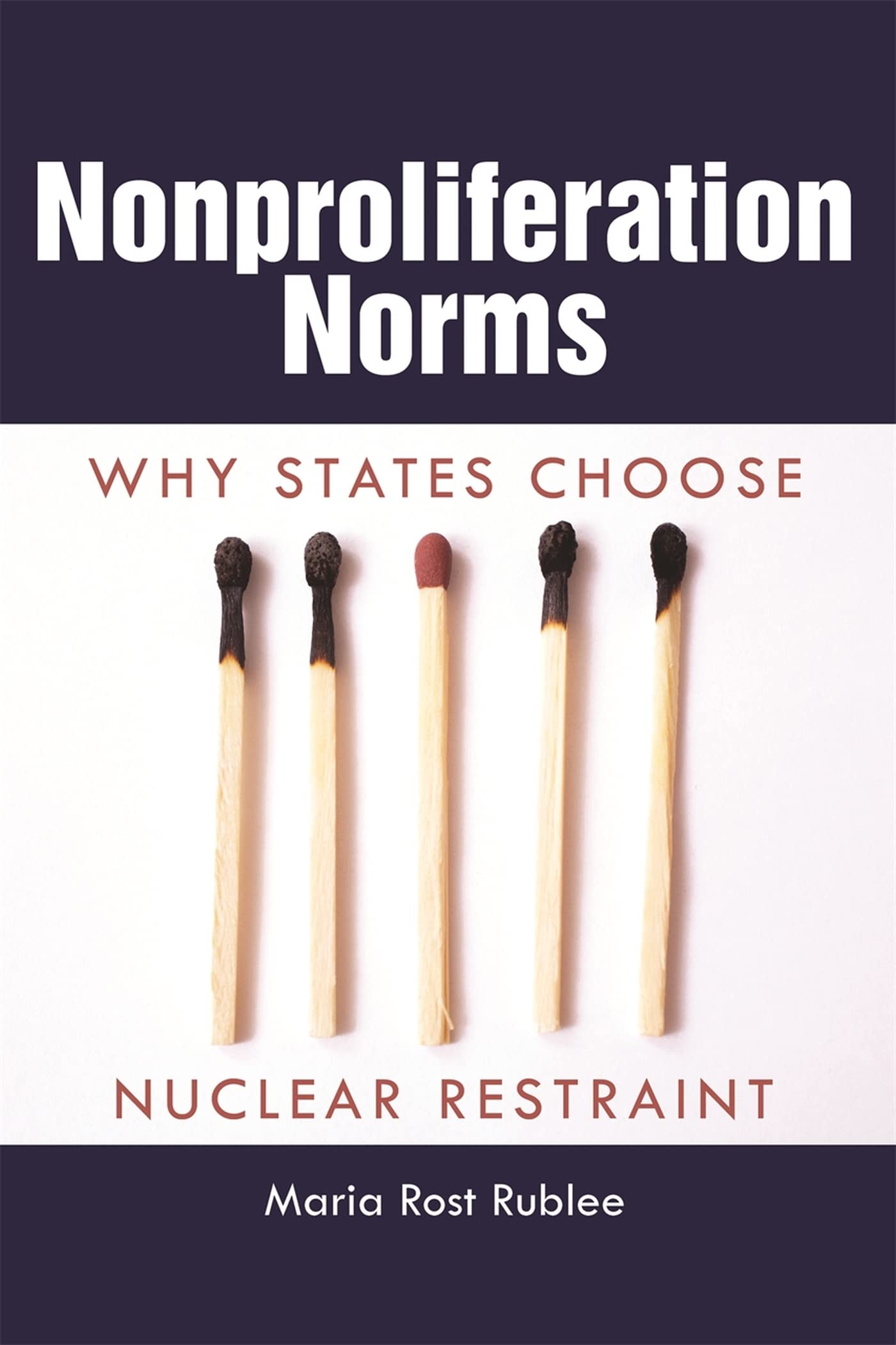
Nonproliferation Norms: Why States Choose Nuclear Restraint (Studies In Security And International Affairs Ser.),Used
Sold by Ergodebooks, an authorized reseller.
Returns accepted within 30 days | support@ergodebooks.com
Shipping Information
- Free Standard Shipping — United States only
- Processing Time: 3–5 business days
- Estimated Delivery: 6–10 business days after dispatch
- Double-boxed, fully insured & discreetly packaged
- Tracking number sent via email once dispatched
Returns & Refund
Returns accepted within 30 days of delivery.
Damaged or Defective Item
Free return shipping + replacement or full refund
Wrong Item Received
Free return shipping + replacement or full refund
Change of Mind
Return shipping at customer's expense · 25% restocking fee applies
Payment Option

Too Often, Our Focus On The Relative Handful Of Countries With Nuclear Weapons Keeps Us From Asking An Important Question: Why Do So Many More States Not Have Such Weapons? More Important, What Can We Learn From These Examples Of Nuclear Restraint? Maria Rost Rublee Argues That In Addition To Understanding A State'S Security Environment, We Must Appreciate The Social Forces That Influence How States Conceptualize The Value Of Nuclear Weapons. Much Of What Rublee Says Also Applies To Other Weapons Of Mass Destruction, As Well As National Security Decision Making In General.The Nuclear Nonproliferation Movement Has Created An International Social Environment That Exerts A Variety Of Normative Pressures On How State Elites And Policymakers Think About Nuclear Weapons. Within A Social Psychology Framework, Rublee Examines Decision Making About Nuclear Weapons In Five Case Studies: Japan, Egypt, Libya, Sweden, And Germany.In Each Case, Rublee Considers The Extent To Which Nuclear Forbearance Resulted From Persuasion (Genuine Transformation Of Preferences), Social Conformity (The Desire To Maximize Social Benefits And/Or Minimize Social Costs, Without A Change In Underlying Preferences), Or Identification (The Desire Or Habit Of Following The Actions Of An Important Other).The Book Offers Bold Policy Prescriptions Based On A Sharpened Knowledge Of The Many Ways We Transmit And Process Nonproliferation Norms. The Social Mechanisms That Encourage Nonproliferationand The Regime That Created Themmust Be Preserved And Strengthened, Rublee Argues, For Without Them States That Have Exercised Nuclear Restraint May Rethink Their Choices.
⚠️ WARNING (California Proposition 65):
This product may contain chemicals known to the State of California to cause cancer, birth defects, or other reproductive harm.
For more information, please visit www.P65Warnings.ca.gov.