
Title
Nonverbal Communication,Used
Sold by Ergodebooks, an authorized reseller.
Returns accepted within 30 days | support@ergodebooks.com
Shipping Information
- Free Standard Shipping — United States only
- Processing Time: 3–5 business days
- Estimated Delivery: 6–10 business days after dispatch
- Double-boxed, fully insured & discreetly packaged
- Tracking number sent via email once dispatched
Returns & Refund
Returns accepted within 30 days of delivery.
Damaged or Defective Item
Free return shipping + replacement or full refund
Wrong Item Received
Free return shipping + replacement or full refund
Change of Mind
Return shipping at customer's expense · 25% restocking fee applies
Payment Option

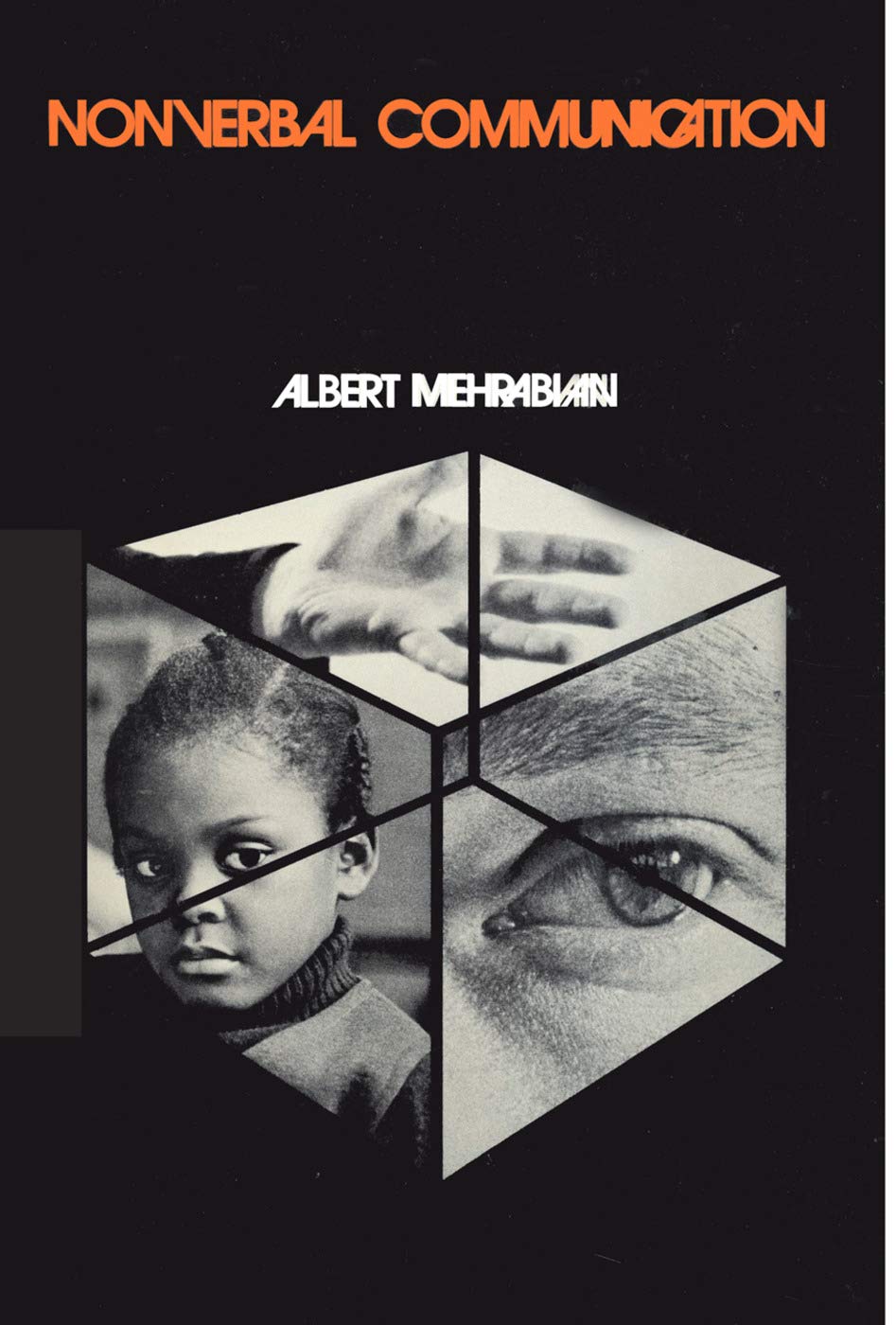
Even though our society subtly discourages the verbal expression of emotions, most of us, in ostensibly conforming to our roles, nevertheless manage to express likes, dislikes, status differences, personalities, as well as weaknesses in nonverbal ways. Using vocal expressions; gestures, postures, and movements, we amplify, restrict, or deny what our words say to one another, and even say some things with greater facility and efficiency than with words.In this new, multidimensional approach to the subject of nonverbal communication Albert Mehrabian brings together a great deal of original work which includes descriptions of new experimental methods that are especially suited to this field, detailed findings of studies scattered throughout the literature, and most importantly, the integration of these findings within a compact framework.The framework starts with the analysis of the meanings of various nonverbal behaviors and is based on the fact that more than half of the variance in the significance of nonverbal signals can be described in terms of the three orthogonal dimensions of positiveness, potency or status, and responsiveness. These three dimensions not only constitute the semantic space for nonverbal communication, but also help to identify groups of behaviors relating to each, to describe characteristic differences in nonverbal communication, to analyze and generate rules for the understanding of inconsistent messages, and to provide researchers with new and comprehensive measures for description of social behavior.This volume will be particularly valuable for both the professional psychologist and the graduate student in psychology. It will also be of great interest to professionals in the fields of speech and communication, sociology, anthropology, and psychiatry.
⚠️ WARNING (California Proposition 65):
This product may contain chemicals known to the State of California to cause cancer, birth defects, or other reproductive harm.
For more information, please visit www.P65Warnings.ca.gov.