
Title
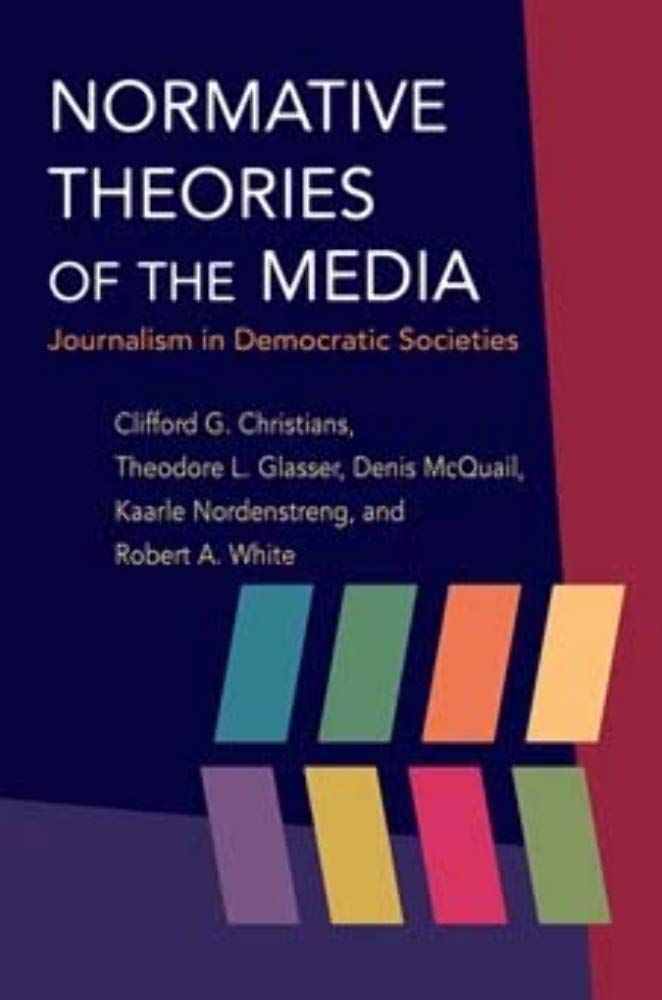
Normative Theories of the Media: Journalism in Democratic Societies (The History of Media and Communication),Used
Sold by Ergodebooks, an authorized reseller.
Returns accepted within 30 days | support@ergodebooks.com
Shipping Information
- Free Standard Shipping — United States only
- Processing Time: 3–5 business days
- Estimated Delivery: 6–10 business days after dispatch
- Double-boxed, fully insured & discreetly packaged
- Tracking number sent via email once dispatched
Returns & Refund
Returns accepted within 30 days of delivery.
Damaged or Defective Item
Free return shipping + replacement or full refund
Wrong Item Received
Free return shipping + replacement or full refund
Change of Mind
Return shipping at customer's expense · 25% restocking fee applies
Payment Option

In this book, five leading scholars of media and communication take on the difficult but important task of explicating the role of journalism in democratic societies. Using Fred S. Siebert, Theodore Peterson, and Wilbur Schramm's classic Four Theories of the Press as their point of departure, the authors explore the philosophical underpinnings and the political realities that inform a normative approach to questions about the relationship between journalism and democracy, investigating not just what journalism is but what it ought to be.The authors identify four distinct yet overlapping roles for the media: the monitorial role of a vigilant informer collecting and publishing information of potential interest to the public; the facilitative role that not only reports on but also seeks to support and strengthen civil society; the radical role that challenges authority and voices support for reform; and the collaborative role that creates partnerships between journalists and centers of power in society, notably the state, to advance mutually acceptable interests. Demonstrating the value of a reconsideration of media roles, Normative Theories of the Media provides a sturdy foundation for subsequent discussions of the changing media landscape and what it portends for democratic ideals.
⚠️ WARNING (California Proposition 65):
This product may contain chemicals known to the State of California to cause cancer, birth defects, or other reproductive harm.
For more information, please visit www.P65Warnings.ca.gov.
- Q: What is the main focus of 'Normative Theories of the Media'? A: The book examines the role of journalism in democratic societies, exploring philosophical and political aspects of journalism and its relationship to democracy.
- Q: Who are the authors of this book? A: The book is authored by leading scholars in media and communication, including Clifford G. Christians.
- Q: How many pages does the book contain? A: The book has a total of 296 pages.
- Q: What is the publication date of this book? A: The book was published on June 16, 2009.
- Q: What edition of the book is available? A: This is the First Edition of 'Normative Theories of the Media'.
- Q: What are the four roles of media discussed in the book? A: The book identifies the monitorial, facilitative, radical, and collaborative roles of media in society.
- Q: Is this book suitable for academic use? A: Yes, it is suitable for academic use, particularly for those studying media, communication, and journalism.
- Q: What type of binding does this book have? A: The book is available in paperback binding.
- Q: What category does this book fall under? A: The book falls under the category of Communication.
- Q: Is the book in new condition? A: Yes, the book is listed as new.