If you have any questions, you are always welcome to contact us. We'll get back to you as soon as possible, withing 24 hours on weekdays.
Customer service
All questions about your order, return and delivery must be sent to our customer service team by e-mail at yourstore@yourdomain.com
Sale & Press
If you are interested in selling our products, need more information about our brand or wish to make a collaboration, please contact us at press@yourdomain.com
Help
If you have any questions, you are always welcome to contact us. We'll get back to you as soon as possible, withing 24 hours on weekdays.
Customer service
All questions about your order, return and delivery must be sent to our customer service team by e-mail at yourstore@yourdomain.com
Sale & Press
If you are interested in selling our products, need more information about our brand or wish to make a collaboration, please contact us at press@yourdomain.com
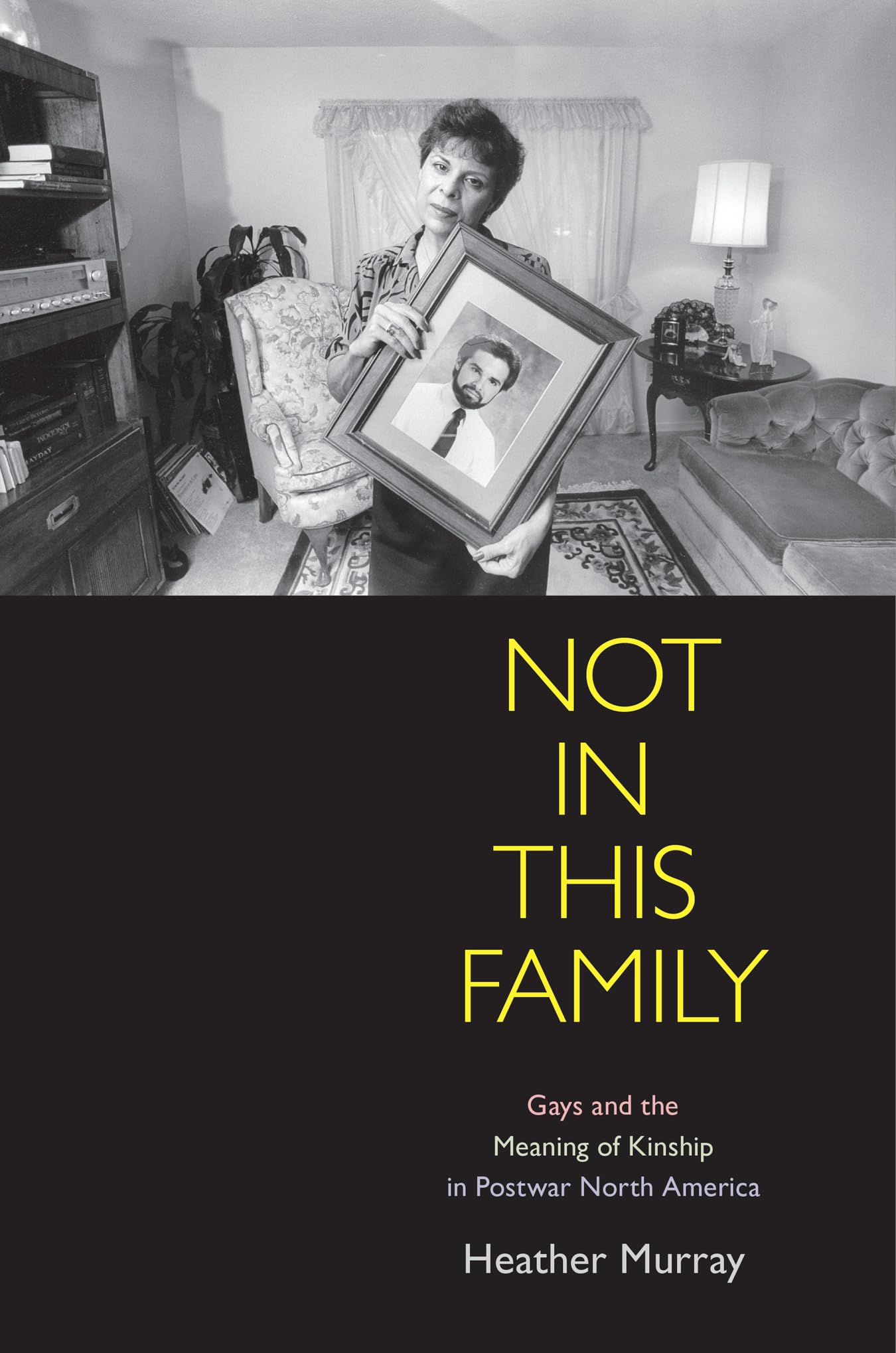
Many Americans hold fast to the notion that gay men and women, more often than not, have been ostracized from disapproving families. Not in This Family challenges this myth and shows how kinship ties were an animating force in gay culture, politics, and consciousness throughout the latter half of the twentieth century.Historian Heather Murray gives voice to gays and their parents through an extensive use of introspective writings, particularly personal correspondence and diaries, as well as through published memoirs, fiction, poetry, song lyrics, movies, and visual and print media. Starting in the late 1940s and 1950s, Not in This Family covers the entire postwar period, including the gay liberation and lesbian feminist movements of the 1960s and 1970s, the establishment of PFLAG (Parents, Families, and Friends of Lesbians and Gays), and the AIDS crisis of the 1980s and 1990s. Ending her story with an examination of contemporary comingout rituals, Murray shows how the personal that was once private became political and, finally, public.In exploring the intimate, reciprocal relationship of gay children and their parents, Not in This Family also chronicles larger cultural shifts in privacy, discretion and public revelation, and the very purpose of family relations. Murray shows that private bedrooms and consumer culture, social movements and psychological fashions, all had a part to play in transforming the modern family.
⚠️ WARNING (California Proposition 65):
This product may contain chemicals known to the State of California to cause cancer,
birth defects, or other reproductive harm.
For MAP (Minimum Advertised Price) violations and Intellectual Property (IP) or Trademark concerns, please contact:
support@ergodebooks.com
⚠️ California Proposition 65 Warning: Some products sold on this website may expose you to chemicals known to the State of California to cause cancer, birth defects, or other reproductive harm. For more information, visit www.P65Warnings.ca.gov.