
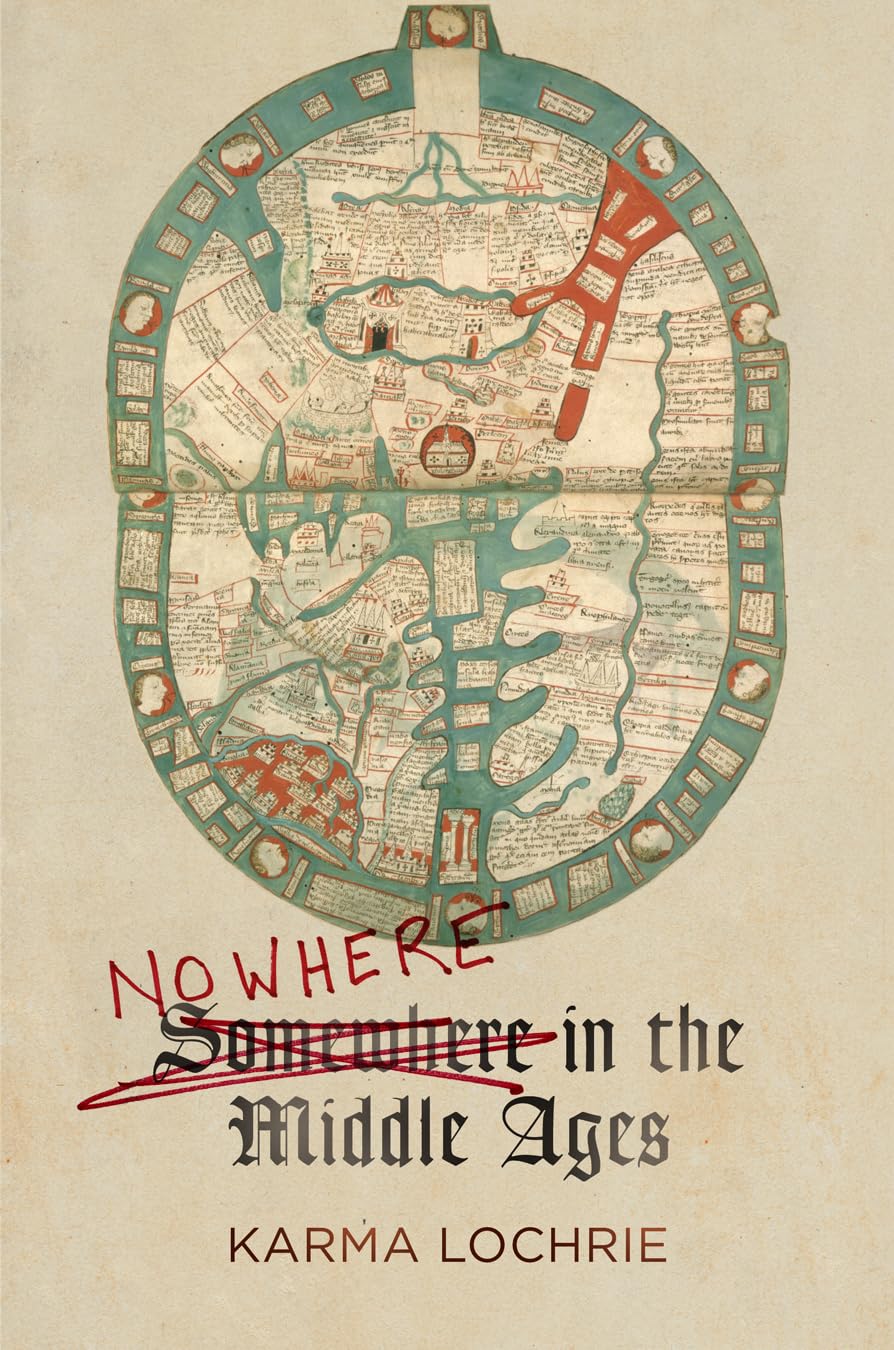
Title
Nowhere In The Middle Ages (The Middle Ages Series),New
Sold by Ergodebooks, an authorized reseller.
Returns accepted within 30 days | support@ergodebooks.com
Shipping Information
- Free Standard Shipping — United States only
- Processing Time: 3–5 business days
- Estimated Delivery: 6–10 business days after dispatch
- Double-boxed, fully insured & discreetly packaged
- Tracking number sent via email once dispatched
Returns & Refund
Returns accepted within 30 days of delivery.
Damaged or Defective Item
Free return shipping + replacement or full refund
Wrong Item Received
Free return shipping + replacement or full refund
Change of Mind
Return shipping at customer's expense · 25% restocking fee applies
Payment Option

Literary And Cultural Historians Typically Cite Thomas More'S 1516 Utopia As The Source Of Both A Genre And A Concept. Karma Lochrie Rejects This Origin Myth Of Utopianism Along With The Assumption That People In The Middle Ages Were Incapable Of Such Thinking. In Nowhere In The Middle Ages, Lochrie Reframes The Terms Of The Discussion By Revealing How Utopian Thought Was, In Fact, 'Somewhere' In The Middle Ages. In The Process, She Transforms Conventional Readings Of More'S Utopia And Challenges The Very Practice Of Literary History Today.Drawing On A Range Of Contemporary Scholarship On Utopianism And A Broad Premodern Archive, Lochrie Charts Variant Utopian Strains In Medieval Literature And Philosophy That Diverge From More'S Work And At The Same Time Plot Uncanny Connections With It. Examining Works Such As Macrobius'S Fifthcentury Commentary On The Dream Of Scipio, Mandeville'S Travels, And William Langland'S Piers Plowman, She Finds Evidence Of A Number Of Utopian Drives, Including The Rejection Of European Centrality, A Desire For More Egalitarian Politics, And A Rethinking Of The Division Between Animals And Humans. Nowhere In The Middle Ages Insists On The Relevance And Transformative Potential Of Medieval Utopias For More'S Work And Positions The Sixteenthcentury Text As One Alternative In A Broader Historical Phenomenon Of Utopian Thinking. Tracing Medieval Utopianisms Forward In Literary History To Reveal Their Influences On Early Modern And Modern Literature And Philosophy, Lochrie Demonstrates That Looking Backward, We Might Extend Future Horizons Of Utopian Thinking.
⚠️ WARNING (California Proposition 65):
This product may contain chemicals known to the State of California to cause cancer, birth defects, or other reproductive harm.
For more information, please visit www.P65Warnings.ca.gov.
- Q: How many pages does 'Nowhere in the Middle Ages' have? A: This book has two hundred eighty pages. It offers an in-depth exploration of medieval utopian thought.
- Q: What are the dimensions of 'Nowhere in the Middle Ages'? A: The book measures six and a half inches in length, one inch in width, and nine and a half inches in height.
- Q: What type of binding does this book have? A: The book is hardcover. This sturdy binding is ideal for preserving the book over time.
- Q: Who is the author of 'Nowhere in the Middle Ages'? A: The author is Karma Lochrie. She is recognized for her scholarly work in literary and cultural history.
- Q: What category does this book fall under? A: This book is categorized under Medieval literature. It addresses themes relevant to the Middle Ages.
- Q: Is 'Nowhere in the Middle Ages' suitable for academic use? A: Yes, it is suitable for academic use. The book is grounded in contemporary scholarship and offers critical insights.
- Q: How does 'Nowhere in the Middle Ages' approach utopianism? A: The book reframes utopianism by exploring medieval literature and philosophy. It challenges conventional views of historical context.
- Q: What themes are explored in 'Nowhere in the Middle Ages'? A: Themes include egalitarian politics and the relationship between humans and animals. It investigates various utopian drives in medieval texts.
- Q: Is 'Nowhere in the Middle Ages' appropriate for casual readers? A: Yes, casual readers can enjoy this book. It presents complex ideas in an accessible manner.
- Q: How does this book relate to Thomas More's Utopia? A: The book challenges the notion that Thomas More's Utopia is the origin of utopian thought. It presents medieval alternatives.
- Q: What historical works does the author examine? A: The author examines works like Macrobius's Commentary on the Dream of Scipio and Mandeville's Travels. These texts provide insights into medieval utopianism.
- Q: Does the book discuss modern influences of medieval utopias? A: Yes, it traces influences of medieval utopias on early modern and modern literature. This connection broadens the understanding of utopian thinking.
- Q: Is there a focus on egalitarian politics in this book? A: Yes, egalitarian politics is a significant focus. The author identifies various utopian drives advocating for more equal societies.
- Q: What critical stance does the author take on literary history? A: The author critiques traditional practices of literary history. She argues for a broader understanding of utopian thought in the Middle Ages.
- Q: What is the main argument of 'Nowhere in the Middle Ages'? A: The main argument is that utopian thought existed during the Middle Ages. It reveals that medieval literature contained various utopian ideas.