If you have any questions, you are always welcome to contact us. We'll get back to you as soon as possible, withing 24 hours on weekdays.
Customer service
All questions about your order, return and delivery must be sent to our customer service team by e-mail at yourstore@yourdomain.com
Sale & Press
If you are interested in selling our products, need more information about our brand or wish to make a collaboration, please contact us at press@yourdomain.com
Help
If you have any questions, you are always welcome to contact us. We'll get back to you as soon as possible, withing 24 hours on weekdays.
Customer service
All questions about your order, return and delivery must be sent to our customer service team by e-mail at yourstore@yourdomain.com
Sale & Press
If you are interested in selling our products, need more information about our brand or wish to make a collaboration, please contact us at press@yourdomain.com
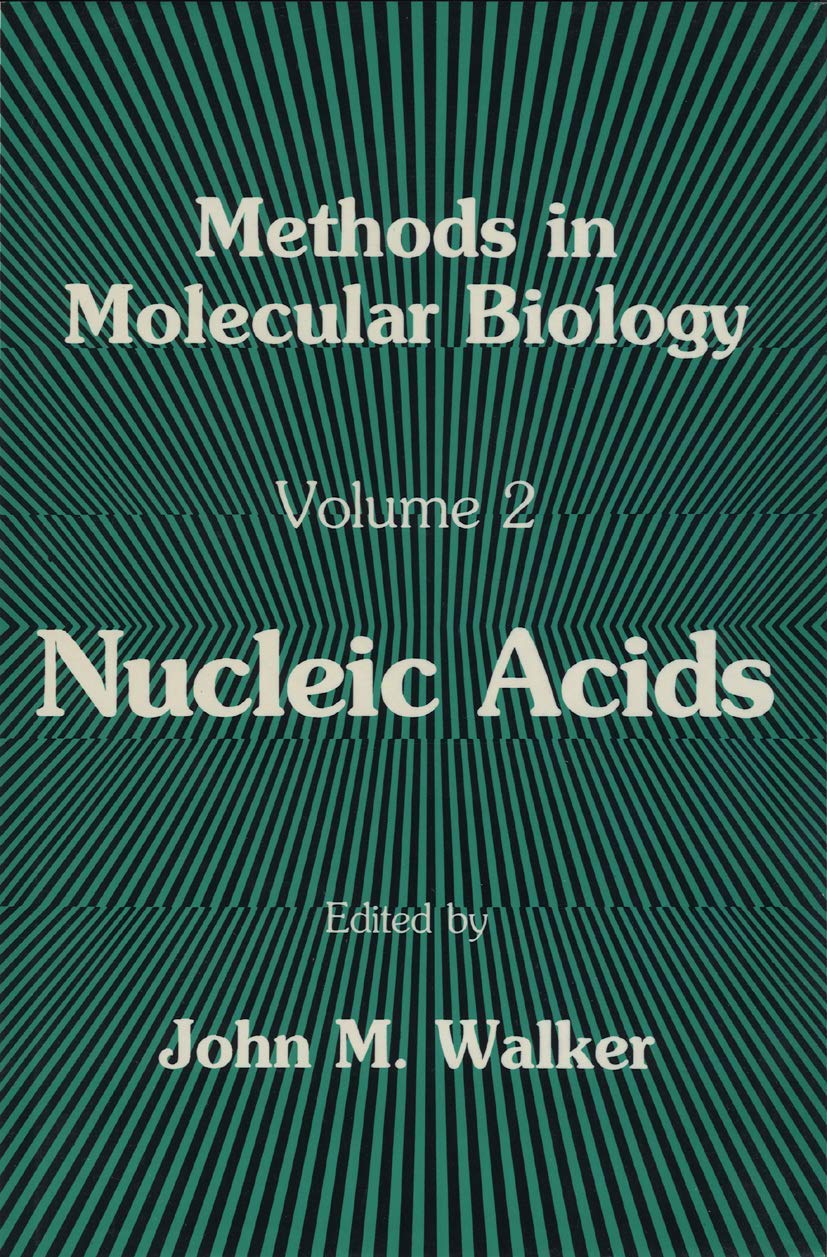
In recent years there has been a tremendous increase in our understanding of the functioning of the cell at the molecular level. This has been achieved in the main by the invention and development of new methodology, parti larly in that area generally referred to as 'genetic en neering'. While this revolution has been taking place in the field of nucleic acids research, the protein chemist has at the same time developed fresh methodology to keep pace with the requirements of present day molecular bi ogy. Today's molecular biologist can no longer be content with being an expert in one particular area alone. He/she needs to be equally competent in the laboratory at h dling DNA, RNA, and proteins, moving from one area to another as required by the problem he/she is trying to solve. Although many of the new techniques in molecular biology are relatively easy to master, it is often difficult for a researcher to obtain all the relevant information nec sary for setting up and successfully applying a new te nique. Information is of course available in the research l erature, but this often lacks the depth of description that the new user requires. This requirement for indepth pr tical details has become apparent by the considerable mand for places on our Molecular Biology Workshops held at Hatfield each summer.
⚠️ WARNING (California Proposition 65):
This product may contain chemicals known to the State of California to cause cancer,
birth defects, or other reproductive harm.
For MAP (Minimum Advertised Price) violations and Intellectual Property (IP) or Trademark concerns, please contact:
support@ergodebooks.com
⚠️ California Proposition 65 Warning: Some products sold on this website may expose you to chemicals known to the State of California to cause cancer, birth defects, or other reproductive harm. For more information, visit www.P65Warnings.ca.gov.