If you have any questions, you are always welcome to contact us. We'll get back to you as soon as possible, withing 24 hours on weekdays.
Customer service
All questions about your order, return and delivery must be sent to our customer service team by e-mail at yourstore@yourdomain.com
Sale & Press
If you are interested in selling our products, need more information about our brand or wish to make a collaboration, please contact us at press@yourdomain.com
Help
If you have any questions, you are always welcome to contact us. We'll get back to you as soon as possible, withing 24 hours on weekdays.
Customer service
All questions about your order, return and delivery must be sent to our customer service team by e-mail at yourstore@yourdomain.com
Sale & Press
If you are interested in selling our products, need more information about our brand or wish to make a collaboration, please contact us at press@yourdomain.com
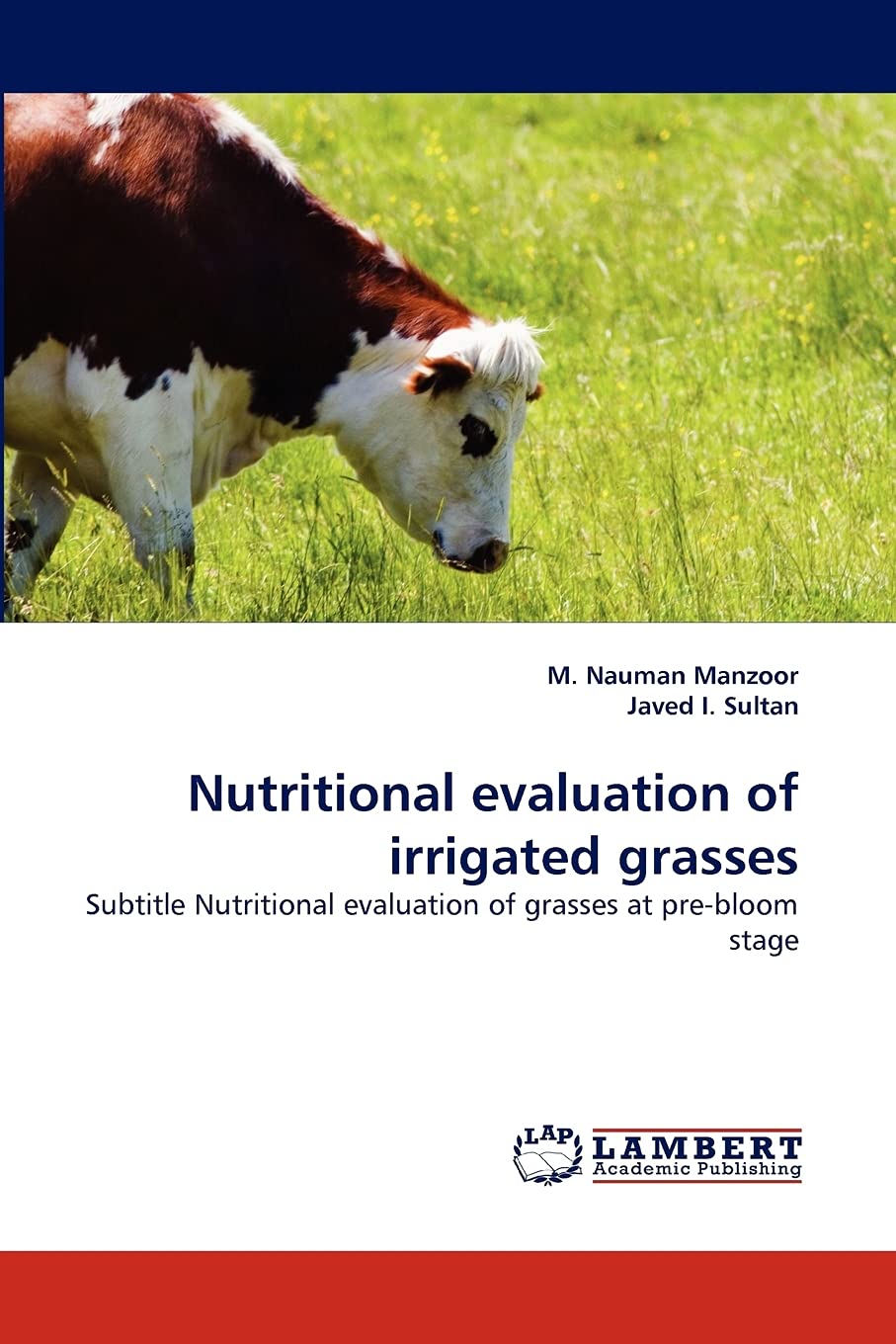
Grasses are the plants (C4) which contain most extensive, much needed and familiar component of range vegetation especially in extreme climates of the range areas. Grasses are more easily accessible, better in taste and quicker in digestion than shrubs and trees. Ecosystems having rather less extreme climate have typical perennial grasses. These grasses have a quality of quick resprouting because they have special ecological features and moderate grazing. Natural flora of Pakistan contains some very good forage grasses. Need of time is to propagate them through artificial seeding and stump planting. This study was conducted to ascertain the nutritional value, mineral profile, gross energy and in situ digestion kinetics of 10 different irrigated grasses (Malai grass, Barru grass, Mott grass, Khas Khas grass or Vetiver, Lemon grass, Dhaman grass grass, Kallar grass, Rhodes grass, Khabal grass or Bermuda grass and Swank grass having botanical names as Panicum antidotale, Sorghum halepense, Pennisetum purpureum, Vetiveria zizanioides, Cymbopogon citrates, Cenchrus ciliaris, Leptochloa fusca, Chloris gayana, Cynodon dactylon and Panicum colunum respectively).
⚠️ WARNING (California Proposition 65):
This product may contain chemicals known to the State of California to cause cancer,
birth defects, or other reproductive harm.
For MAP (Minimum Advertised Price) violations and Intellectual Property (IP) or Trademark concerns, please contact:
support@ergodebooks.com
⚠️ California Proposition 65 Warning: Some products sold on this website may expose you to chemicals known to the State of California to cause cancer, birth defects, or other reproductive harm. For more information, visit www.P65Warnings.ca.gov.