
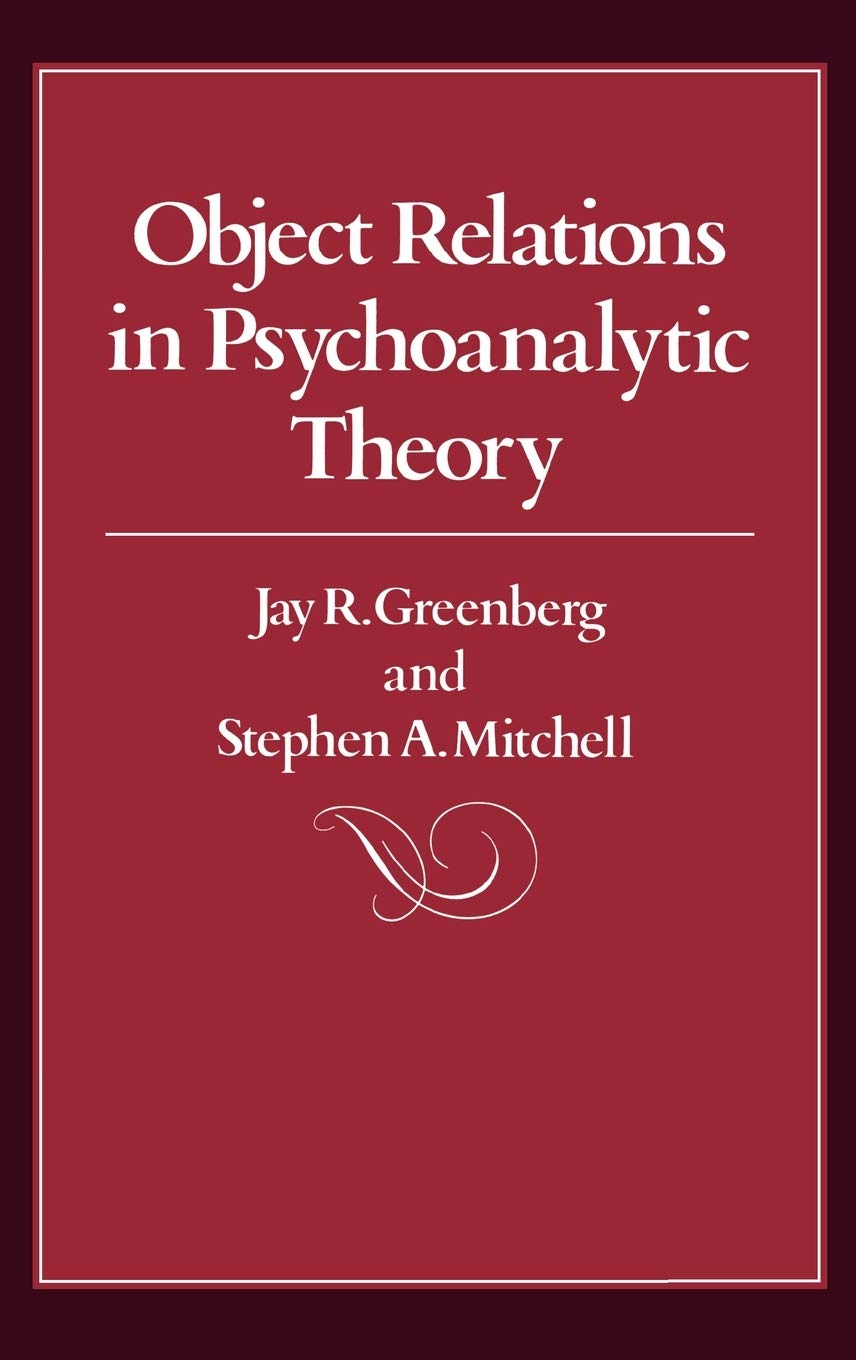
Title
Object Relations In Psychoanalytic Theory,New
Sold by Ergodebooks, an authorized reseller.
Returns accepted within 30 days | support@ergodebooks.com
Shipping Information
- Free Standard Shipping — United States only
- Processing Time: 3–5 business days
- Estimated Delivery: 6–10 business days after dispatch
- Double-boxed, fully insured & discreetly packaged
- Tracking number sent via email once dispatched
Returns & Refund
Returns accepted within 30 days of delivery.
Damaged or Defective Item
Free return shipping + replacement or full refund
Wrong Item Received
Free return shipping + replacement or full refund
Change of Mind
Return shipping at customer's expense · 25% restocking fee applies
Payment Option

Object Relations In Psychoanalytic Theory Provides A Masterful Overview Of The Central Issue Concerning Psychoanalysts Today: Finding A Way To Deal In Theoretical Terms With The Importance Of The Patient'S Relationships With Other People. Just As Disturbed And Distorted Relationships Lie At The Core Of The Patient'S Distress, So Too Does The Relation Between Analyst And Patient Play A Key Role In The Analytic Process. All Psychoanalytic Theories Recognize The Clinical Centrality Of Object Relations, But Much Else About The Concept Is In Dispute. In Their Groundbreaking Exercise In Comparative Psychoanalysis, The Authors Offer A New Way To Understand The Dramatic And Confusing Proliferation Of Approaches To Object Relations. The Result Is Major Clarification Of The History Of Psychoanalysis And A Reliable Guide To The Fundamental Issues That Unite And Divide The Field.Greenberg And Mitchell, Both Psychoanalysts In Private Practice In New York, Locate Much Of The Variation In The Concept Of Object Relations Between Two Deeply Divergent Models Of Psychoanalysis: Freud'S Model, In Which Relations With Others Are Determined By The Individual'S Need To Satisfy Primary Instinctual Drives, And An Alternative Model, In Which Relationships Are Taken As Primary. The Authors Then Diagnose The History Of Disagreement About Object Relations As A Product Of Competition Between These Disparate Paradigms. Within This Framework, Sullivan'S Interpersonal Psychiatry And The British Tradition Of Object Relations Theory, Led By Klein, Fairbairn, Winnicott, And Guntrip, Are Shown To Be United By Their Rejection Of Significant Aspects Of Freud'S Drive Theory. In Contrast, The American Ego Psychology Of Hartmann, Jacobson, And Kernberg Appears As An Effort To Enlarge The Classical Drive Theory To Accommodate Information Derived From The Study Of Object Relations.Object Relations In Psychoanalytic Theory Offers A Conceptual Map Of The Most Difficult Terrain In Psychoanalysis And A History Of Its Most Complex Disputes. In Exploring The Counterpoint Between Different Psychoanalytic Schools And Traditions, It Provides A Synthetic Perspective That Is A Major Contribution To The Advance Of Psychoanalytic Thought.
⚠️ WARNING (California Proposition 65):
This product may contain chemicals known to the State of California to cause cancer, birth defects, or other reproductive harm.
For more information, please visit www.P65Warnings.ca.gov.
- Q: What are the dimensions of the book? A: The book measures six point thirty-eight inches in length, zero point twelve inches in width, and nine point twenty-five inches in height.
- Q: How many pages does this book have? A: This book contains four hundred thirty-seven pages, providing a comprehensive overview of psychoanalytic theory.
- Q: What is the binding type of this book? A: The book is bound in hardcover, ensuring durability and longevity for readers.
- Q: Who is the author of this book? A: The author of this book is Jay R. Greenberg, a noted psychoanalyst.
- Q: What is the main subject of this book? A: The book focuses on object relations in psychoanalytic theory, exploring patient relationships and their significance.
- Q: Is this book suitable for beginners in psychology? A: Yes, this book is suitable for beginners as it provides a foundational understanding of psychoanalytic concepts.
- Q: Can I use this book for academic research? A: Yes, this book is a valuable resource for academic research in the field of psychoanalysis.
- Q: What psychoanalytic theories does the book discuss? A: The book discusses various psychoanalytic theories, including Freud's drive theory and interpersonal psychiatry.
- Q: How should I store this book? A: Store the book upright in a cool, dry place to maintain its condition and prevent damage.
- Q: Are there any specific care instructions for this book? A: Keep the book away from direct sunlight and moisture to preserve its integrity.
- Q: What if the book arrives damaged? A: If the book arrives damaged, you can request a return or replacement through the seller's customer service.
- Q: Is there a warranty on this book? A: No, books typically do not come with a warranty, but check the seller's return policy.
- Q: Can I compare this book to other psychoanalysis texts? A: Yes, this book can be compared to other texts in psychoanalysis for its unique perspective on object relations.
- Q: Is this book appropriate for someone studying psychology? A: Yes, this book is appropriate for psychology students due to its in-depth analysis of psychoanalytic theories.
- Q: What kind of insights can I gain from reading this book? A: You can gain insights into the complexities of object relations and the evolution of psychoanalytic thought.