If you have any questions, you are always welcome to contact us. We'll get back to you as soon as possible, withing 24 hours on weekdays.
Customer service
All questions about your order, return and delivery must be sent to our customer service team by e-mail at yourstore@yourdomain.com
Sale & Press
If you are interested in selling our products, need more information about our brand or wish to make a collaboration, please contact us at press@yourdomain.com
Help
If you have any questions, you are always welcome to contact us. We'll get back to you as soon as possible, withing 24 hours on weekdays.
Customer service
All questions about your order, return and delivery must be sent to our customer service team by e-mail at yourstore@yourdomain.com
Sale & Press
If you are interested in selling our products, need more information about our brand or wish to make a collaboration, please contact us at press@yourdomain.com
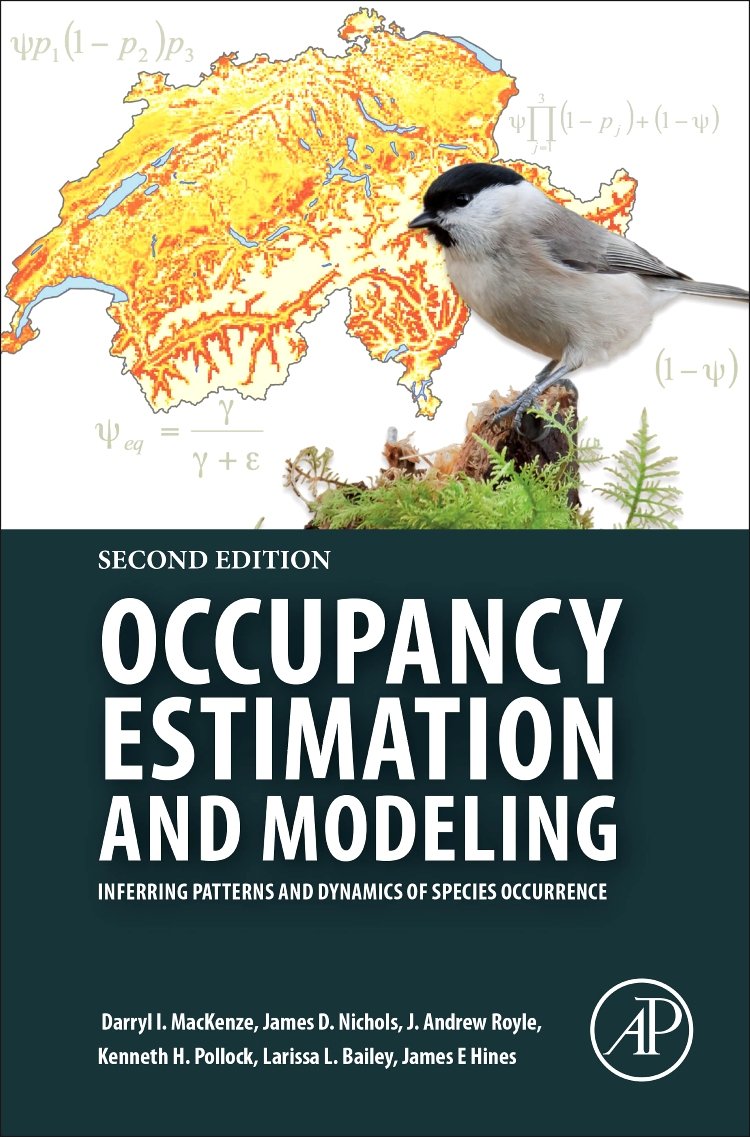
Occupancy Estimation and Modeling: Inferring Patterns and Dynamics of Species Occurrence, Second Edition, provides a synthesis of modelbased approaches for analyzing presenceabsence data, allowing for imperfect detection. Beginning from the relatively simple case of estimating the proportion of area or sampling units occupied at the time of surveying, the authors describe a wide variety of extensions that have been developed since the early 2000s. This provides an improved insight about species and community ecology, including, detection heterogeneity; correlated detections; spatial autocorrelation; multiple states or classes of occupancy; changes in occupancy over time; species cooccurrence; communitylevel modeling, and more.Occupancy Estimation and Modeling: Inferring Patterns and Dynamics of Species Occurrence, Second Edition has been greatly expanded and detail is provided regarding the estimation methods and examples of their application are given. Important study design recommendations are also covered to give a well rounded view of modeling. Provides authoritative insights into the latest in occupancy modeling Examines the latest methods in analyzing detection/no detection data surveys Addresses critical issues of imperfect detectability and its effects on species occurrence estimation Discusses important study design considerations such as defining sample units, sample size determination and optimal effort allocation
⚠️ WARNING (California Proposition 65):
This product may contain chemicals known to the State of California to cause cancer,
birth defects, or other reproductive harm.
For MAP (Minimum Advertised Price) violations and Intellectual Property (IP) or Trademark concerns, please contact:
support@ergodebooks.com
⚠️ California Proposition 65 Warning: Some products sold on this website may expose you to chemicals known to the State of California to cause cancer, birth defects, or other reproductive harm. For more information, visit www.P65Warnings.ca.gov.