
Title
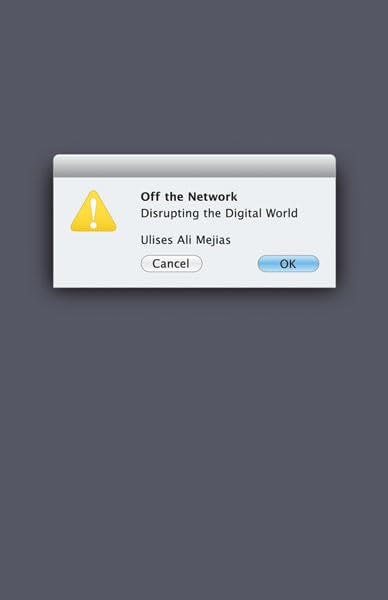
Off The Network: Disrupting The Digital World (Volume 41) (Electronic Mediations),Used
Sold by Ergodebooks, an authorized reseller.
Returns accepted within 30 days | support@ergodebooks.com
Shipping Information
- Free Standard Shipping — United States only
- Processing Time: 3–5 business days
- Estimated Delivery: 6–10 business days after dispatch
- Double-boxed, fully insured & discreetly packaged
- Tracking number sent via email once dispatched
Returns & Refund
Returns accepted within 30 days of delivery.
Damaged or Defective Item
Free return shipping + replacement or full refund
Wrong Item Received
Free return shipping + replacement or full refund
Change of Mind
Return shipping at customer's expense · 25% restocking fee applies
Payment Option

The digital world profoundly shapes how we work and consume and also how we play, socialize, create identities, and engage in politics and civic life. Indeed, we are so enmeshed in digital networksfrom social media to cell phonesthat it is hard to conceive of them from the outside or to imagine an alternative, let alone defy their seemingly inescapable power and logic. Yes, it is (sort of) possible to quit Facebook. But is it possible to disconnect from the digital networkand why might we want to?Off the Network is a fresh and authoritative examination of how the hidden logic of the Internet, social media, and the digital network is changing users understanding of the worldand why that should worry us. Ulises Ali Mejias also suggests how we might begin to rethink the logic of the network and question its ascendancy. Touted as consensual, inclusive, and pleasurable, the digital network is also, Mejias says, monopolizing and threatening in its capacity to determine, commodify, and commercialize so many aspects of our lives. He shows how the network broadens participation yet also exacerbates disparityand how it excludes more of society than it includes.Uniquely, Mejias makes the case that it is not only necessary to challenge the privatized and commercialized modes of social and civic life offered by corporatecontrolled spaces such as Facebook and Twitter, but that such confrontations can be mounted from both within and outside the network. The result is an uncompromising, sophisticated, and accessible critique of the digital world that increasingly dominates our lives.
⚠️ WARNING (California Proposition 65):
This product may contain chemicals known to the State of California to cause cancer, birth defects, or other reproductive harm.
For more information, please visit www.P65Warnings.ca.gov.