

Title
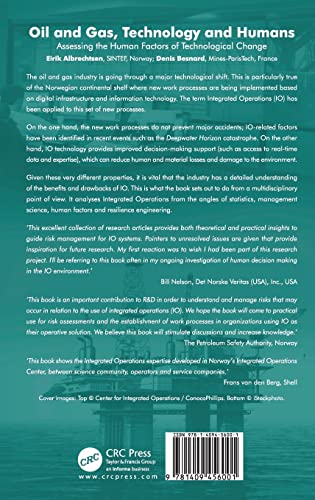

Oil and Gas, Technology and Humans: Assessing the Human Factors of Technological Change,Used
Sold by Ergodebooks, an authorized reseller.
Returns accepted within 30 days | support@ergodebooks.com
Shipping Information
- Free Standard Shipping — United States only
- Processing Time: 3–5 business days
- Estimated Delivery: 6–10 business days after dispatch
- Double-boxed, fully insured & discreetly packaged
- Tracking number sent via email once dispatched
Returns & Refund
Returns accepted within 30 days of delivery.
Damaged or Defective Item
Free return shipping + replacement or full refund
Wrong Item Received
Free return shipping + replacement or full refund
Change of Mind
Return shipping at customer's expense · 25% restocking fee applies
Payment Option

The oil and gas industry is going through a major technological shift. This is particularly true of the Norwegian continental shelf where new work processes are being implemented based on digital infrastructure and information technology. The term Integrated Operations (IO) has been applied to this set of new processes. It is defined by the Centre for Integrated Operations in the Petroleum Industry as 'work processes and technology to make smarter decisions and better execution, enabled by ubiquitous real time data, collaborative techniques and access to multiple expertise'. It's claimed that IO is efficient, optimises exploration, reduces costs and improves safety performance. However, the picture is not as clearcut as it may appear. On the one hand, the new work processes do not prevent major accidents: IOrelated factors have been identified in recent events such as the Deepwater Horizon catastrophe. On the other hand, IO technology provides improved decisionmaking support (such as access to realtime data and expertise), which can reduce human and material losses and damage to the environment. Given these very different properties, it's vital that the industry has a detailed understanding of the benefits and drawbacks of IO, which this book sets out to do from a multidisciplinary point of view. It analyses Integrated Operations from the angles of statistics, management science, human factors and resilience engineering. These varied disciplines provide a multifaceted understanding of IO that better informs risk assessment practices, as well as explaining new techniques and methods and provides stateoftheart guidance to risk assessment practitioners working in the oil and gas industry.
⚠️ WARNING (California Proposition 65):
This product may contain chemicals known to the State of California to cause cancer, birth defects, or other reproductive harm.
For more information, please visit www.P65Warnings.ca.gov.