
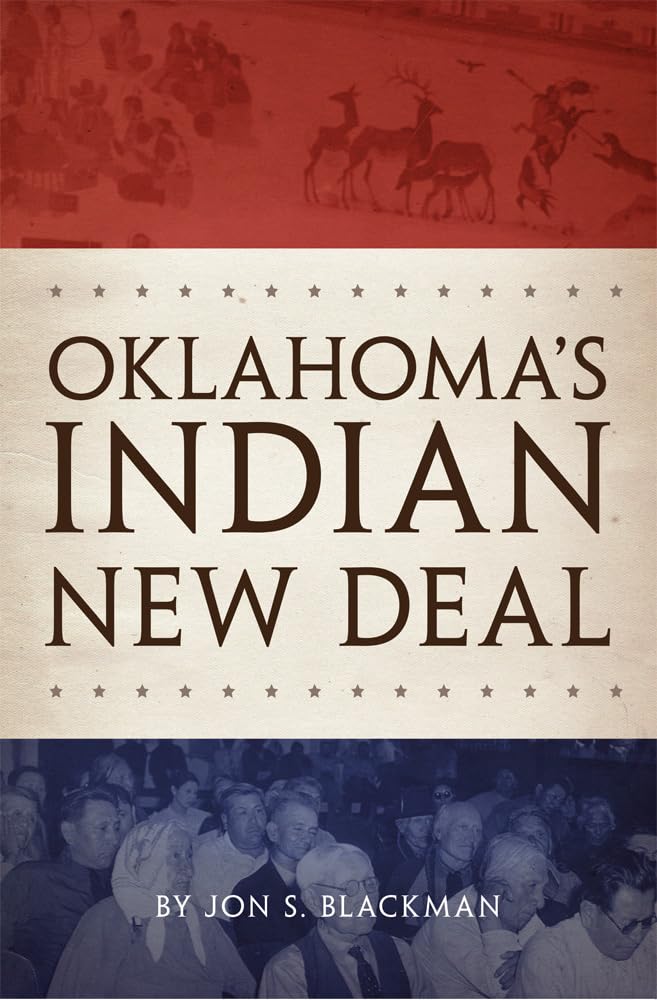
Title
Oklahoma'S Indian New Deal,Used
Sold by Ergodebooks, an authorized reseller.
Returns accepted within 30 days | support@ergodebooks.com
Shipping Information
- Free Standard Shipping — United States only
- Processing Time: 3–5 business days
- Estimated Delivery: 6–10 business days after dispatch
- Double-boxed, fully insured & discreetly packaged
- Tracking number sent via email once dispatched
Returns & Refund
Returns accepted within 30 days of delivery.
Damaged or Defective Item
Free return shipping + replacement or full refund
Wrong Item Received
Free return shipping + replacement or full refund
Change of Mind
Return shipping at customer's expense · 25% restocking fee applies
Payment Option

Among the New Deal programs that transformed American life in the 1930s was legislation known as the Indian New Deal, whose centerpiece was the Indian Reorganization Act (IRA) of 1934. Oddly, much of that law did not apply to Native residents of Oklahoma, even though a large percentage of the countrys Native American population resided there in the 1930s and no other state was home to so many different tribes. The Oklahoma Indian Welfare Act (OIWA), passed by Congress in 1936, brought Oklahoma Indians under all of the IRAs provisions, but included other measures that applied only to Oklahomas tribal population. This first booklength history of the OIWA explains the laws origins, enactment, implementation, and impact, and shows how the act played a unique role in the Indian New Deal.In the early decades of the twentieth century, white farmers, entrepreneurs, and lawyers used allotment policies and other legal means to gain control of thousands of acres of Indian land in Oklahoma. To counter the accumulated effects of this history, the OIWA specified how tribes could strengthen government by adopting new constitutions, and it enabled both tribes and individual Indians to obtain financial credit and land. Virulent opposition to the bill came from oil, timber, mining, farming, and ranching interests. Jon S. Blackmans narrative of the legislative battle reveals the roles of bureaucrats, politicians, and tribal members in drafting and enacting the law.Although the OIWA encouraged tribes to organize for political and economic purposes, it yielded mixed results. It did not produce a significant increase in Indian land ownership in Oklahoma, and only a small percentage of Indian households applied for OIWA loans. Yet the act increased member participation in tribal affairs, enhanced Indian relations with nonIndian businesses and government, promoted greater Indian influence in government programsand, as Blackman shows, became a springboard to the selfdetermination movements of the 1950s and 1960s.
⚠️ WARNING (California Proposition 65):
This product may contain chemicals known to the State of California to cause cancer, birth defects, or other reproductive harm.
For more information, please visit www.P65Warnings.ca.gov.