
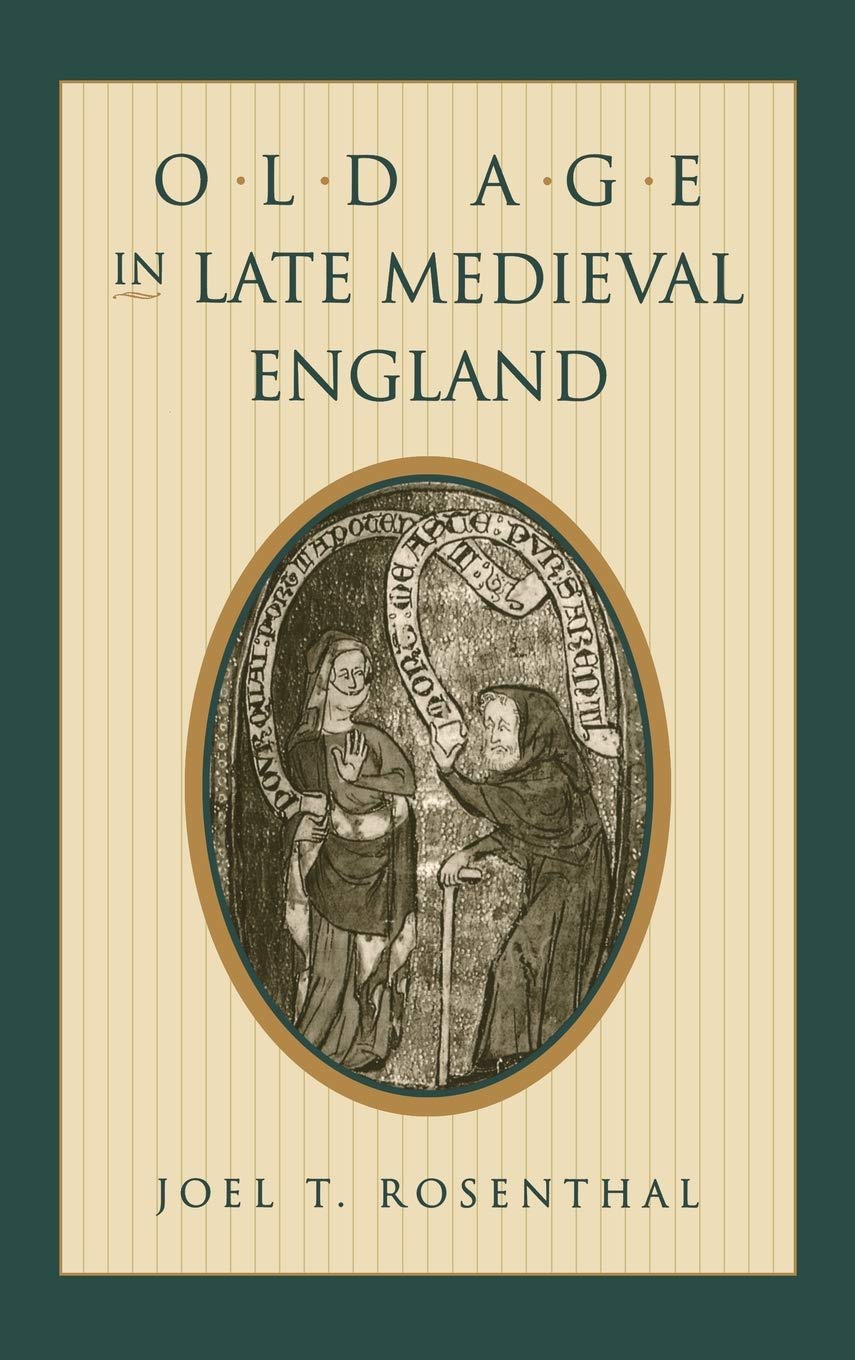
Title
Old Age In Late Medieval England (The Middle Ages Series),Used
Sold by Ergodebooks, an authorized reseller.
Returns accepted within 30 days | support@ergodebooks.com
Shipping Information
- Free Standard Shipping — United States only
- Processing Time: 3–5 business days
- Estimated Delivery: 6–10 business days after dispatch
- Double-boxed, fully insured & discreetly packaged
- Tracking number sent via email once dispatched
Returns & Refund
Returns accepted within 30 days of delivery.
Damaged or Defective Item
Free return shipping + replacement or full refund
Wrong Item Received
Free return shipping + replacement or full refund
Change of Mind
Return shipping at customer's expense · 25% restocking fee applies
Payment Option

In Old Age in Late Medieval England, Joel T. Rosenthal explores the life spans, sustained activities, behaviors, and mentalites of the individuals who approached and who passed the biblically stipulated span of three score and ten in late medieval England. Drawing on a wide variety of documentary and court records (which were, however, more likely to specify with precision an individual's age on reaching majority or inheriting property than on the occasion of his or her death) as well as literary and didactic texts, he examines 'old age' as a social construct and web of behavioral patterns woven around a biological phenomenon.Focusing on 'lived experience' in late medieval England, Rosenthal uses demographic and quantitative records, family histories, and biographical information to demonstrate that many people lived into their sixth, seventh, and occasionally eighth decades. Those who survived might well live to know their grandchildren. This view of a society composed of the aged as well as of the young and the middle aged is reinforced by an examination of peers, bishops, and members of parliament and urban office holders, for whom demographic and careerlength information exists. Many individuals had active careers until near the end of their lives; the aged were neither rarities nor outcasts within their world. Late medieval society recognized the concept of retirement, of old age pensions, and of the welcome release from duty for those who had served over the decades.
⚠️ WARNING (California Proposition 65):
This product may contain chemicals known to the State of California to cause cancer, birth defects, or other reproductive harm.
For more information, please visit www.P65Warnings.ca.gov.