If you have any questions, you are always welcome to contact us. We'll get back to you as soon as possible, withing 24 hours on weekdays.
Customer service
All questions about your order, return and delivery must be sent to our customer service team by e-mail at yourstore@yourdomain.com
Sale & Press
If you are interested in selling our products, need more information about our brand or wish to make a collaboration, please contact us at press@yourdomain.com
Help
If you have any questions, you are always welcome to contact us. We'll get back to you as soon as possible, withing 24 hours on weekdays.
Customer service
All questions about your order, return and delivery must be sent to our customer service team by e-mail at yourstore@yourdomain.com
Sale & Press
If you are interested in selling our products, need more information about our brand or wish to make a collaboration, please contact us at press@yourdomain.com
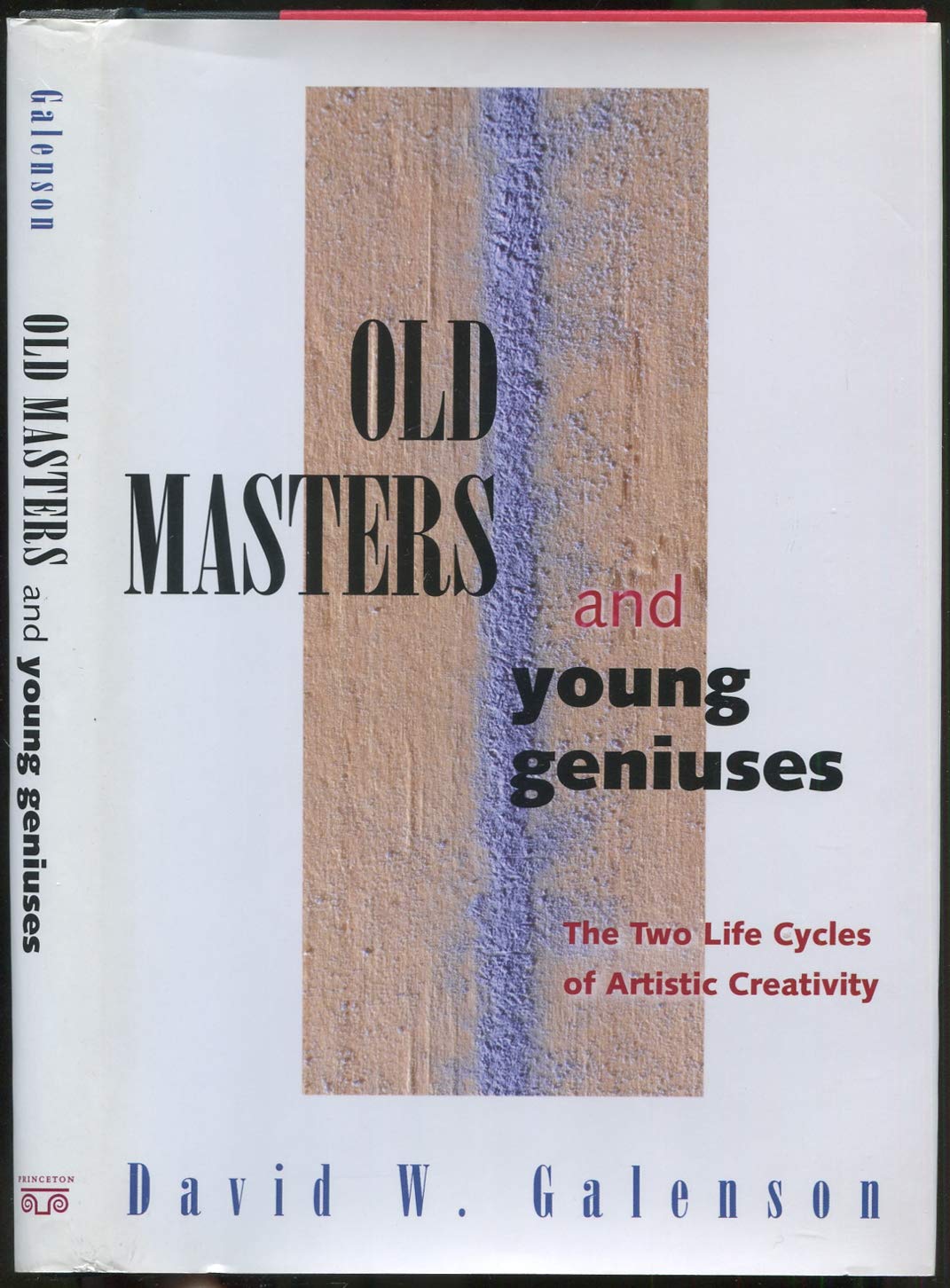
When in their lives do great artists produce their greatest art? Do they strive for creative perfection throughout decades of painstaking and frustrating experimentation, or do they achieve it confidently and decisively, through meticulous planning that yields masterpieces early in their lives?By examining the careers not only of great painters but also of important sculptors, poets, novelists, and movie directors, Old Masters and Young Geniuses offers a profound new understanding of artistic creativity. Using a wide range of evidence, David Galenson demonstrates that there are two fundamentally different approaches to innovation, and that each is associated with a distinct pattern of discovery over a lifetime.Experimental innovators work by trial and error, and arrive at their major contributions gradually, late in life. In contrast, conceptual innovators make sudden breakthroughs by formulating new ideas, usually at an early age. Galenson shows why such artists as Michelangelo, Rembrandt, Czanne, Jackson Pollock, Virginia Woolf, Robert Frost, and Alfred Hitchcock were experimental old masters, and why Vermeer, van Gogh, Picasso, Herman Melville, James Joyce, Sylvia Plath, and Orson Welles were conceptual young geniuses. He also explains how this changes our understanding of art and its past.Experimental innovators seek, and conceptual innovators find. By illuminating the differences between them, this pioneering book provides vivid new insights into the mysterious processes of human creativity.
⚠️ WARNING (California Proposition 65):
This product may contain chemicals known to the State of California to cause cancer,
birth defects, or other reproductive harm.
For MAP (Minimum Advertised Price) violations and Intellectual Property (IP) or Trademark concerns, please contact:
support@ergodebooks.com
⚠️ California Proposition 65 Warning: Some products sold on this website may expose you to chemicals known to the State of California to cause cancer, birth defects, or other reproductive harm. For more information, visit www.P65Warnings.ca.gov.