
Title
Old Taoist,Used
Sold by Ergodebooks, an authorized reseller.
Returns accepted within 30 days | support@ergodebooks.com
Shipping Information
- Free Standard Shipping — United States only
- Processing Time: 3–5 business days
- Estimated Delivery: 6–10 business days after dispatch
- Double-boxed, fully insured & discreetly packaged
- Tracking number sent via email once dispatched
Returns & Refund
Returns accepted within 30 days of delivery.
Damaged or Defective Item
Free return shipping + replacement or full refund
Wrong Item Received
Free return shipping + replacement or full refund
Change of Mind
Return shipping at customer's expense · 25% restocking fee applies
Payment Option

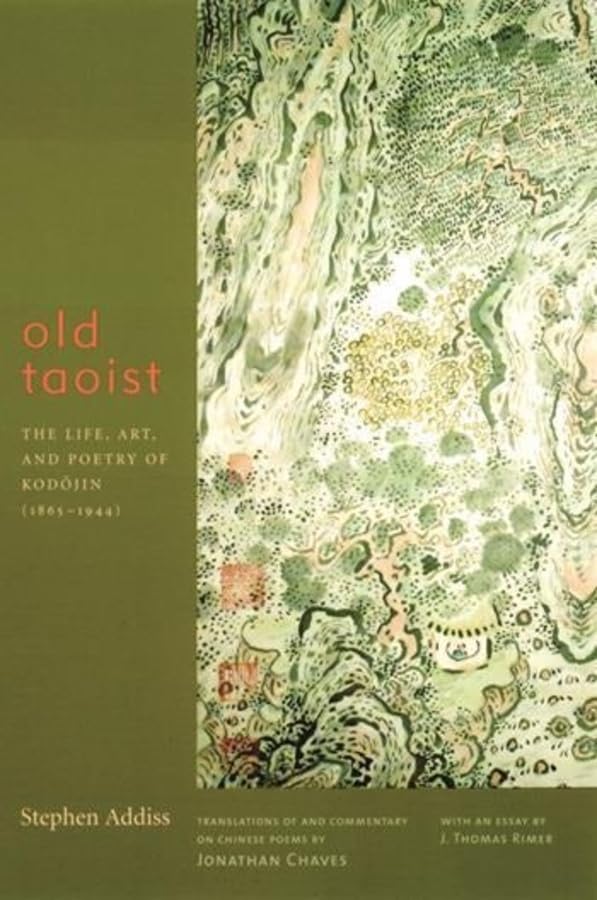
In The Literary And Artistic Milieu Of Early Modern Japan The Chinese And Japanese Arts Flourished Side By Side. Kodojin, The 'Old Taoist' (18651944), Was The Last Of These Great Poetpainters In Japan. Under The Support Of Various Patrons, He Composed A Number Of Taoistinfluenced Chinese And Japanese Poems And Did Lively And Delightful Ink Paintings, Continuing The Tradition Of The Poetsage Who Devotes Himself To Study Of The Ancients, Lives Quietly And Modestly, And Creates Art Primarily For Himself And His Friends.Portraying This Last Representative Of A Tradition Of Gentle And Refined Artistry In The Midst Of A Society That Valued Economic Growth And National Achievement Above All, This Beautifully Illustrated Book Brings Together 150 Of Kodojin'S Chinese Poems (Introduced And Translated By Jonathan Chaves), More Than 100 Of His Haiku And Tanka (Introduced And Translated By Stephen Addiss), And Many Examples Of His Calligraphy And Ink Paintings. Addiss'S Indepth Introduction Details The Importance Of The Poetpainter Tradition, Outlines The Life Of Kodojin, And Offers A Critical Appraisal Of His Work, While J. Thomas Rimer'S Essay Puts The Literary Work Of The Old Taoist In Context.
⚠️ WARNING (California Proposition 65):
This product may contain chemicals known to the State of California to cause cancer, birth defects, or other reproductive harm.
For more information, please visit www.P65Warnings.ca.gov.
- Q: What is the binding type of the book? A: The binding type of the book is paperback. This makes it lightweight and flexible for easy reading.
- Q: How many pages does 'Old Taoist' have? A: The book has two hundred eight pages. This length provides ample content to explore the life and works of Kodojin.
- Q: What are the dimensions of the book? A: The book measures six inches in length, zero point four three inches in width, and nine point zero two inches in height. These dimensions make it convenient for handling and storage.
- Q: Who is the author of 'Old Taoist'? A: The author of the book is Stephen Addiss. He provides translations and insights into Kodojin's work.
- Q: What is the main theme of 'Old Taoist'? A: The main theme is the intersection of Chinese and Japanese arts through the work of poet-painter Kodojin. It reflects on a tradition of gentle artistry amidst societal change.
- Q: How does the book portray Kodojin's art? A: The book showcases Kodojin's ink paintings and poetry, emphasizing his dedication to the poet-sage tradition. It highlights his unique artistic style.
- Q: Is 'Old Taoist' suitable for children? A: Yes, the content is suitable for a general audience. However, parental guidance may be beneficial due to the historical context.
- Q: What type of poetry is featured in the book? A: The book features Taoist-influenced Chinese poems, haiku, and tanka. These forms reflect the cultural and artistic traditions of the time.
- Q: Who translated the poems in 'Old Taoist'? A: The Chinese poems are translated by Jonathan Chaves, while the haiku and tanka are translated by Stephen Addiss. Their expertise enhances the reading experience.
- Q: What is the significance of the introduction by Addiss? A: Addiss's introduction provides context about the poet-painter tradition and details the life of Kodojin. It enriches the reader's understanding of the work.
- Q: What is the publisher of 'Old Taoist'? A: The book is published by Columbia University Press. This reputable publisher is known for academic and literary works.
- Q: Are there illustrations in 'Old Taoist'? A: Yes, the book includes many examples of Kodojin's ink paintings and calligraphy. These illustrations complement the text beautifully.
- Q: What genre does 'Old Taoist' fall under? A: The book falls under the genre of criticism. It critically examines the life and artistry of Kodojin.
- Q: How does this book contribute to understanding Japanese art? A: It provides insights into the last representative of the poet-painter tradition, showcasing the blending of Chinese and Japanese artistic influences.
- Q: What can readers expect from the essays in the book? A: Readers can expect a critical appraisal of Kodojin's work and essays that place his literary contributions in a broader context.
- Q: Is there any hazardous material in 'Old Taoist'? A: No, there are no hazardous materials in the book. It is a standard paperback publication.