
Title
On Being Normal and Other Disorders: A Manual for Clinical Psychodiagnostics,Used
Sold by Ergodebooks, an authorized reseller.
Returns accepted within 30 days | support@ergodebooks.com
Shipping Information
- Free Standard Shipping — United States only
- Processing Time: 3–5 business days
- Estimated Delivery: 6–10 business days after dispatch
- Double-boxed, fully insured & discreetly packaged
- Tracking number sent via email once dispatched
Returns & Refund
Returns accepted within 30 days of delivery.
Damaged or Defective Item
Free return shipping + replacement or full refund
Wrong Item Received
Free return shipping + replacement or full refund
Change of Mind
Return shipping at customer's expense · 25% restocking fee applies
Payment Option

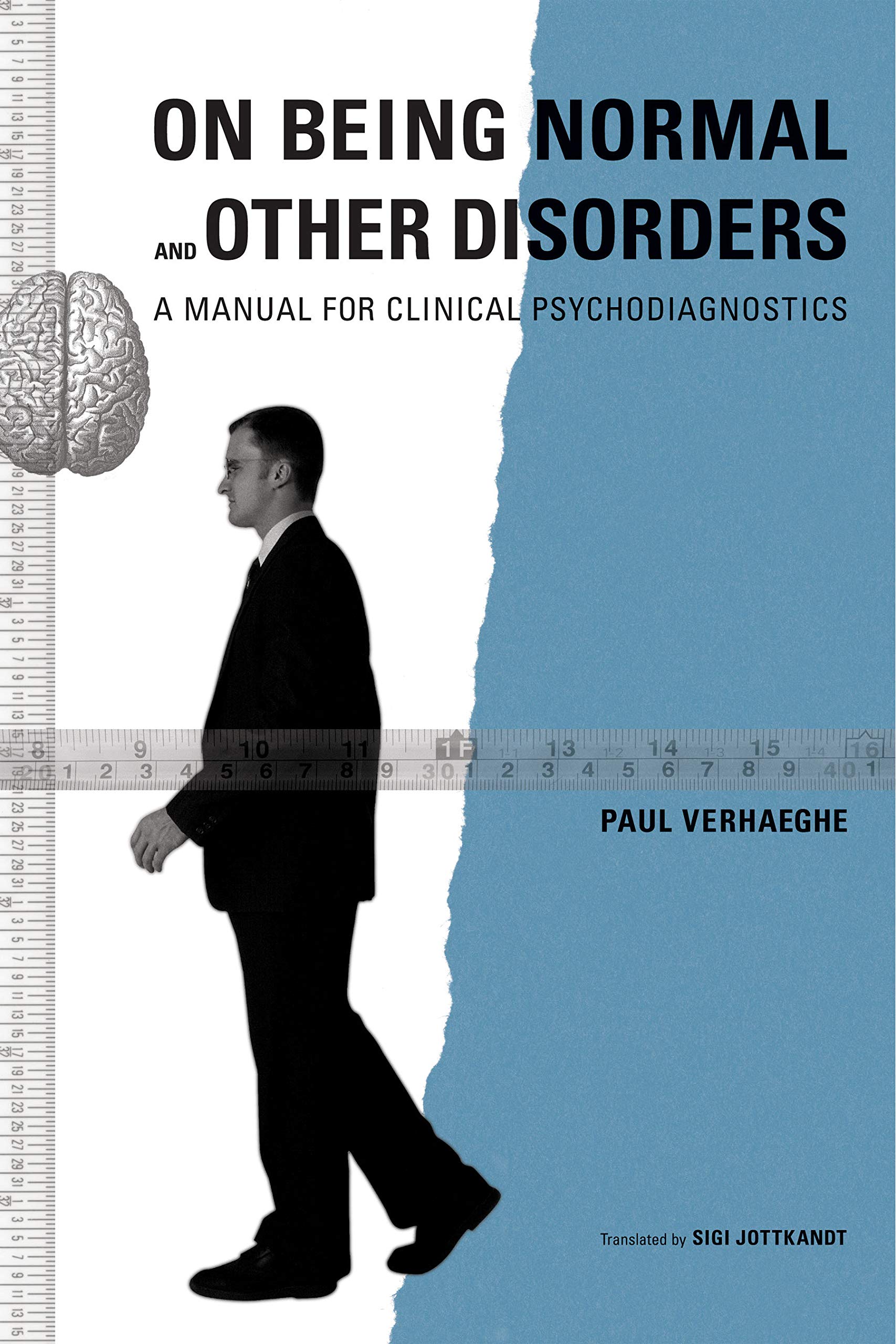
Winner of the 2005 Goethe Award in Psychoanalytic ScholarshipThe central argument of On Being Normal and Other Disorders is that psychic identity is acquired through one's primary intersubjective relationships. Thus, the diagnosis of potential pathologies must also be founded on this relation. Given that the efficacy of all forms of treatment depends upon the therapeutic relation, a diagnostic of this sort has wideranging applications.Paul Verhaeghe's critical evaluation of the contemporary DSMdiagnostic shows that the lack of reference to an updated governing metapsychology impinges on the therapeutic value of the DSM categories. In response to this problem, the author sketches out the foundations of such a metapsychology by combining a FreudoLacanian approach with contemporary empirical research. Close attention is paid to the processes of identity acquisition to show how the self and the Other are not two separate entities. Rather, subject formation is seen as a process in which both the subject's and the Other's identity, as well as the relationship between them, comes into being.By engaging this new theoretical approach in a constant dialogue with the findings of contemporary research, this book provides a compass for the practical applications of such a differential diagnostic. Postmodern categories of anxiety disorders, personality disorders, and posttraumatic stress disorders are approached both through the wellknown neurotic, psychotic, and perverse structures, as well as through the less familiar distinction between an actual pathology and a psychopathology. These two outlooks, which involve the role of language and the subject's relation to the Other, are spelled out to show their implications for treatment at every turn.
⚠️ WARNING (California Proposition 65):
This product may contain chemicals known to the State of California to cause cancer, birth defects, or other reproductive harm.
For more information, please visit www.P65Warnings.ca.gov.