
Title
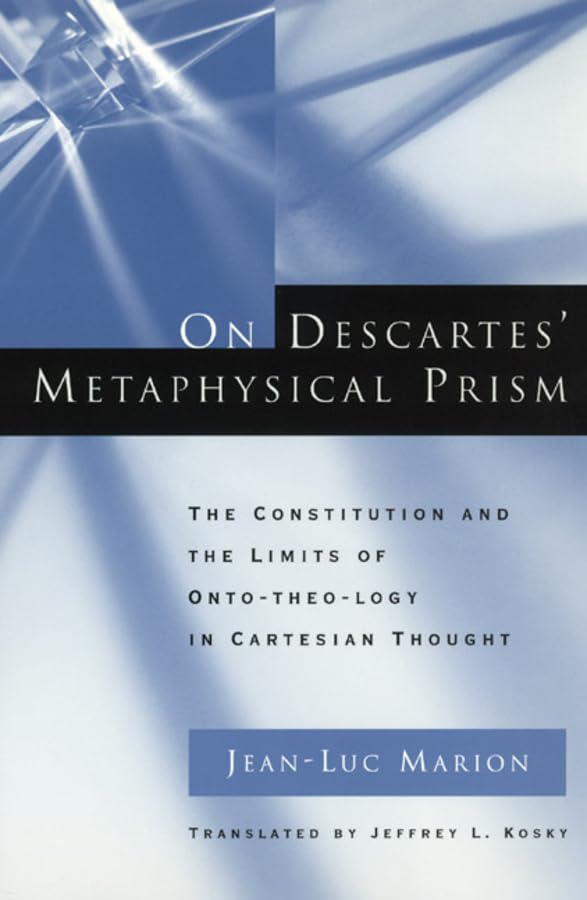
On Descartes' Metaphysical Prism: The Constitution And The Limits Of Ontotheology In Cartesian Thought,Used
Sold by Ergodebooks, an authorized reseller.
Returns accepted within 30 days | support@ergodebooks.com
Shipping Information
- Free Standard Shipping — United States only
- Processing Time: 3–5 business days
- Estimated Delivery: 6–10 business days after dispatch
- Double-boxed, fully insured & discreetly packaged
- Tracking number sent via email once dispatched
Returns & Refund
Returns accepted within 30 days of delivery.
Damaged or Defective Item
Free return shipping + replacement or full refund
Wrong Item Received
Free return shipping + replacement or full refund
Change of Mind
Return shipping at customer's expense · 25% restocking fee applies
Payment Option

Product Description Does Descartes belong to metaphysics? What do we mean when we say 'metaphysics'? These questions form the point of departure for JeanLuc Marion's groundbreaking study of Cartesian thought. Analyses of Descartes' notion of the ego and his idea of God show that if Descartes represents the fullest example of metaphysics, he no less transgresses its limits. Writing as philosopher and historian of philosophy, Marion uses Heidegger's concept of metaphysics to interpret the Cartesian corpusan interpretation strangely omitted from Heidegger's own history of philosophy. This interpretation complicates and deepens the Heideggerian concept of metaphysics, a concept that has dominated twentiethcentury philosophy. Examinations of Descartes' predecessors (Aristotle, Augustine, Aquinas, and Suarez) and his successors (Leibniz, Spinoza, and Hegel) clarify the meaning of the Cartesian revolution in philosophy. Expertly translated by Jeffrey Kosky, this work will appeal to historians of philosophy, students of religion, and anyone interested in the genealogy of contemporary thought and its contradictions. About the Author JeanLuc Marion, member of the Acadmie franaise,is emeritus professor of philosophy at the Universit ParisSorbonne (Paris IV). He is the Andrew Thomas Greeley and Grace McNichols Greeley Professor of Catholic Studies, professor of the philosophy of religions and theology, and professor in the Committee on Social Thought and the Department of Philosophy at the University of Chicago. He also holds the Dominique Dubarle chair at the Institut Catholique of Paris. In 2020 he was awarded the Ratzinger Prize for his lifetime achievements in theology.
⚠️ WARNING (California Proposition 65):
This product may contain chemicals known to the State of California to cause cancer, birth defects, or other reproductive harm.
For more information, please visit www.P65Warnings.ca.gov.