
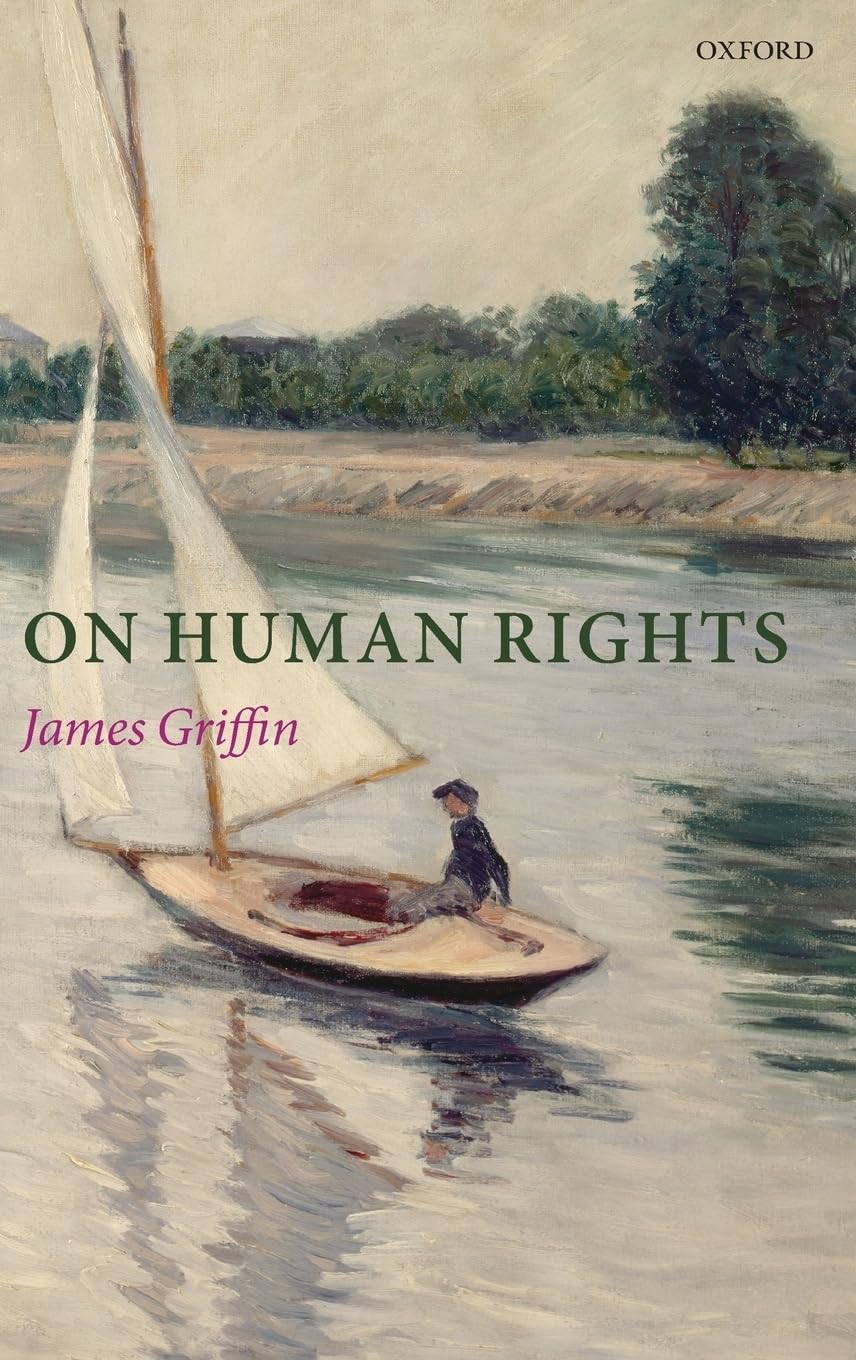
Title
On Human Rights
Sold by Ergodebooks, an authorized reseller.
Returns accepted within 30 days | support@ergodebooks.com
Shipping Information
- Free Standard Shipping — United States only
- Processing Time: 3–5 business days
- Estimated Delivery: 6–10 business days after dispatch
- Double-boxed, fully insured & discreetly packaged
- Tracking number sent via email once dispatched
Returns & Refund
Returns accepted within 30 days of delivery.
Damaged or Defective Item
Free return shipping + replacement or full refund
Wrong Item Received
Free return shipping + replacement or full refund
Change of Mind
Return shipping at customer's expense · 25% restocking fee applies
Payment Option

What Is A Human Right? How Can We Tell Whether A Proposed Human Right Really Is One? How Do We Establish The Content Of Particular Human Rights, And How Do We Resolve Conflicts Between Them? These Are Pressing Questions For Philosophers, Political Theorists, Jurisprudents, International Lawyers, And Activists. James Griffin Offers Answers In His Compelling New Investigation Of The Foundations Of Human Rights.First, On Human Rights Traces The Idea Of A Natural Right From Its Origin In The Late Middle Ages, When The Rights Were Seen As Deriving From Natural Laws, Through The Seventeenth And Eighteenth Centuries, When The Original Theological Background Was Progressively Dropped And 'Natural Law' Emptied Of Most Of Its Original Meaning. By The End Of The Enlightenment, The Term Human Rights (Droits De L'Homme) Appeared, Marking The Purge Of The Theological Background. But The Enlightenment, In Putting Nothing In Its Place, Left Us With An Unsatisfactory, Incomplete Idea Of A Human Right.Griffin Shows How The Language Of Human Rights Has Become Debased. There Are Scarcely Any Accepted Criteria, Either In The Academic Or The Public Sphere, For Correct Use Of The Term. He Takes On The Task Of Showing The Way Towards A Determinate Concept Of Human Rights, Based On Their Relation To The Human Status That We All Share. He Works From Certain Paradigm Cases, Such As Freedom Of Expression And Freedom Of Worship, To More Disputed Cases Such As Welfare Rightsfor Instance The Idea Of A Human Right To Health. His Goal Is A Substantive Account Of Human Rightsan Account With Enough Content To Tell Us Whether Proposed Rights Really Are Rights. Griffin Emphasizes The Practical As Well As Theoretical Urgency Of This Goal: As The United Nations Recognized In 1948 With Its Universal Declaration, The Idea Of Human Rights Has Considerable Power To Improve The Lot Of Humanity Around The World.We Can'T Do Without The Idea Of Human Rights, And We Need To Get Clear About It. It Is Our Job Nowthe Job Of This Bookto Influence And Develop The Unsettled Discourse Of Human Rights So As To Complete The Incomplete Idea.
⚠️ WARNING (California Proposition 65):
This product may contain chemicals known to the State of California to cause cancer, birth defects, or other reproductive harm.
For more information, please visit www.P65Warnings.ca.gov.
- Q: What is the page count of 'On Human Rights'? A: The book 'On Human Rights' has three hundred fifty-four pages. This length allows for an in-depth exploration of the topic.
- Q: What is the binding type of 'On Human Rights'? A: This book is available in hardcover binding. Hardcover books are known for their durability and long-lasting quality.
- Q: What are the dimensions of 'On Human Rights'? A: The dimensions of this book are nine point three inches in length, one inch in width, and six point three inches in height. These dimensions make it a suitable size for reading and shelf storage.
- Q: Who is the author of 'On Human Rights'? A: The author of 'On Human Rights' is James Griffin. He is recognized for his contributions to philosophy and human rights discourse.
- Q: What is the main theme of 'On Human Rights'? A: The main theme of the book is the exploration of the foundations of human rights. Griffin addresses various pressing questions about human rights and their implications.
- Q: Is 'On Human Rights' suitable for beginners? A: Yes, 'On Human Rights' is suitable for beginners. The author presents complex ideas in an accessible manner, making it understandable for a wide audience.
- Q: How can I apply the concepts from 'On Human Rights'? A: You can apply the concepts by engaging in discussions about human rights and advocating for them in your community. The book provides a framework for understanding and addressing human rights issues.
- Q: What age group is 'On Human Rights' appropriate for? A: The book is appropriate for adults and older teens. It addresses sophisticated philosophical questions that may require a mature understanding.
- Q: How should I care for my hardcover copy of 'On Human Rights'? A: To care for your hardcover copy, keep it in a dry place away from direct sunlight. Regularly dust the cover and avoid bending the pages.
- Q: Is 'On Human Rights' a safe book for young readers? A: No, 'On Human Rights' is not recommended for young readers. The content is complex and deals with mature themes surrounding human rights.
- Q: What if my copy of 'On Human Rights' arrives damaged? A: If your copy arrives damaged, contact the seller for a replacement. Most sellers have a return policy for damaged items.
- Q: Can I return 'On Human Rights' if I don't like it? A: Yes, you can return 'On Human Rights' if you don't like it, provided you follow the seller's return policy. Be sure to check the conditions for returns.
- Q: What is the significance of the Universal Declaration mentioned in 'On Human Rights'? A: The Universal Declaration is significant as it outlines fundamental human rights recognized globally. Griffin emphasizes its importance in improving humanity's condition.
- Q: How does Griffin address the language of human rights in the book? A: Griffin argues that the language of human rights has become debased. He seeks to clarify the concept and establish criteria for its correct use.
- Q: Does 'On Human Rights' include practical applications for human rights? A: Yes, the book includes discussions on practical applications of human rights, such as freedom of expression and welfare rights. Griffin emphasizes their relevance in today's society.