If you have any questions, you are always welcome to contact us. We'll get back to you as soon as possible, withing 24 hours on weekdays.
Customer service
All questions about your order, return and delivery must be sent to our customer service team by e-mail at yourstore@yourdomain.com
Sale & Press
If you are interested in selling our products, need more information about our brand or wish to make a collaboration, please contact us at press@yourdomain.com
Help
If you have any questions, you are always welcome to contact us. We'll get back to you as soon as possible, withing 24 hours on weekdays.
Customer service
All questions about your order, return and delivery must be sent to our customer service team by e-mail at yourstore@yourdomain.com
Sale & Press
If you are interested in selling our products, need more information about our brand or wish to make a collaboration, please contact us at press@yourdomain.com
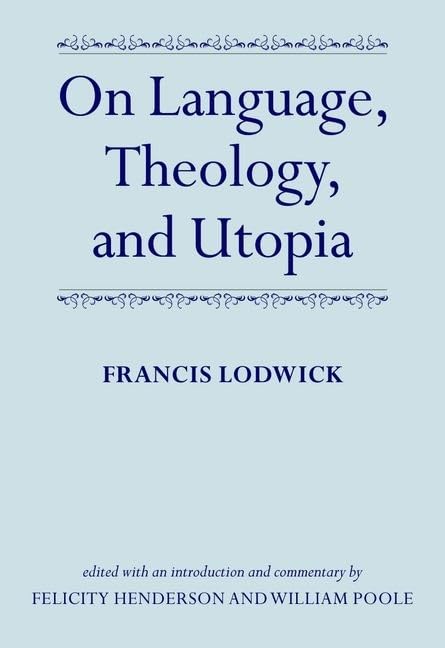
Francis Lodwick FRS (161994) was a prosperous merchant, bibliophile, writer, thinker, and member of the Royal Society. He wrote extensively on language, religion, and experimental philosophy, most of it too controversial to be safely published during his lifetime. This edition includes the first publication of his unorthodox religious works alongside groundbreaking writings on language.Following an extensive introduction by the editors the book is divided into three parts. Part One includes A Common Writing (1647), the first English attempt at an artificial language, and the equally pioneering phonetic alphabet set out in An Essay Towards an Universal Alphabet (1686). Part Two contains a series of linked short treatises on the nature of religion and divine revelation, including 'Of the Word of God' and 'Of the Use of Reason in Religion', in which Lodwick argues for a new understanding of the Bible, advocates a rational approach to divine worship, and seeks to reinterpret received religion for an age of reason. The final part of the book contains his unpublished utopian fiction, A Country Not Named: here he creates a world to express his most firmlyheld opinions on language and religion, and in which his utopians found a church that bans the Bible. The book gives new insights into the religious aspects of the scientific revolution and throws fresh light on the early modern frame of mind. It is aimed at intellectual and cultural historians, historians of science and linguistics, and literary scholars indeed, at all those interested in the interplay of ideas, language, and religion in seventeenthcentury England
⚠️ WARNING (California Proposition 65):
This product may contain chemicals known to the State of California to cause cancer,
birth defects, or other reproductive harm.
For MAP (Minimum Advertised Price) violations and Intellectual Property (IP) or Trademark concerns, please contact:
support@ergodebooks.com
⚠️ California Proposition 65 Warning: Some products sold on this website may expose you to chemicals known to the State of California to cause cancer, birth defects, or other reproductive harm. For more information, visit www.P65Warnings.ca.gov.