
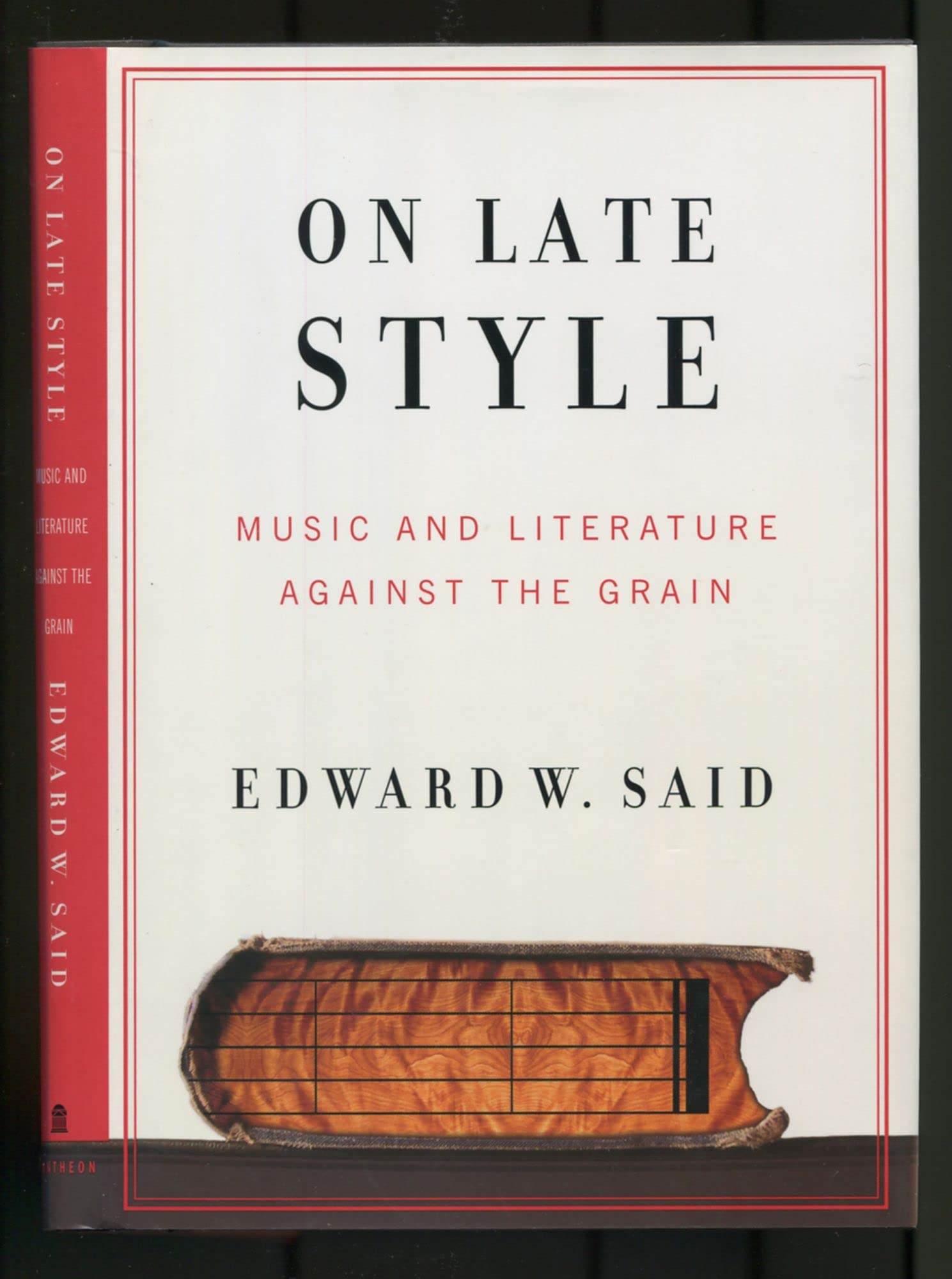
Title
On Late Style: Music And Literature Against The Grain,New
Sold by Ergodebooks, an authorized reseller.
Returns accepted within 30 days | support@ergodebooks.com
Shipping Information
- Free Standard Shipping — United States only
- Processing Time: 3–5 business days
- Estimated Delivery: 6–10 business days after dispatch
- Double-boxed, fully insured & discreetly packaged
- Tracking number sent via email once dispatched
Returns & Refund
Returns accepted within 30 days of delivery.
Damaged or Defective Item
Free return shipping + replacement or full refund
Wrong Item Received
Free return shipping + replacement or full refund
Change of Mind
Return shipping at customer's expense · 25% restocking fee applies
Payment Option

In His Fascinating Last Book, Edward Said Looks At A Selection Of Essays, Poems, Novels, Films, And Operas To Determine What Late Style May Explain About The Evolution Of The Creative Life. He Discusses How The Approaching Death Of An Artist Can Make Its Way ?Ith Anachronism And Anomaly?Into His Work, As Was The Case In The Late Work Of Thomas Mann, Richard Strauss, Jean Genet, Giuseppe Tomasi Di Lampedusa, And C. P. Cavafy. Said Examines Beethoven? Missa Solemnis, Genet? Le Captif Amoureux And Les Paravents, Mozart? Cos?Fan Tutte, Visconti? Film Of Lampedusa? The Leopard, Euripides?The Bacchae And Iphigenia At Aulis, And Thomas Mann? Death In Venice, Among Other Works.He Points Out That One Can Also Find An ?Nearthly Serenity,?In Last Works, For Example, In Sophocles, Shakespeare, Rembrandt, Matisse, Bach, And Wagner, Which, As Said Puts It, ?Rown A Lifetime Of Aesthetic Endeavor.?But In On Late Style He Concentrates On Artistic Lateness As ?Ntransigence, Difficulty, And Unresolved Contradiction.?He Also Writes About Theodor Adorno And About Glenn Gould, Who Chose To Stop Performing, Thereby Creating His Own Form Of Lateness. Said Makes Clear That Most Of The Works Discussed Are Rife With Deep Conflict And An Almost Impenetrable Complexity. In Fact, He Feels That Lateness Is Often ? Form Of Exile.?These Works Frequently Stood In Direct Contrast To What Was Popular At The Time, But They Were Forerunners Of What Was To Come In Each Artist? Particular Disciplineworks Of True Genius.Eloquent And Impassioned, Brilliantly Reasoned And Revelatory, On Late Style Is Edward Said? Own Great Last Work.
⚠️ WARNING (California Proposition 65):
This product may contain chemicals known to the State of California to cause cancer, birth defects, or other reproductive harm.
For more information, please visit www.P65Warnings.ca.gov.
- Q: How many pages does the book have? A: The book has two hundred eight pages. This length provides a comprehensive exploration of the themes discussed by Edward Said.
- Q: What is the binding type of this book? A: This book is hardcover bound. The hardcover format ensures durability and a premium feel for readers.
- Q: What are the dimensions of the book? A: The book measures five point ninety-four inches in length, zero point eighty-four inches in width, and eight point fifty-four inches in height. These dimensions make it easy to handle and store.
- Q: What themes does the book cover? A: The book explores themes of late style in art and literature. It discusses how the proximity of death influences creative expression in various works.
- Q: Who is the author of this book? A: The author of the book is Edward W. Said. He is a renowned literary critic and cultural theorist known for his influential works.
- Q: Is this book suitable for all age groups? A: No, this book is better suited for adults and older teens. The complex themes and discussions require a mature understanding.
- Q: How should I care for this hardcover book? A: To care for this book, keep it in a dry place and avoid exposing it to direct sunlight. Regularly dust the cover to maintain its appearance.
- Q: Can I store this book on a bookshelf? A: Yes, you can store this book on a bookshelf. Ensure it is placed upright to prevent damage to the spine and pages.
- Q: What if the book arrives damaged? A: If the book arrives damaged, you should contact the seller for a return or replacement. Most sellers have policies in place for such issues.
- Q: Does this book include illustrations or images? A: No, this book does not include illustrations or images. It focuses on textual analysis and literary criticism.
- Q: Is the book part of a series? A: No, this book is not part of a series. It stands alone as a significant work by Edward Said.
- Q: What genres does this book belong to? A: This book belongs to the genres of History and Criticism. It critically examines artistic works and their evolution.
- Q: Is there a specific reading level for this book? A: Yes, this book is intended for a college or advanced reading level. It requires familiarity with literary concepts.
- Q: What if I need further assistance with the book? A: If you need further assistance, check the publisher's website for resources or contact customer support for more detailed inquiries.
- Q: Are there any notable works discussed in the book? A: Yes, notable works discussed include Beethoven's Missa Solemnis and Thomas Mann's Death in Venice. These examples illustrate the themes of late style.