
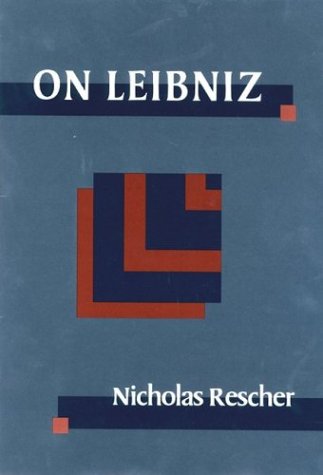
Title
On Leibniz,New
Sold by Ergodebooks, an authorized reseller.
Returns accepted within 30 days | support@ergodebooks.com
Shipping Information
- Free Standard Shipping — United States only
- Processing Time: 3–5 business days
- Estimated Delivery: 6–10 business days after dispatch
- Double-boxed, fully insured & discreetly packaged
- Tracking number sent via email once dispatched
Returns & Refund
Returns accepted within 30 days of delivery.
Damaged or Defective Item
Free return shipping + replacement or full refund
Wrong Item Received
Free return shipping + replacement or full refund
Change of Mind
Return shipping at customer's expense · 25% restocking fee applies
Payment Option

Gottfried Wilhelm Leibniz (16461716) possessed one of history's great minds. The German philosopher, mathematician, and logician invented (independently of Sir Isaac Newton) calculus. His metaphysics bequeathed a set of problems and approaches that drove the course of Western philosophy, from Kant's eighteenth century until the present day.For over fifty years, the study of Leibniz has been a consistent passion for distinguished philosopher Nicholas Rescher. On Leibniz offers eleven of his essays, written with signature clarity, exploring the aspects of Leibniz's work and life that still resonate in the discipline of philosophy.Rescher's essays are snapshots of Leibniz, lucidly drawn case studies that explain the fundamentals of his ontology: the theory of possible worlds, the world's contingency, spacetime frameworks, and intermonadic relationships.Several illuminating pieces reveal Leibniz as a substantial contributor to theories of knowledge. Discussions of his epistemology and methodology, its relationship to John Maynard Keynes and Talmudic scholarship, broaden the traditional view of Leibniz as a uniquely metaphysical thinker.Rescher also explores, in four absorbing biographical essays, Leibniz's scholarly development and professional career in historical context. As a 'philosopher courtier' to the Hanoverian court, Leibniz was associated with the leading intellectuals and politicians of his era, including Spinoza, Huygens, Newton, Queen Sophie Charlotte, and Czar Peter the Great.A concluding essay holds up Leibniz's mode of philosophy as a role model for today's scholars. Rescher argues that many current problems can be effectively addressed with principles of process philosophy along lines inspired by Leibniz's monadology. On Leibniz is essential reading for students of Leibniz and Rescher alike.
⚠️ WARNING (California Proposition 65):
This product may contain chemicals known to the State of California to cause cancer, birth defects, or other reproductive harm.
For more information, please visit www.P65Warnings.ca.gov.