
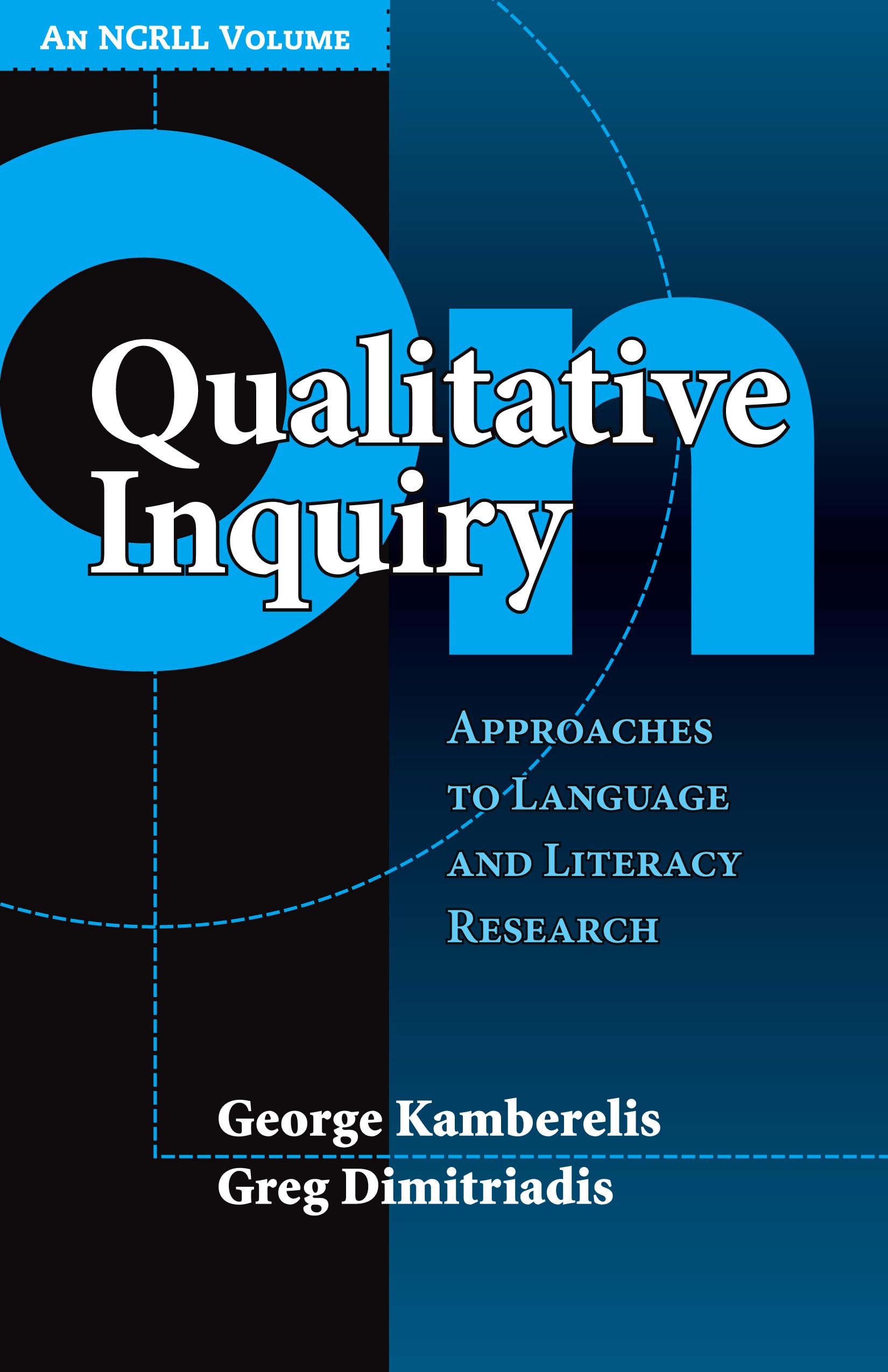
Title
On Qualitative Inquiry: Approaches To Language And Literacy Research (An Ncrll Volume) (Ncrll Collection)
Sold by Ergodebooks, an authorized reseller.
Returns accepted within 30 days | support@ergodebooks.com
Shipping Information
- Free Standard Shipping — United States only
- Processing Time: 3–5 business days
- Estimated Delivery: 6–10 business days after dispatch
- Double-boxed, fully insured & discreetly packaged
- Tracking number sent via email once dispatched
Returns & Refund
Returns accepted within 30 days of delivery.
Damaged or Defective Item
Free return shipping + replacement or full refund
Wrong Item Received
Free return shipping + replacement or full refund
Change of Mind
Return shipping at customer's expense · 25% restocking fee applies
Payment Option

In This Seminal Work, The Authors Provide The First Systematic Exploration Of The Philosophical Foundations And The Historical Development Of Qualitative Inquiry. Thorough Yet Accessible, This Volume Is An Indispensable Tool For Language And Literacy Researchersnovices And Experts Alike.Using A Genealogical Approach, The Authors: Discuss Key Philosophical Concepts And Traditions Central To Various Theories, Approaches, And Strategies Of Qualitative Inquiry. Offer A Broad Introduction To Prominent Theorists And Researchers Who Contributed To The Emergence And Proliferation Of Qualitative Inquiry As A Strategic Force Within Educational Research, Including Dell Hymes, Shirley Brice Heath, Courtney Cazden, Ruth Behar, Norman Denzin, And Patti Lather. Provide Annotations Of Both Classic And Contemporary Studies Of Language And Literacy Practice That Represent Major Approaches To Qualitative Inquiry. Argue That Qualitative Inquiry Has Become A Transdisciplinary Metadiscourse That Now Drives Research Across Many Disciplines.
⚠️ WARNING (California Proposition 65):
This product may contain chemicals known to the State of California to cause cancer, birth defects, or other reproductive harm.
For more information, please visit www.P65Warnings.ca.gov.
- Q: What is the page count of this book? A: This book has one hundred ninety-two pages. It covers various aspects of qualitative inquiry in language and literacy research.
- Q: What is the binding type of this book? A: This book is a paperback edition. This makes it lightweight and easy to handle for readers.
- Q: Who is the author of this book? A: The author of this book is George Kamberelis. He provides insights into qualitative research methodologies.
- Q: What are the dimensions of this book? A: The dimensions of this book are five point five one inches by eight point five inches. It is a standard size for academic texts.
- Q: What category does this book belong to? A: This book belongs to the linguistics category. It focuses on language and literacy research methodologies.
- Q: How can I use this book for my research? A: You can use this book as a foundational text for qualitative inquiry. It offers insights and frameworks for both novice and experienced researchers.
- Q: Is this book suitable for beginners in qualitative research? A: Yes, this book is suitable for beginners. It provides accessible discussions on key philosophical concepts and methodologies.
- Q: What type of readers will benefit from this book? A: Both novices and experts in language and literacy research will benefit from this book. It serves as a comprehensive guide to qualitative inquiry.
- Q: How should I care for this book? A: You should keep this book in a dry place and avoid exposing it to direct sunlight. This will help preserve its condition over time.
- Q: Can I lend this book to someone else? A: Yes, you can lend this book to others. Just ensure it is returned in good condition to maintain its usability.
- Q: Is there a warranty or return policy for this book? A: Typically, there is no warranty for books. However, check the return policy where you purchased it for specific details.
- Q: What if the book arrives damaged? A: If the book arrives damaged, you should contact the seller immediately. They may offer a replacement or refund based on their policy.
- Q: Are there any recommended supplementary texts? A: Yes, you may consider texts by Dell Hymes or Norman Denzin for deeper insights. These authors are influential in qualitative research.
- Q: How does this book compare to others in qualitative research? A: This book is distinct for its genealogical approach to qualitative inquiry. It offers a comprehensive overview compared to other texts.
- Q: What key themes are covered in this book? A: Key themes include philosophical foundations and historical developments in qualitative inquiry. It discusses major theorists and their contributions.
- Q: Is this book appropriate for academic use? A: Yes, this book is appropriate for academic use. It serves as a reference for researchers and students in educational fields.