
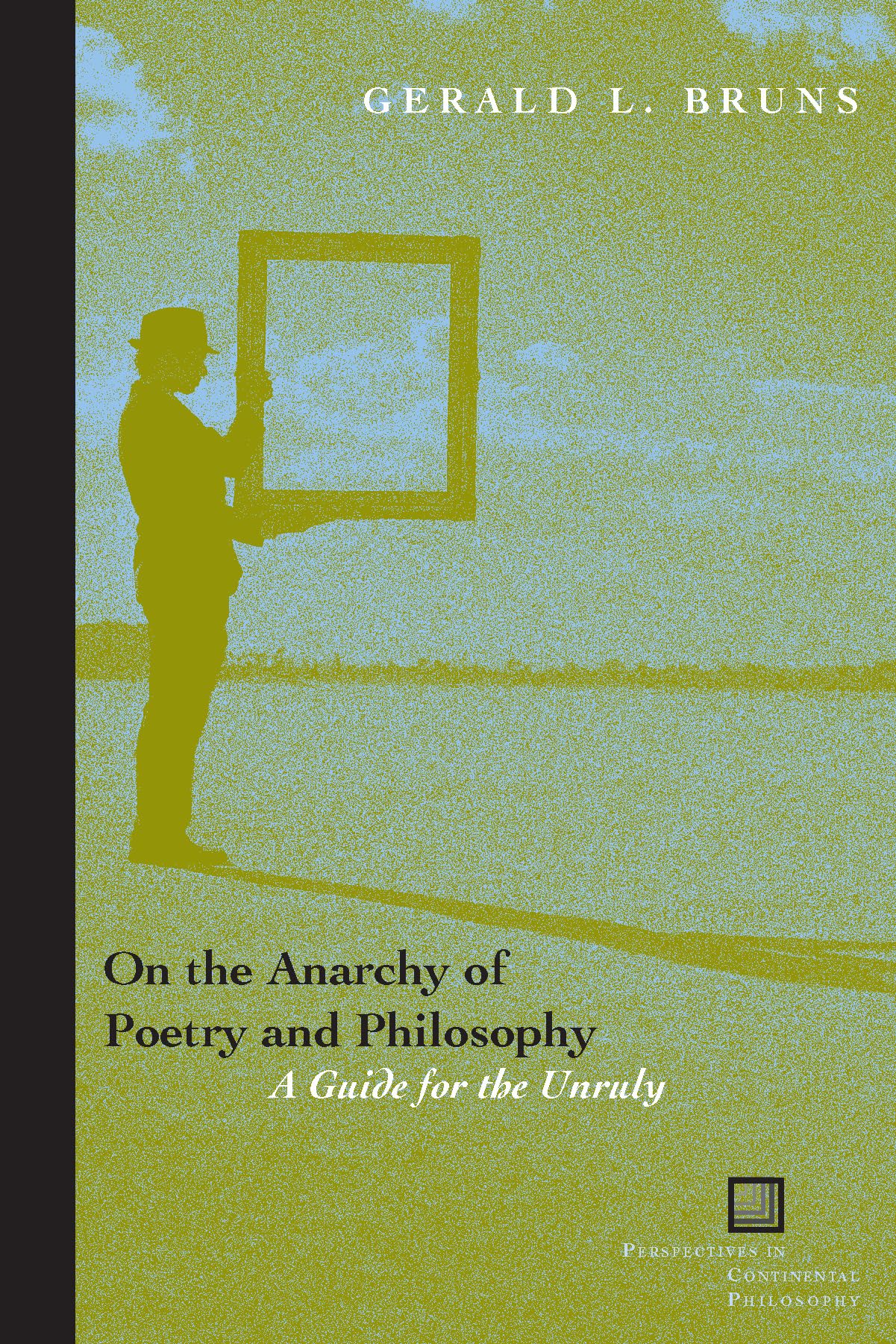
Title
On The Anarchy Of Poetry And Philosophy: A Guide For The Unruly (Perspectives In Continental Philosophy),Used
Sold by Ergodebooks, an authorized reseller.
Returns accepted within 30 days | support@ergodebooks.com
Shipping Information
- Free Standard Shipping — United States only
- Processing Time: 3–5 business days
- Estimated Delivery: 6–10 business days after dispatch
- Double-boxed, fully insured & discreetly packaged
- Tracking number sent via email once dispatched
Returns & Refund
Returns accepted within 30 days of delivery.
Damaged or Defective Item
Free return shipping + replacement or full refund
Wrong Item Received
Free return shipping + replacement or full refund
Change of Mind
Return shipping at customer's expense · 25% restocking fee applies
Payment Option

Marcel Duchamp once asked whether it is possible to make something that is not a work of art. This question returns over and over in modernist culture, where there are no longer any authoritative criteria for what can be identified (or excluded) as a work of art. As William Carlos Williams says, A poem can be made of anything, even newspaper clippings.At this point, art turns into philosophy, all art is now conceptual art, and the manifesto becomes the distinctive genre of modernism. This book takes seriously this transformation of art into philosophy, focusing upon the systematic interest that so many European philosophers take in modernism. Among the philosophers Gerald Bruns discusses are Theodor W. Adorno, Maurice Blanchot, Arthur Danto, Stanley Cavell, HansGeorg Gadamer, Michel Foucault, Gilles Deleuze and Felix Guattari, Jacques Derrida, JeanFranois Lyotard, JeanLuc Nancy, Philippe LacoueLabarthe, and Emmanuel Levinas.As Bruns demonstrates, the difficulty of much modern and contemporary poetry can be summarized in the idea that a poem is made of words, not of any of the things that we use words to produce: meanings, concepts, propositions, narratives, or expressions of feeling. Many modernist poets have argued that in poetry language is no longer a form of mediation but a reality to be explored and experienced in its own right. But what sort of experience, philosophically, might this be? The problem of the materiality or hermetic character of poetic language inevitably leads to questions of how philosophy itself is to be written and what sort of communitydefines the work of artor, for that matter, the work of philosophy.In this provocative study, Bruns answers that the culture of modernism is a kind of anarchist community, where the work of art is apt to be as much an event or experienceor, indeed, an alternative form of lifeas a formal object. In modern writing, philosophy and poetry fold into one another. In this book, Bruns helps us to see how.
⚠️ WARNING (California Proposition 65):
This product may contain chemicals known to the State of California to cause cancer, birth defects, or other reproductive harm.
For more information, please visit www.P65Warnings.ca.gov.
- Q: How many pages does this book have? A: This book has two hundred seventy-four pages. It provides an in-depth exploration of modernist culture and philosophy.
- Q: What is the binding type of this book? A: The binding type is paperback. This makes it lightweight and easy to handle.
- Q: What are the dimensions of this book? A: The dimensions are eight point nine inches in length, five point nine one inches in height, and zero point eight inches in width. This size is portable and easy to fit in a bag.
- Q: Who is the author of this book? A: The author is Gerald L. Bruns. He is known for his insights into modernism and its philosophical implications.
- Q: What genre does this book belong to? A: This book belongs to the Criticism and Theory genre. It explores the intersection of poetry and philosophy.
- Q: Is this book suitable for beginners in philosophy? A: Yes, this book is suitable for beginners. It presents complex ideas in an accessible manner without assuming prior knowledge.
- Q: What themes are explored in this book? A: This book explores themes of modernism, the nature of art, and the relationship between poetry and philosophy. It challenges traditional notions of artistic value.
- Q: Can this book be used as a textbook for a philosophy course? A: Yes, this book can be used as a textbook for a philosophy course. It provides valuable insights and discussions relevant to modern philosophical inquiries.
- Q: How should I care for this paperback book? A: To care for this paperback book, keep it away from moisture and direct sunlight. Store it upright on a shelf to prevent bending.
- Q: What should I do if the book arrives damaged? A: If the book arrives damaged, contact the retailer for a return or exchange. Most retailers have policies in place for damaged items.
- Q: Is there a warranty for this book? A: No, there is no warranty for this book. However, most sellers offer a return policy for unsatisfactory conditions.
- Q: What if I lose my place in the book? A: If you lose your place, simply use a bookmark or a piece of paper to mark your spot. The book does not include a built-in bookmark.
- Q: Are there any safety concerns with this book? A: No, there are no safety concerns with this book. It contains no hazardous materials or content.
- Q: Is this book appropriate for young readers? A: This book is more suitable for adult and mature readers due to its complex themes and discussions. It may not be appropriate for younger audiences.
- Q: How does this book compare to other modernist literature? A: This book offers a unique perspective by merging poetry and philosophy, unlike many other modernist literature that may focus solely on artistic expression.