If you have any questions, you are always welcome to contact us. We'll get back to you as soon as possible, withing 24 hours on weekdays.
Customer service
All questions about your order, return and delivery must be sent to our customer service team by e-mail at yourstore@yourdomain.com
Sale & Press
If you are interested in selling our products, need more information about our brand or wish to make a collaboration, please contact us at press@yourdomain.com
Help
If you have any questions, you are always welcome to contact us. We'll get back to you as soon as possible, withing 24 hours on weekdays.
Customer service
All questions about your order, return and delivery must be sent to our customer service team by e-mail at yourstore@yourdomain.com
Sale & Press
If you are interested in selling our products, need more information about our brand or wish to make a collaboration, please contact us at press@yourdomain.com
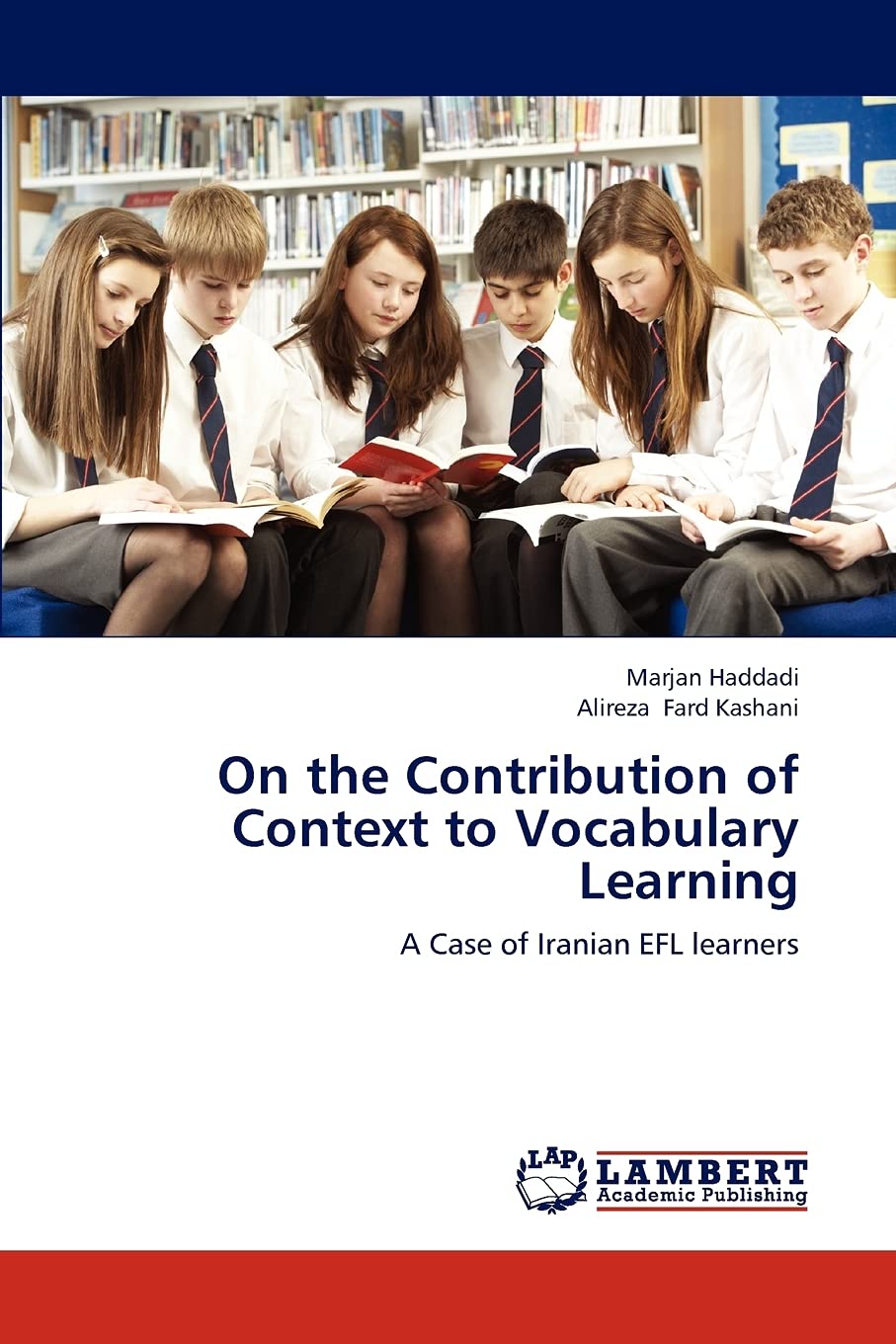
Educational researches in the field of vocabulary acquisition emphasize different instructional trends to expand language learners vocabulary knowledge; in this line, a great number of researches along the two major modes have been conducted: acquisition through direct instruction of vocabulary, and incidental vocabulary acquisition through exposure to context. Although the effectiveness of direct instruction has been supported, the sheer size of the vocabulary learning task makes it apparent that direct instruction alone cannot be responsible for all of the words acquired by native speakers or even by nonnative speakers (Walters, 2004); therefore, deriving meaning of the word from the context can be a powerful contributor to vocabulary acquisition. In order to highlight the issue, this book enjoying a comparative nature, not only does touch the possible efficiency of two groups of contextual clues (i.e. synonyms/antonyms, and collocations) in general, but also compares the possible superiority of using a certain contextual clue on the performance of EFL learners vocabulary acquisition.
⚠️ WARNING (California Proposition 65):
This product may contain chemicals known to the State of California to cause cancer,
birth defects, or other reproductive harm.
For MAP (Minimum Advertised Price) violations and Intellectual Property (IP) or Trademark concerns, please contact:
support@ergodebooks.com
⚠️ California Proposition 65 Warning: Some products sold on this website may expose you to chemicals known to the State of California to cause cancer, birth defects, or other reproductive harm. For more information, visit www.P65Warnings.ca.gov.