
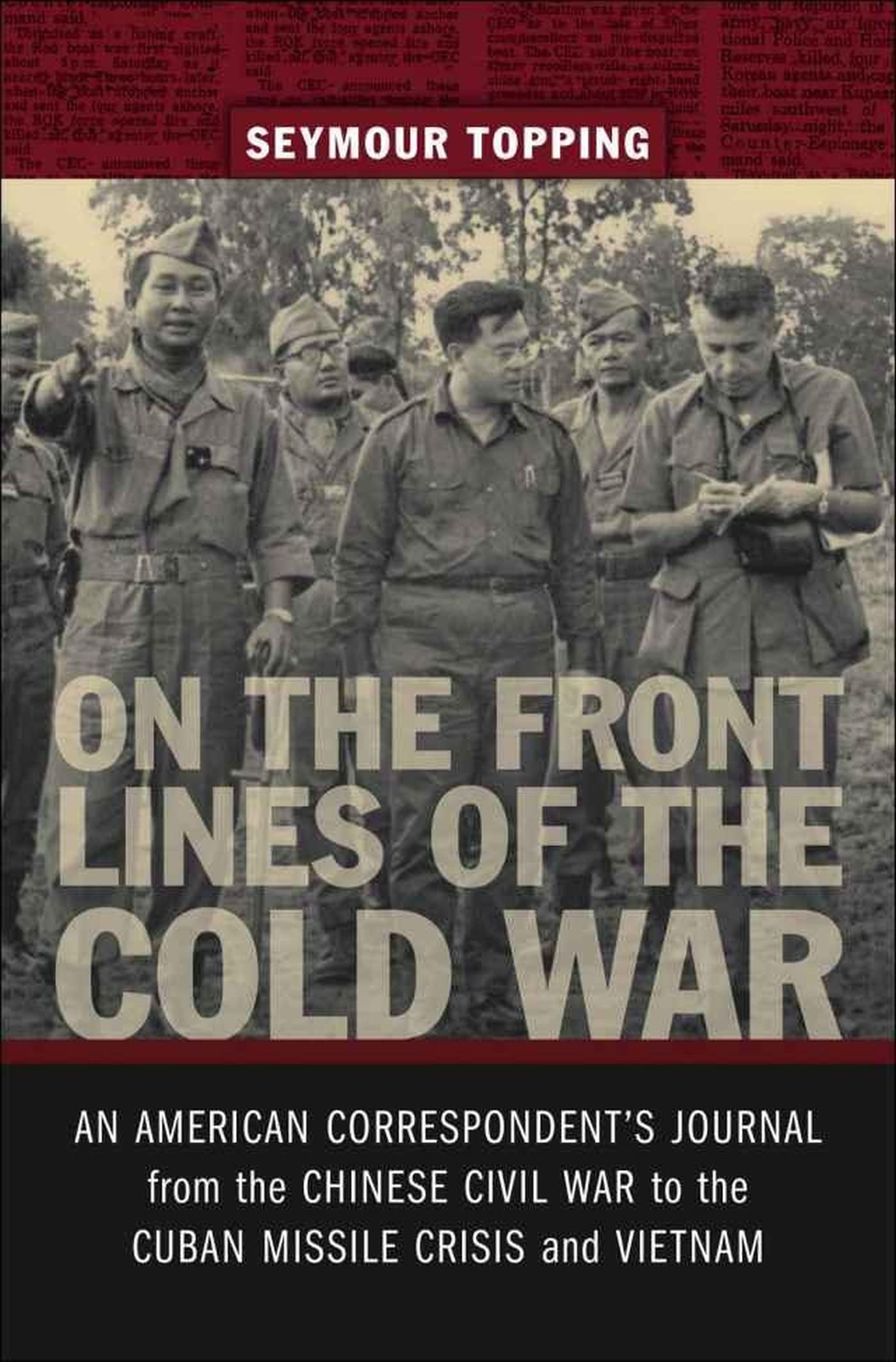
Title
On The Front Lines Of The Cold War: An American Correspondent'S Journal From The Chinese Civil War To The Cuban Missile Crisis A
Sold by Ergodebooks, an authorized reseller.
Returns accepted within 30 days | support@ergodebooks.com
Shipping Information
- Free Standard Shipping — United States only
- Processing Time: 3–5 business days
- Estimated Delivery: 6–10 business days after dispatch
- Double-boxed, fully insured & discreetly packaged
- Tracking number sent via email once dispatched
Returns & Refund
Returns accepted within 30 days of delivery.
Damaged or Defective Item
Free return shipping + replacement or full refund
Wrong Item Received
Free return shipping + replacement or full refund
Change of Mind
Return shipping at customer's expense · 25% restocking fee applies
Payment Option

In The Years Following World War Ii, The United States Suffered Its Most Severe Military And Diplomatic Reverses In Asia While Mao Zedong Laid The Foundation For The Emergence Of China As A Major Economic And Military World Power. As A Correspondent For The International News Service, The Associated Press, And Later For The New York Times, Seymour Topping Documented On The Ground The Tumultuous Events During The Chinese Civil War, The French Indochina War, And The American Retreat From Vietnam, Cambodia, And Laos. In This Riveting Narrative, Topping Chronicles His Extraordinary Experiences Covering The Eastwest Struggle In Asia And Eastern Europe From 1946 Into The 1980S, Taking Us Beyond Conventional Historical Accounts To Provide A Fresh, Firsthand Perspective On American Triumphs And Defeats During The Cold War Era.At The Close Of World War Ii, Toppingwho Had Served As An Infantry Officer In The Pacificreported For The International News Service From Beijing And Maos Yenan Stronghold Before Joining The Associated Press In Nanking, Chiang Kaisheks Capital. He Covered The Chinese Civil War For The Next Three Years, Often Interviewing Nationalist And Communist Commanders In Combat Zones. Crossing Nationalist Lines, Topping Was Captured By Communist Guerrillas And Tramped For Days Over Battlefields To Reach The Peoples Liberation Army As It Advanced On Nanking. The Sole Correspondent On The Battlefield During The Decisive Battle Of The Huaihai, Which Sealed Maos Victory, Topping Later Scored A Worldwide Exclusive As The First Journalist To Report The Fall Of The Capital.In 1950, Topping Opened The Associated Press Bureau In Saigon, Becoming The First American Correspondent In Vietnam. In 1951, John F. Kennedy, Then A Young Congressman On A Factfinding Visit To Saigon, Sought Out Topping For A Briefing. Assignments In London And West Berlin Followed, Then Moscow And Hong Kong For The New York Times. During Those Years Topping Reported On The Chinese Intervention In The Korean Conflict, Maos Cultural Revolution And Its Preceding Internal Power Struggle, The Chinese Leaders Monumental Ideological Split With Nikita Khrushchev, The French Indochina War, Americas Vietnam War, And The Genocides In Cambodia And Indonesia. He Stood In The Kremlin With A Vodkatilting Khrushchev On The Night The Cuban Missile Crisis Ended And Interviewed Fidel Castro In Havana On Its Aftermath.Throughout This Captivating Chronicle, Topping Also Relates The Story Of His Marriage To Audrey Ronning, A Worldrenowned Photojournalist And Writer And Daughter Of The Canadian Ambassador To China. As The Couple Traveled From Post To Post Reporting On Some Of The Biggest Stories Of The Century In Asia And Eastern Europe, They Raised Five Daughters. In An Epilogue, Topping Cites Lessons To Be Learned From The Asia Wars Which Could Serve As Useful Guides For American Policymakers In Dealing With Presentday Conflicts In Afghanistan And Iraq.From China To Indochina, Burma To Korea And Beyond, Topping Did More Than Report The News; He Became Involved In International Diplomacy, Enabling Him To Gain Extraordinary Insights. In On The Front Lines Of The Cold War, Topping Shares These Insights, Providing An Invaluable Eyewitness Account Of Some Of The Pivotal Moments In Modern History.
⚠️ WARNING (California Proposition 65):
This product may contain chemicals known to the State of California to cause cancer, birth defects, or other reproductive harm.
For more information, please visit www.P65Warnings.ca.gov.
- Q: How many pages does the book have? A: The book has four hundred eighty-eight pages. This length provides an in-depth exploration of the Cold War era through the author's experiences.
- Q: What is the binding type of this book? A: This book is bound in hardcover. Hardcover bindings are known for their durability and elegant presentation, making them ideal for collectors.
- Q: What are the dimensions of the book? A: The book measures six point one two inches in length, one point one inches in width, and nine point two five inches in height. These dimensions make it a manageable size for reading.
- Q: Who is the author of the book? A: The author is Seymour Topping. He was a prominent correspondent who reported on significant historical events during the Cold War.
- Q: What is the genre of this book? A: The book falls under the category of Asian and Asian American history. It provides a historical narrative focused on the Cold War and its impacts.
- Q: How do I read this book effectively? A: To read this book effectively, consider setting aside dedicated time to engage with the content. The author's narrative style invites deep reflection on historical events.
- Q: Is this book suitable for young readers? A: No, this book is not specifically aimed at young readers. It covers complex historical themes that may be more suitable for adults or mature teens.
- Q: What themes are explored in this book? A: The book explores themes of war, diplomacy, and personal experiences during the Cold War. It offers insights into the geopolitical dynamics of the time.
- Q: How should I store this hardcover book? A: Store this hardcover book upright on a shelf in a cool, dry place. This helps prevent damage to the spine and pages.
- Q: Are there any safety concerns with this book? A: No, there are no specific safety concerns associated with this book. It is a historical narrative intended for adult readers.
- Q: What if my book arrives damaged? A: If your book arrives damaged, you should contact the seller for a return or exchange. Most sellers have policies in place to handle damaged items.
- Q: Can I return the book if I don't like it? A: Yes, you can typically return the book if it is within the seller’s return policy timeframe. Check the specific return policy of the retailer.
- Q: Is this book a good choice for someone interested in history? A: Yes, this book is an excellent choice for history enthusiasts. It provides unique insights into pivotal moments of the Cold War era.
- Q: How do I keep this book in good condition? A: To keep this book in good condition, avoid exposing it to direct sunlight and handle it with clean hands to prevent dirt and oil transfer.
- Q: What can I learn from this book? A: You can learn about the complexities of the Cold War and the author's personal experiences as a journalist during crucial historical events.
- Q: Does this book include personal anecdotes? A: Yes, the book includes personal anecdotes from Seymour Topping’s experiences as a correspondent. These stories provide a unique perspective on historical events.