
Title
On the Great Plains: Agriculture and Environment (Volume 20) (Environmental History Series),Used
Sold by Ergodebooks, an authorized reseller.
Returns accepted within 30 days | support@ergodebooks.com
Shipping Information
- Free Standard Shipping — United States only
- Processing Time: 3–5 business days
- Estimated Delivery: 6–10 business days after dispatch
- Double-boxed, fully insured & discreetly packaged
- Tracking number sent via email once dispatched
Returns & Refund
Returns accepted within 30 days of delivery.
Damaged or Defective Item
Free return shipping + replacement or full refund
Wrong Item Received
Free return shipping + replacement or full refund
Change of Mind
Return shipping at customer's expense · 25% restocking fee applies
Payment Option

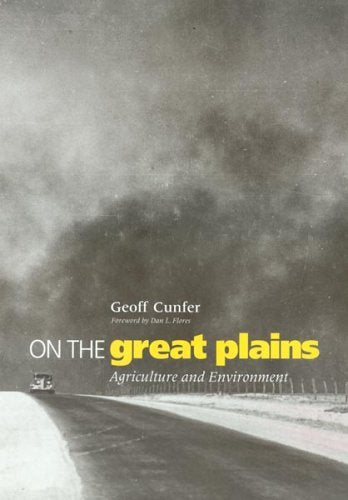
Depending on who is telling it, the history of EuroAmerican farmers on the Great Plains has been a story of either agricultural triumph or ecological failurean optimistic tale of taming nature for human purposes or a dire account of disrupting nature and suffering the environmental consequences. In both stories, human beings dominate the narrative, whether as subduers or as destroyers of the natural processes that define this grassland ecosystem.In On the Great Plains, author Geoff Cunfer poses an alternative scenario: that people were not the masters of nature on the Great Plains. Land use in Americas vast interior prairies has stayed remarkably stable throughout the twentieth century, changing little as droughts came and went, as farmers shifted from horses to tractors, and as federal subsidies and fluctuating crop prices transformed the economics of farming. An equilibrium between natural and human forces emerged as farmers plowed and planted the same amount of cropland during most of this period, maintaining two thirds of the Great Plains in unplowed, native vegetation. Even the Dust Bowl of the 1930s was a temporary disruption in a stable system that may be considered sustainable.To support his theory, Cunfer looks at the entire Great Plains (450 counties in ten states), tapping historical agricultural census data paired with GIS mapping to illuminate land use on the Great Plains over 130 years. Coupled with several community and family case studies, this database allows Cunfer to track plowing and grazing practices, crop choices, technological advances, nutrient systems, and weather, soil, and drought conditions to reassess the interaction between farmers and nature in the Great Plains agricultural landscape.Combining the readability of evocative local history with the explanatory power of systematic regional analysis, On the Great Plains makes a compelling argument for those interested in wester, environmental, and agricultural history, grassland management, and the geography and demography of the Great Plains.
⚠️ WARNING (California Proposition 65):
This product may contain chemicals known to the State of California to cause cancer, birth defects, or other reproductive harm.
For more information, please visit www.P65Warnings.ca.gov.