If you have any questions, you are always welcome to contact us. We'll get back to you as soon as possible, withing 24 hours on weekdays.
Customer service
All questions about your order, return and delivery must be sent to our customer service team by e-mail at yourstore@yourdomain.com
Sale & Press
If you are interested in selling our products, need more information about our brand or wish to make a collaboration, please contact us at press@yourdomain.com
Help
If you have any questions, you are always welcome to contact us. We'll get back to you as soon as possible, withing 24 hours on weekdays.
Customer service
All questions about your order, return and delivery must be sent to our customer service team by e-mail at yourstore@yourdomain.com
Sale & Press
If you are interested in selling our products, need more information about our brand or wish to make a collaboration, please contact us at press@yourdomain.com
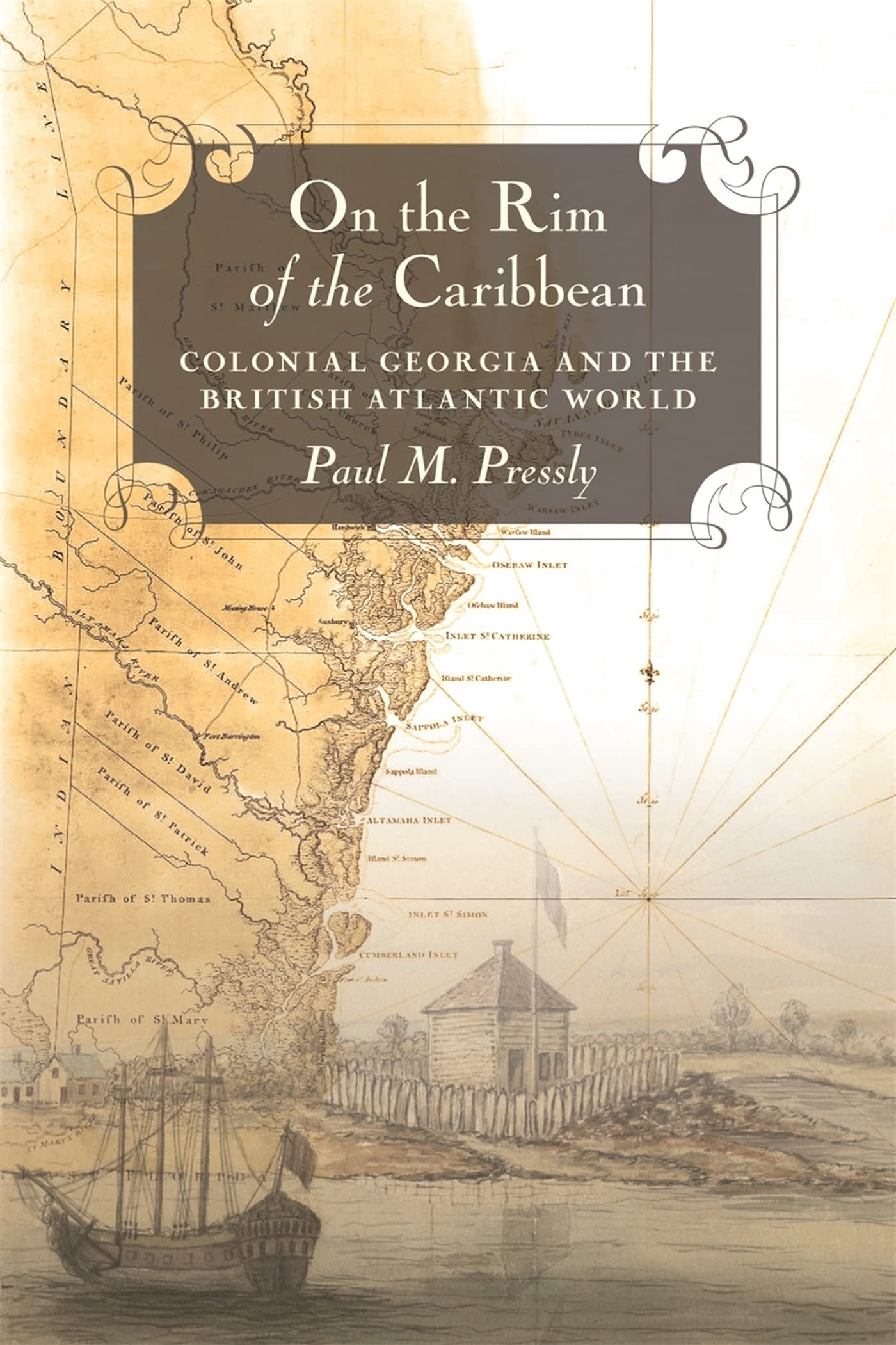
How did colonial Georgia, an economic backwater in its early days, make its way into the burgeoning Caribbean and Atlantic economies where trade spilled over national boundaries, merchants operated in multiple markets, and the transport of enslaved Africans bound together four continents?In On the Rim of the Caribbean, Paul M. Pressly interprets Georgia's place in the Atlantic world in light of recent work in transnational and economic history. He considers how a tiny elite of newly arrived merchants, adapting to local culture but loyal to a larger vision of the British empire, led the colony into overseas trade. From this perspective, Pressly examines the ways in which Georgia came to share many of the characteristics of the sugar islands, how Savannah developed as a 'Caribbean' town, the dynamics of an emerging slave market, and the role of merchantplanters as leaders in forging a highly adaptive economic culture open to innovation. The colony's rapid growth holds a larger story: how a frontier where Carolinians played so large a role earned its own distinctive character.Georgia's slowness in responding to the revolutionary movement, Pressly maintains, had a larger context. During the colonial era, the lowcountry remained oriented to the West Indies and Atlantic and failed to develop close ties to the North American mainland as had South Carolina. He suggests that the American Revolution initiated the process of bringing the lowcountry into the orbit of the mainland, a process that would extend well beyond the Revolution.
⚠️ WARNING (California Proposition 65):
This product may contain chemicals known to the State of California to cause cancer,
birth defects, or other reproductive harm.
For MAP (Minimum Advertised Price) violations and Intellectual Property (IP) or Trademark concerns, please contact:
support@ergodebooks.com
⚠️ California Proposition 65 Warning: Some products sold on this website may expose you to chemicals known to the State of California to cause cancer, birth defects, or other reproductive harm. For more information, visit www.P65Warnings.ca.gov.