
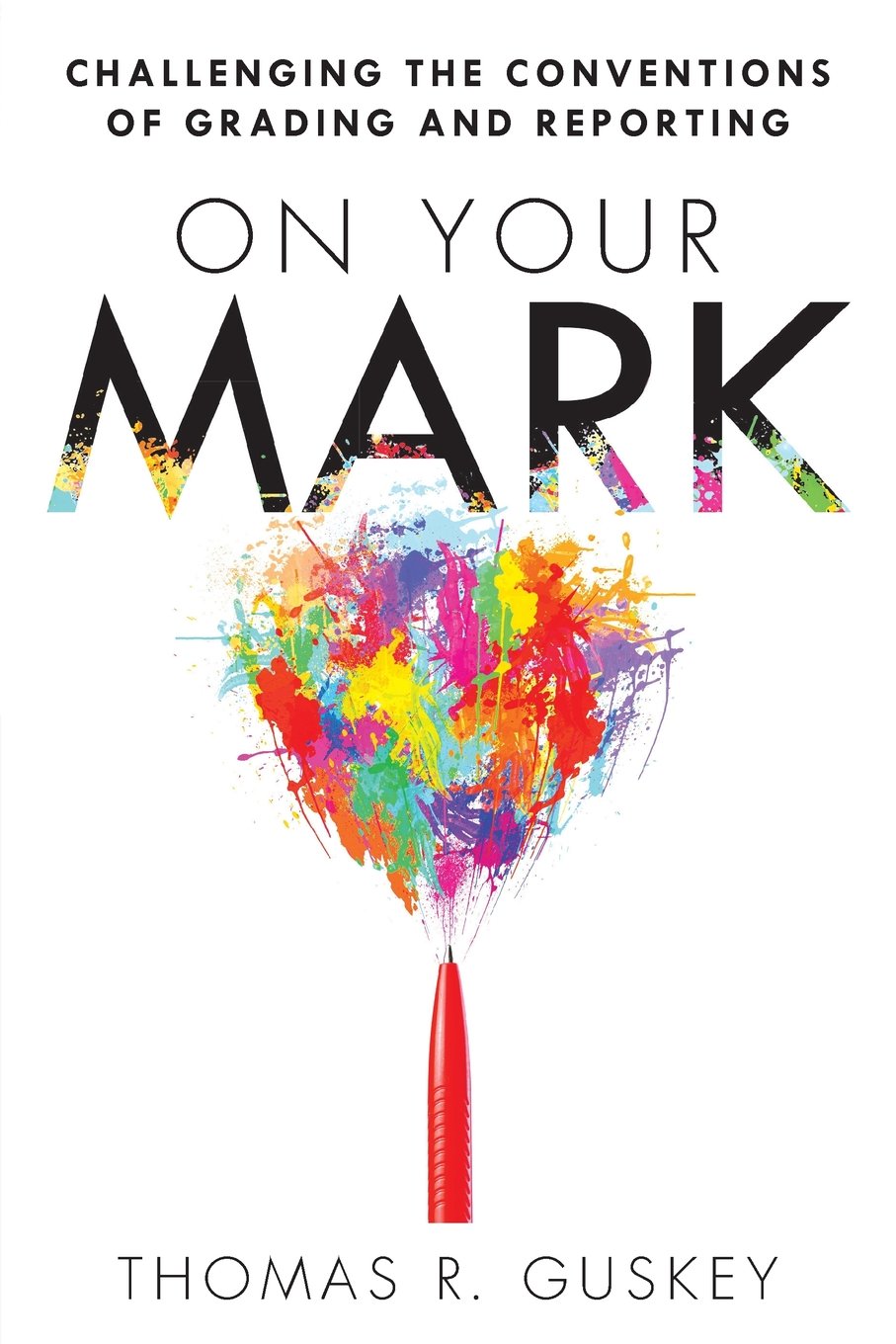
Title
On Your Mark: Challenging The Conventions Of Grading And Reporting (A Book For K12 Assessment Policies And Practices) (Essentia,New
Sold by Ergodebooks, an authorized reseller.
Returns accepted within 30 days | support@ergodebooks.com
Shipping Information
- Free Standard Shipping — United States only
- Processing Time: 3–5 business days
- Estimated Delivery: 6–10 business days after dispatch
- Double-boxed, fully insured & discreetly packaged
- Tracking number sent via email once dispatched
Returns & Refund
Returns accepted within 30 days of delivery.
Damaged or Defective Item
Free return shipping + replacement or full refund
Wrong Item Received
Free return shipping + replacement or full refund
Change of Mind
Return shipping at customer's expense · 25% restocking fee applies
Payment Option

Create And Sustain A Learning Environment Where Students Thrive And Stakeholders Are Accurately Informed Of Student Progress. Clarify The Purpose Of Grades, Craft A Vision Statement Aligned With This Purpose, And Discover Researchbased Strategies To Implement Effective Grading And Reporting Practices. Identify Policies And Practices That Render Grading Inaccurate, And Understand The Role Grades Play In Students' Future Success And Opportunities.K12 Teachers And Administrators Will: Question Traditional Grading And Reporting Practices, And Seek More Accurate Practices. Identify The Purpose Of Grading, And Ensure School And Classroom Visions, Practices, And Policies Support It. Implement Researchbased Grading And Reporting Practices That Promote Accurate, Useful Accounts Of Student Learning. Understand Why Traditional Practices, Such As Grading On The Curve And Offering Plus Or Minus Grades, Don'T Fully Report Student Academic Performance. Examine Grading And Reporting Policies, And Make Sure They Support Students, Parents, And Other Stakeholders.Contents:Chapter 1: Define The Purpose Of Gradeschapter 2: Challenge The Use Of Percentage Gradeschapter 3: Challenge Plus And Minus And Halfgrade Incrementschapter 4: Challenge Bellshaped Grade Distributionschapter 5: Challenge The Computation Of Class Rankchapter 6: Challenge The Use Of A Single Gradechapter 7: Challenge The Use Of Mathematical Algorithmschapter 8: Challenge Practices That Confound The Meaning Of Gradesfinal Thoughts
⚠️ WARNING (California Proposition 65):
This product may contain chemicals known to the State of California to cause cancer, birth defects, or other reproductive harm.
For more information, please visit www.P65Warnings.ca.gov.
- Q: What is the page count of this book? A: This book has one hundred forty-four pages. It offers a comprehensive look at K-12 assessment policies and practices.
- Q: What are the dimensions of the book? A: The book measures six point twenty-five inches in length, zero point fifty-one inches in width, and nine point twenty-five inches in height.
- Q: What type of binding does this book have? A: This book is available in paperback binding. This makes it flexible and easier to handle for reading.
- Q: Who is the author of this book? A: The author of this book is Thomas R. Guskey. He is recognized for his expertise in K-12 assessment.
- Q: What is the main subject of the book? A: The main subject of the book is the challenges of grading and reporting in K-12 education. It focuses on improving assessment practices.
- Q: How can educators use this book? A: Educators can use this book to implement effective grading practices. It provides research-based strategies for better assessment.
- Q: Is this book suitable for all educators? A: Yes, this book is suitable for K-12 teachers and administrators. It addresses common grading issues applicable to various educational settings.
- Q: What kind of grading practices does the book challenge? A: The book challenges traditional grading practices like percentage grades and grading on a curve. It promotes more accurate methods of reporting student progress.
- Q: Does this book provide practical strategies? A: Yes, it provides practical strategies for clarifying the purpose of grades and implementing effective policies. Educators will find actionable insights throughout.
- Q: What topics are covered in the book's chapters? A: The chapters cover topics such as the purpose of grades, grading algorithms, and the impact of mathematical practices on grading accuracy.
- Q: Is there a vision statement included in the book? A: Yes, the book encourages educators to craft a vision statement aligned with the purpose of grades. This helps guide assessment practices.
- Q: How can this book inform stakeholders? A: This book informs stakeholders about student progress. It ensures that grading practices support transparency and accuracy in education.
- Q: What final thoughts does the author share? A: The author shares final thoughts on the importance of questioning traditional grading practices. He emphasizes the need for change in K-12 education.
- Q: Does the book address the impact of grading on student futures? A: Yes, the book discusses how inaccurate grading can affect students' futures and opportunities. It highlights the importance of fair and accurate assessment.
- Q: What is the target audience for this book? A: The target audience for this book includes K-12 educators and administrators. It is designed for those involved in assessment policies and practices.
- Q: Can this book help with policy development? A: Yes, it can assist in developing more effective grading policies. Educators will gain insights into creating practices that truly reflect student learning.