
Title
One Nation Under Surveillance: A New Social Contract to Defend Freedom Without Sacrificing Liberty,Used
Sold by Ergodebooks, an authorized reseller.
Returns accepted within 30 days | support@ergodebooks.com
Shipping Information
- Free Standard Shipping — United States only
- Processing Time: 3–5 business days
- Estimated Delivery: 6–10 business days after dispatch
- Double-boxed, fully insured & discreetly packaged
- Tracking number sent via email once dispatched
Returns & Refund
Returns accepted within 30 days of delivery.
Damaged or Defective Item
Free return shipping + replacement or full refund
Wrong Item Received
Free return shipping + replacement or full refund
Change of Mind
Return shipping at customer's expense · 25% restocking fee applies
Payment Option

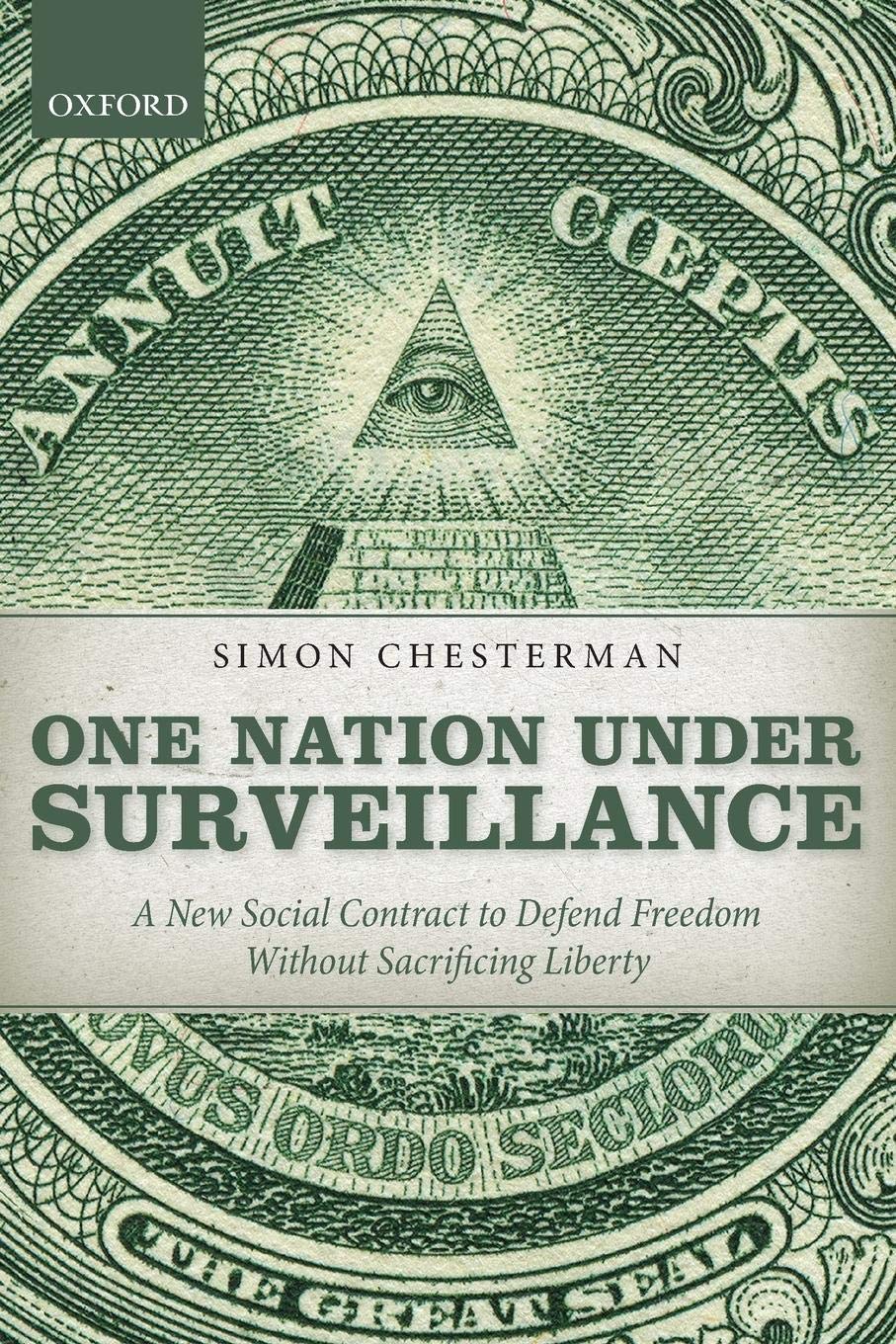
What limits, if any, should be placed on a government's efforts to spy on its citizens in the interests of national security? Spying on foreigners has long been regarded as an unseemly but necessary enterprise. Spying on one's own citizens in a democracy, by contrast, has historically been subject to various forms of legal and political restraint. For most of the twentieth century these regimes were kept distinct. That position is no longer tenable. Modern threats do not respect national borders. Changes in technology make it impractical to distinguish between 'foreign' and 'local' communications. And our culture is progressively reducing the sphere of activity that citizens can reasonably expect to be kept from government eyes.The main casualty of this transformed environment will be privacy. Recent battles over privacy have been dominated by fights over warrantless electronic surveillance or CCTV; the coming years will see debates over datamining and biometric identification. There will be protests and lawsuits, editorials and elections resisting these attacks on privacy. Those battles are worthy. But they will all be lost. Modern threats increasingly require that governments collect such information, governments are increasingly able to collect it, and citizens increasingly accept that they will collect it.The point of this book is to shift focus away from questions of whether governments should collect information and onto more problematic and relevant questions concerning its use. By reframing the relationship between privacy and security in the language of a social contract, mediated by a citizenry who are active participants rather than passive targets, the book offers a framework to defend freedom without sacrificing liberty.
⚠️ WARNING (California Proposition 65):
This product may contain chemicals known to the State of California to cause cancer, birth defects, or other reproductive harm.
For more information, please visit www.P65Warnings.ca.gov.