If you have any questions, you are always welcome to contact us. We'll get back to you as soon as possible, withing 24 hours on weekdays.
Customer service
All questions about your order, return and delivery must be sent to our customer service team by e-mail at yourstore@yourdomain.com
Sale & Press
If you are interested in selling our products, need more information about our brand or wish to make a collaboration, please contact us at press@yourdomain.com
Help
If you have any questions, you are always welcome to contact us. We'll get back to you as soon as possible, withing 24 hours on weekdays.
Customer service
All questions about your order, return and delivery must be sent to our customer service team by e-mail at yourstore@yourdomain.com
Sale & Press
If you are interested in selling our products, need more information about our brand or wish to make a collaboration, please contact us at press@yourdomain.com
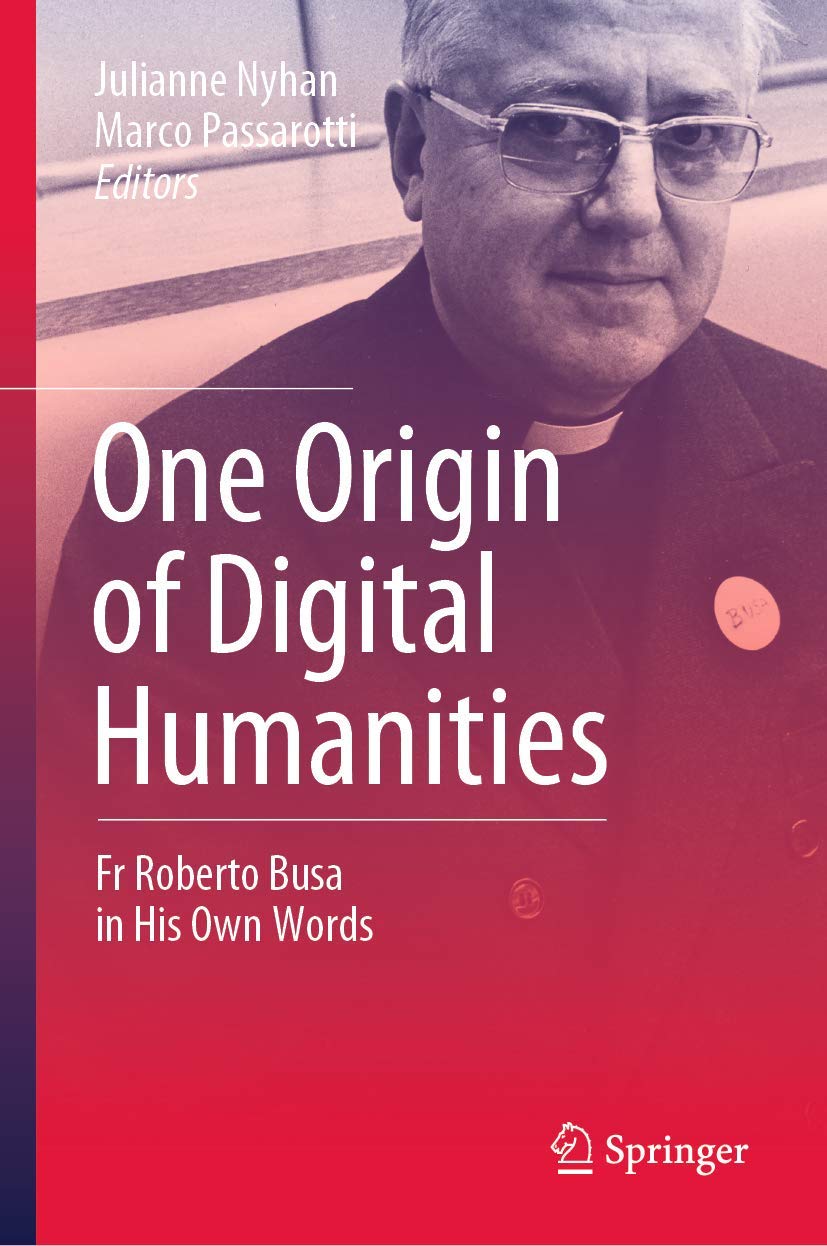
This book gathers, and makes available in English, with new introductions, previously out of print or otherwise difficult to access articles by Fr Roberto Busa S.J. (1913 2011). Also included is a comprehensive bibliography of Busa, an oral history interview with Busa's translator, and a substantial new chapter that evaluates Busa's contributions and intellectual legacies. The result is a groundbreaking book that is of interest to digital humanists and computational linguists as well as historians of science, technology and the humanities. As the application of computing to cultural heritage becomes ever more ubiquitous, new possibilities for transmitting, shaping, understanding, questioning and even imagining the human record are opening up. Busa is considered by many to be among the pioneers in this field, and his research on projects like the Index Thomisticus is one of the earliest known examples of a humanities project that incorporated automation; it continues to be widely cited and used today. Busa published more than 350 academic articles and shorter pieces in numerous languages, but despite the unquestionable importance of his early work for understanding the history and development of fields like humanities computing and computational linguistics, a large part of his canon and thinking remained inaccessible or difficult to access until this book.
⚠️ WARNING (California Proposition 65):
This product may contain chemicals known to the State of California to cause cancer,
birth defects, or other reproductive harm.
For MAP (Minimum Advertised Price) violations and Intellectual Property (IP) or Trademark concerns, please contact:
support@ergodebooks.com
⚠️ California Proposition 65 Warning: Some products sold on this website may expose you to chemicals known to the State of California to cause cancer, birth defects, or other reproductive harm. For more information, visit www.P65Warnings.ca.gov.