If you have any questions, you are always welcome to contact us. We'll get back to you as soon as possible, withing 24 hours on weekdays.
Customer service
All questions about your order, return and delivery must be sent to our customer service team by e-mail at yourstore@yourdomain.com
Sale & Press
If you are interested in selling our products, need more information about our brand or wish to make a collaboration, please contact us at press@yourdomain.com
Help
If you have any questions, you are always welcome to contact us. We'll get back to you as soon as possible, withing 24 hours on weekdays.
Customer service
All questions about your order, return and delivery must be sent to our customer service team by e-mail at yourstore@yourdomain.com
Sale & Press
If you are interested in selling our products, need more information about our brand or wish to make a collaboration, please contact us at press@yourdomain.com
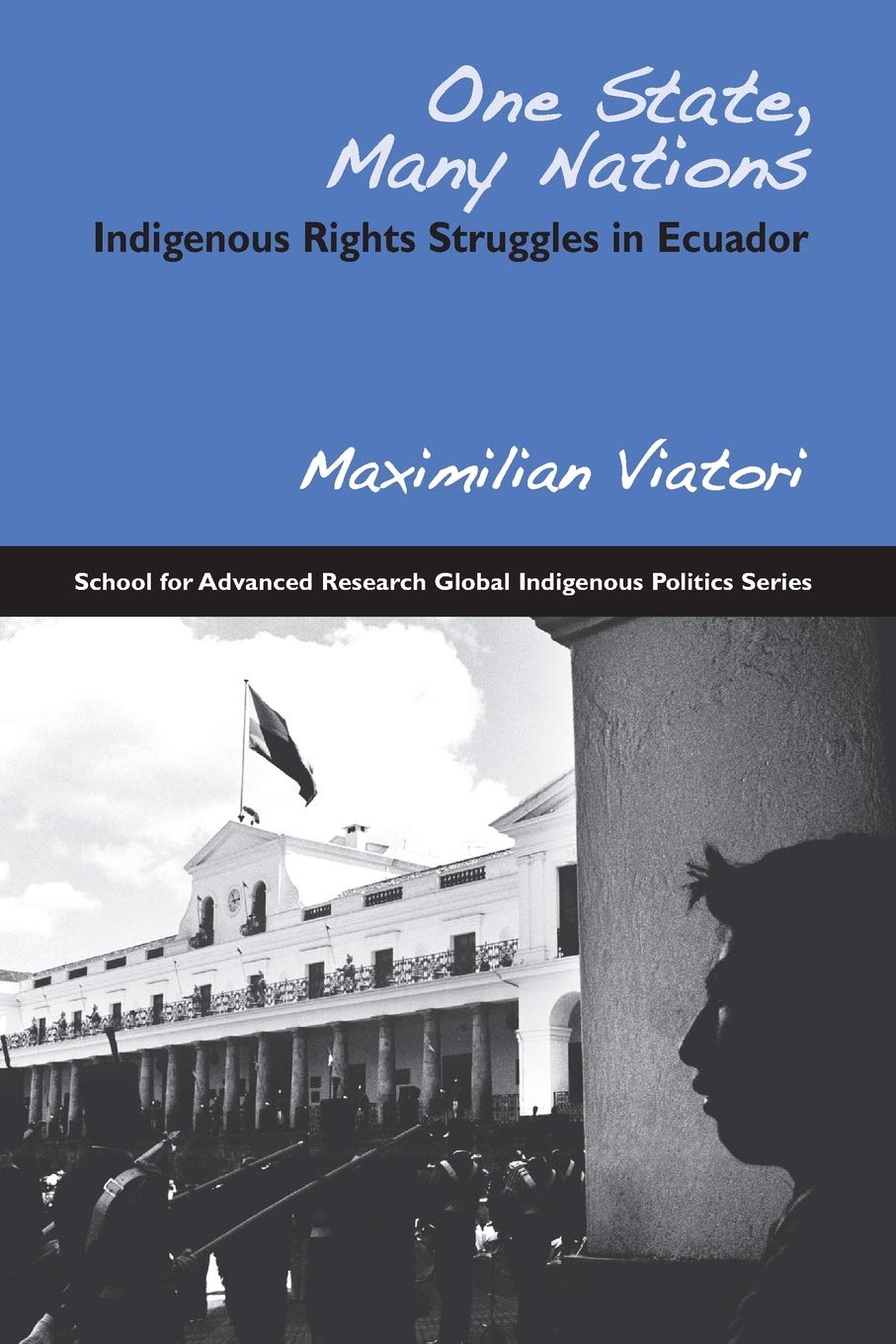
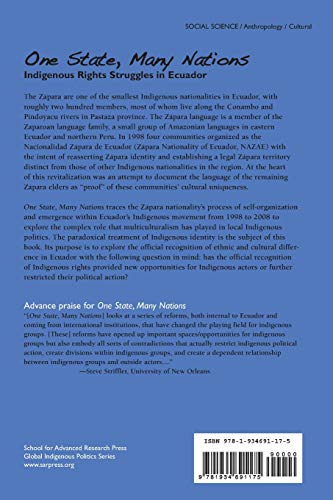
The Zpara are one of the smallest Indigenous nationalities in Ecuador, with roughly two hundred members, most of whom live along the Conambo and Pindoyacu rivers in Pastaza province. The Zpara language is a member of the Zaparoan language family, a small group of Amazonian languages in eastern Ecuador and northern Peru. In 1998 four communities organized as the Nacionalidad Zpara de Ecuador (Zpara Nationality of Ecuador, NAZAE) with the intent of reasserting Zpara identity and establishing a legal Zpara territory distinct from those of other Indigenous nationalities in the region. At the heart of this revitalization was an attempt to document the language of the remaining Zpara elders as 'proof' of these communities' cultural uniqueness.One State, Many Nations traces the Zpara nationality's process of selforganization and emergence within Ecuador's Indigenous movement from 1998 to 2008, to explore the complex role that multiculturalism has played in local Indigenous politics. The paradoxical treatment of Indigenous identity is the subject of this book. Its purpose is to explore the official recognition of ethnic and cultural difference in Ecuador with the following question in mind: has the official recognition of Indigenous rights provided new opportunities for Indigenous actors or further restricted their political action?
⚠️ WARNING (California Proposition 65):
This product may contain chemicals known to the State of California to cause cancer,
birth defects, or other reproductive harm.
For MAP (Minimum Advertised Price) violations and Intellectual Property (IP) or Trademark concerns, please contact:
support@ergodebooks.com
⚠️ California Proposition 65 Warning: Some products sold on this website may expose you to chemicals known to the State of California to cause cancer, birth defects, or other reproductive harm. For more information, visit www.P65Warnings.ca.gov.