If you have any questions, you are always welcome to contact us. We'll get back to you as soon as possible, withing 24 hours on weekdays.
Customer service
All questions about your order, return and delivery must be sent to our customer service team by e-mail at yourstore@yourdomain.com
Sale & Press
If you are interested in selling our products, need more information about our brand or wish to make a collaboration, please contact us at press@yourdomain.com
Help
If you have any questions, you are always welcome to contact us. We'll get back to you as soon as possible, withing 24 hours on weekdays.
Customer service
All questions about your order, return and delivery must be sent to our customer service team by e-mail at yourstore@yourdomain.com
Sale & Press
If you are interested in selling our products, need more information about our brand or wish to make a collaboration, please contact us at press@yourdomain.com
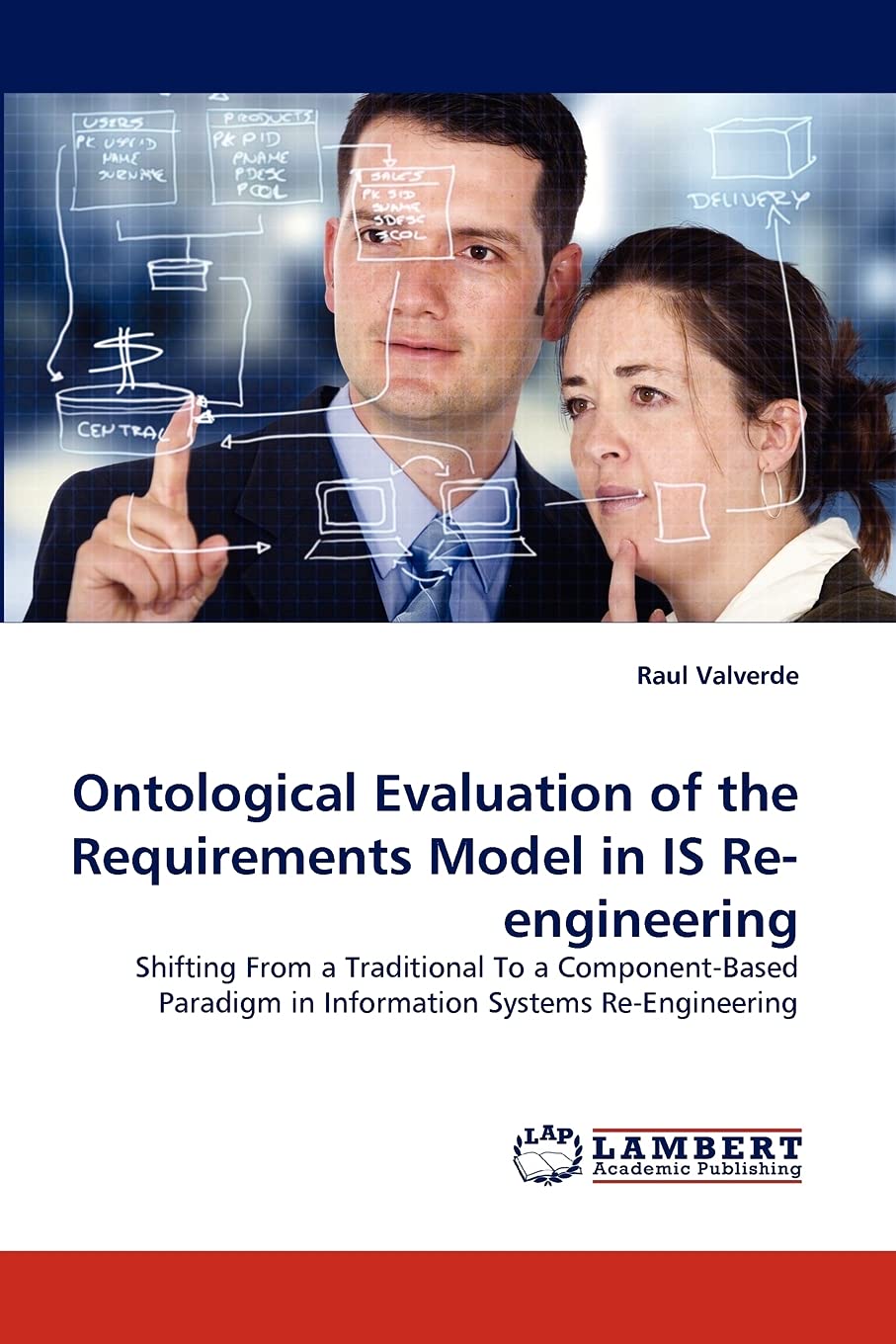
The vast majority of present legacy information systems were implemented using the traditional paradigm that consists of modeling techniques used by system analysts such as System Flow Charts and Data Flow Diagrams (DFD) to capture, during the analysis phase, the activities within a system. However, with recent developments, particularly trends towards eCommerce applications, platform independence, reusability of prebuilt components, many organizations are realizing they will need to reengineer their systems into new component based systems that meet these trends given the limitations of legacy systems to adapt to these new technical requirements. There is a high degree of interest and concern in establishing whether or not a full migration to a more portable and scalable componentbased architecture will be able to represent the legacy business requirements in the underlying requirements model of the reengineered information systems. As a result, this study poses the question: Is the resulting componentbased requirements model ontological equivalent to the legacy requirements model when shifting paradigms in the reengineering process?
⚠️ WARNING (California Proposition 65):
This product may contain chemicals known to the State of California to cause cancer,
birth defects, or other reproductive harm.
For MAP (Minimum Advertised Price) violations and Intellectual Property (IP) or Trademark concerns, please contact:
support@ergodebooks.com
⚠️ California Proposition 65 Warning: Some products sold on this website may expose you to chemicals known to the State of California to cause cancer, birth defects, or other reproductive harm. For more information, visit www.P65Warnings.ca.gov.