
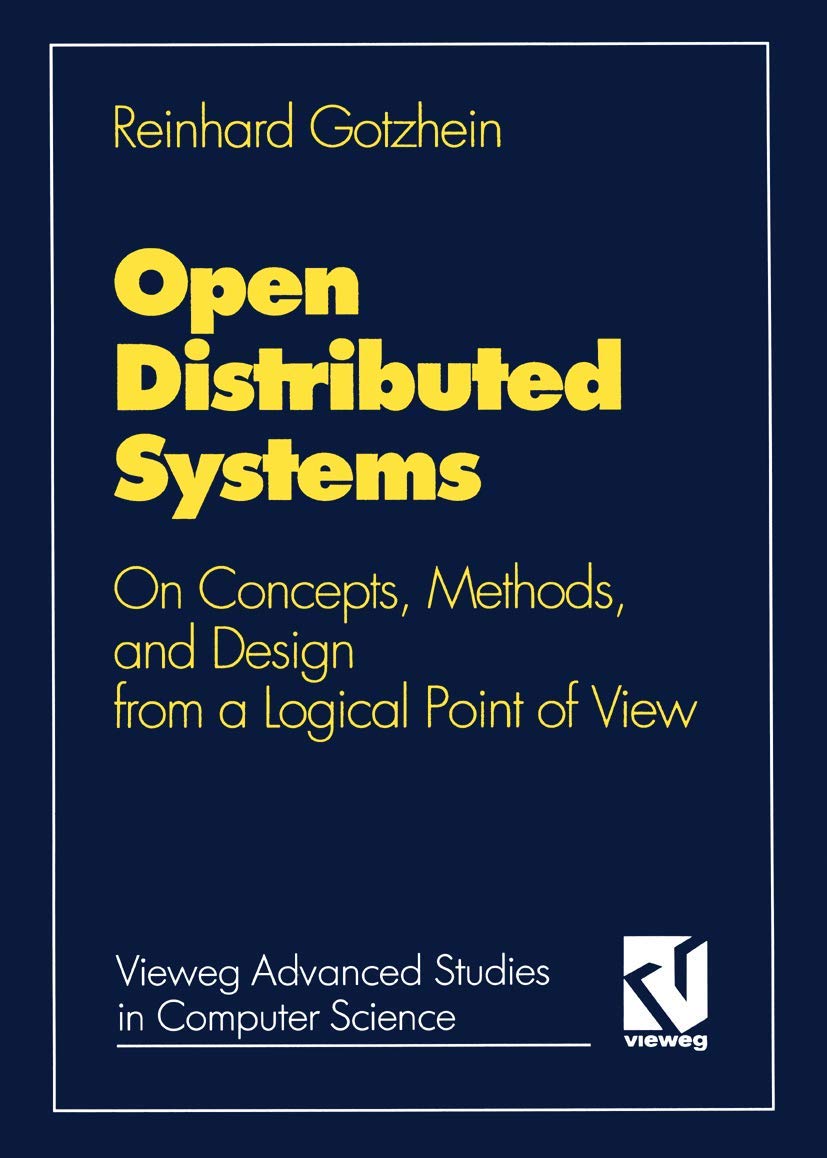
Title
Open Distributed Systems: On Concepts, Methods, and Design from a Logical Point of View (Vieweg Advanced Studies in Computer Sci,Used
Sold by Ergodebooks, an authorized reseller.
Returns accepted within 30 days | support@ergodebooks.com
Shipping Information
- Free Standard Shipping — United States only
- Processing Time: 3–5 business days
- Estimated Delivery: 6–10 business days after dispatch
- Double-boxed, fully insured & discreetly packaged
- Tracking number sent via email once dispatched
Returns & Refund
Returns accepted within 30 days of delivery.
Damaged or Defective Item
Free return shipping + replacement or full refund
Wrong Item Received
Free return shipping + replacement or full refund
Change of Mind
Return shipping at customer's expense · 25% restocking fee applies
Payment Option

Foreword A variety of technological advances have taken place since the early days of computer networking in the sixties and the present distributed systems of the nineties. The major concern of the past was the distribution of functions aimed at providing reliable and high perfomance data transmission facilities for different geographical spans, from local to global areas. Currently, the area of greatest interest appears to focus on that of distributed applications. M. Stonebraker's "Your company is distributed so should your data be" augurs this shift of focus towards a more complete coverage of distributed systems technology. One of the reasons that this process of technological advance required approxirnately thirty years was the relatively slow acceptance of the concept "Openness". Openness means, intuitively, that different components from different manufacturers produced by different groups are able to interact and cooperate with each other. It is clear that the need for Openness arose step by step with the consequence that the technological irnplications and concepts were developed in parallel with the need for using them. The work on "Open Systems Interconnection (OSI)" began in the late seventies (1977) under the sponsorship of the International Standardization Organization. Five years later the "Open Systems Interconnection Reference Model (OSIRM)" was born. This framework for the development of standards covers data transport issues (up to Layer 4) as weIl as some application issues (File Transfer, etc.; up to Layer 7).
⚠️ WARNING (California Proposition 65):
This product may contain chemicals known to the State of California to cause cancer, birth defects, or other reproductive harm.
For more information, please visit www.P65Warnings.ca.gov.