
Title
Open Skies For Africa: Implementing The Yamoussoukro Decision (Directions In Development) (Directions In Development: Infrastruc,Used
Sold by Ergodebooks, an authorized reseller.
Returns accepted within 30 days | support@ergodebooks.com
Shipping Information
- Free Standard Shipping — United States only
- Processing Time: 3–5 business days
- Estimated Delivery: 6–10 business days after dispatch
- Double-boxed, fully insured & discreetly packaged
- Tracking number sent via email once dispatched
Returns & Refund
Returns accepted within 30 days of delivery.
Damaged or Defective Item
Free return shipping + replacement or full refund
Wrong Item Received
Free return shipping + replacement or full refund
Change of Mind
Return shipping at customer's expense · 25% restocking fee applies
Payment Option

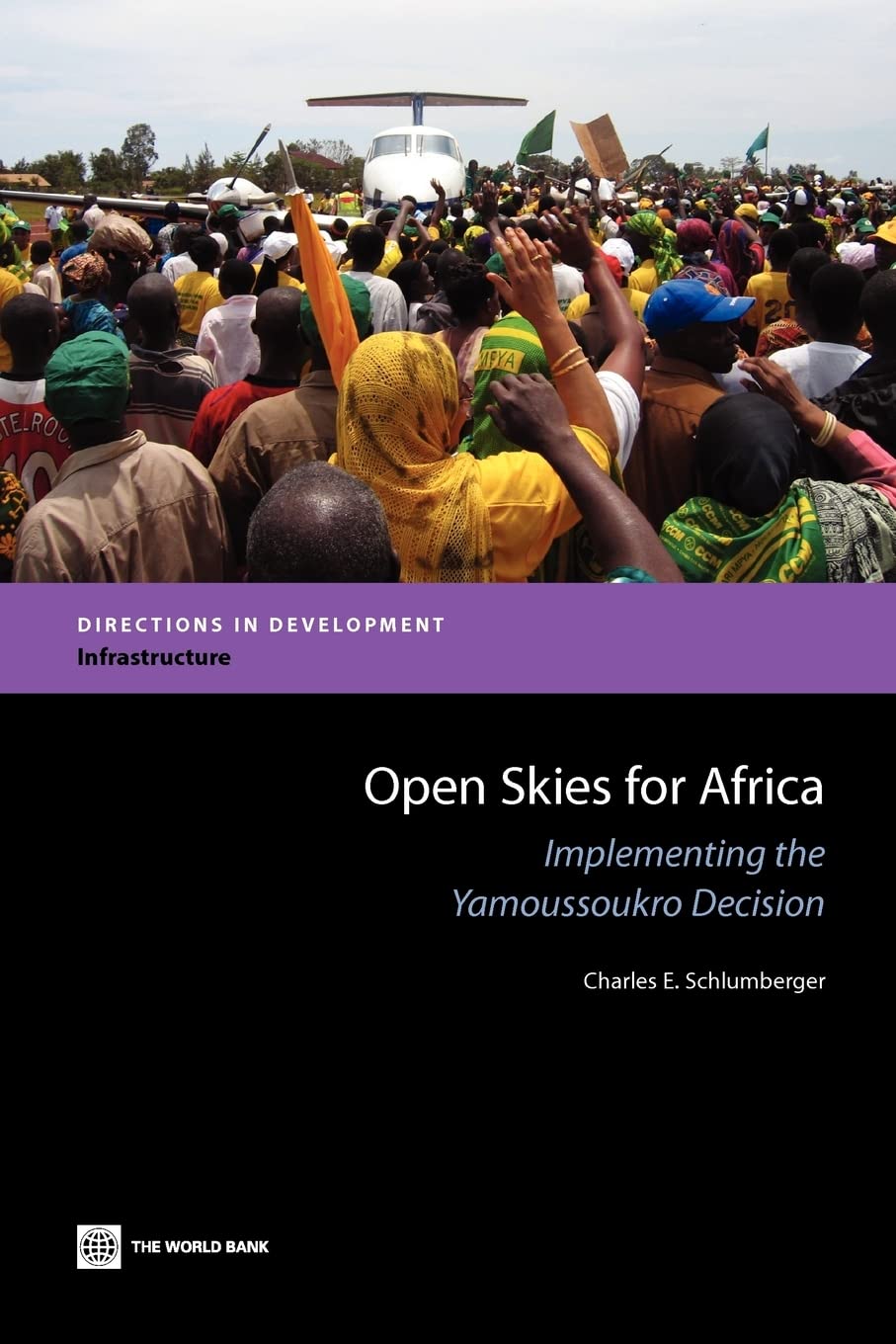
In Africa, where poor roads, ports and railway infrastructure often constrain the rapid and efficient transportation of goods earmarked for export as well as passengers, air transport holds both a potential for growth and a role for the economic development of the continent by fostering trade and foreign investments. However, Africas air transport industry has always been a relatively small player when compared with the global industry. After independence, most African states created their own flag carrier, which primarily served on a few intercontinental routes, while the domestic market remained thin. Several early attempts to unite various small African carriers did not bear fruit. As a consequence, the domestic air service market remained inefficient, underdeveloped, and uncompetitive.In order to address these shortcomings, on 14 November 1999, African Ministers responsible for civil aviation adopted the Yamoussoukro Decision on the liberalization of access to air transport markets in Africa. This panAfrican treaty widely liberalizes air services on the African continent, and most African countries are bound to it. However, more than twenty years after the declaration of intent, and ten years after adopting formal liberalization of air services, full implementation of the liberalization has not been achieved, and many consider the treaty a failure. Nevertheless, in certain regions, as well as on various bilateral relationships, liberalization of African air services has indeed done significant progress, and several operators do benefit from it.This book highlights the shortcomings of the 20 yearold effort towards liberalization of air services in Africa, by analyzing pending or completed implementation steps both on a panAfrica level, and within the various regions. A special focus is made on the challenges posed by the poor aviation safety and security standards in most African countries. Finally, the book measures the impact that certain policy steps of the Decision had, and evaluates the economic significance of air transportation and its full liberalization in Africa. It concludes that the process of liberalizing African air services must continue, and it provides policy recommendations for the way forward.
⚠️ WARNING (California Proposition 65):
This product may contain chemicals known to the State of California to cause cancer, birth defects, or other reproductive harm.
For more information, please visit www.P65Warnings.ca.gov.