If you have any questions, you are always welcome to contact us. We'll get back to you as soon as possible, withing 24 hours on weekdays.
Customer service
All questions about your order, return and delivery must be sent to our customer service team by e-mail at yourstore@yourdomain.com
Sale & Press
If you are interested in selling our products, need more information about our brand or wish to make a collaboration, please contact us at press@yourdomain.com
Help
If you have any questions, you are always welcome to contact us. We'll get back to you as soon as possible, withing 24 hours on weekdays.
Customer service
All questions about your order, return and delivery must be sent to our customer service team by e-mail at yourstore@yourdomain.com
Sale & Press
If you are interested in selling our products, need more information about our brand or wish to make a collaboration, please contact us at press@yourdomain.com
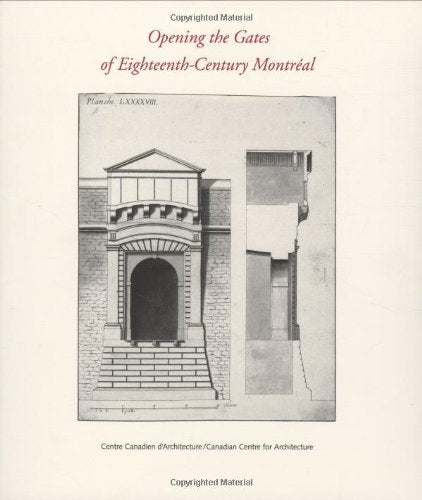
This study focuses on the interrelationships of three key elements of Montral's urban form: its fortifications; the ownership, distribution, and use of property within its walls; and the nature of its buildings.Based on a fifteenyear study of manuscript sources from Europe and North America, Opening the Gates of EighteenthCentury Montral focuses on the interrelationships of three key elements of Montral's urban form: its fortifications; the ownership, distribution, and use of property within its walls; and the nature of its buildings. The first section of the book, Fortifications, traces Montral's development as one of the most important military and commercial centers of the French colonial network arching from Louisbourg to the Great Lakes and down the Lake Champlain and Ohio corridors. It also discusses the related development of the town's fortifications. Town, the second section, examines how Montral's diversifying economic activities many connected with the building, maintenance, and supply of inland military posts influenced land use and building within the walls. The last section, Buildings, focuses on the urban house, Montral's principal building type in the eighteenthcentury, examining it in its material and social environments: morphology of town and fortifications, distribution of institutional buildings, and formative legal traditionsmetropolitan French above all, but later also British and American. The demolition of the walls (18011817) that had defined the town blurred town and suburb and augured a new urban form.
⚠️ WARNING (California Proposition 65):
This product may contain chemicals known to the State of California to cause cancer,
birth defects, or other reproductive harm.
For MAP (Minimum Advertised Price) violations and Intellectual Property (IP) or Trademark concerns, please contact:
support@ergodebooks.com
⚠️ California Proposition 65 Warning: Some products sold on this website may expose you to chemicals known to the State of California to cause cancer, birth defects, or other reproductive harm. For more information, visit www.P65Warnings.ca.gov.