
Title
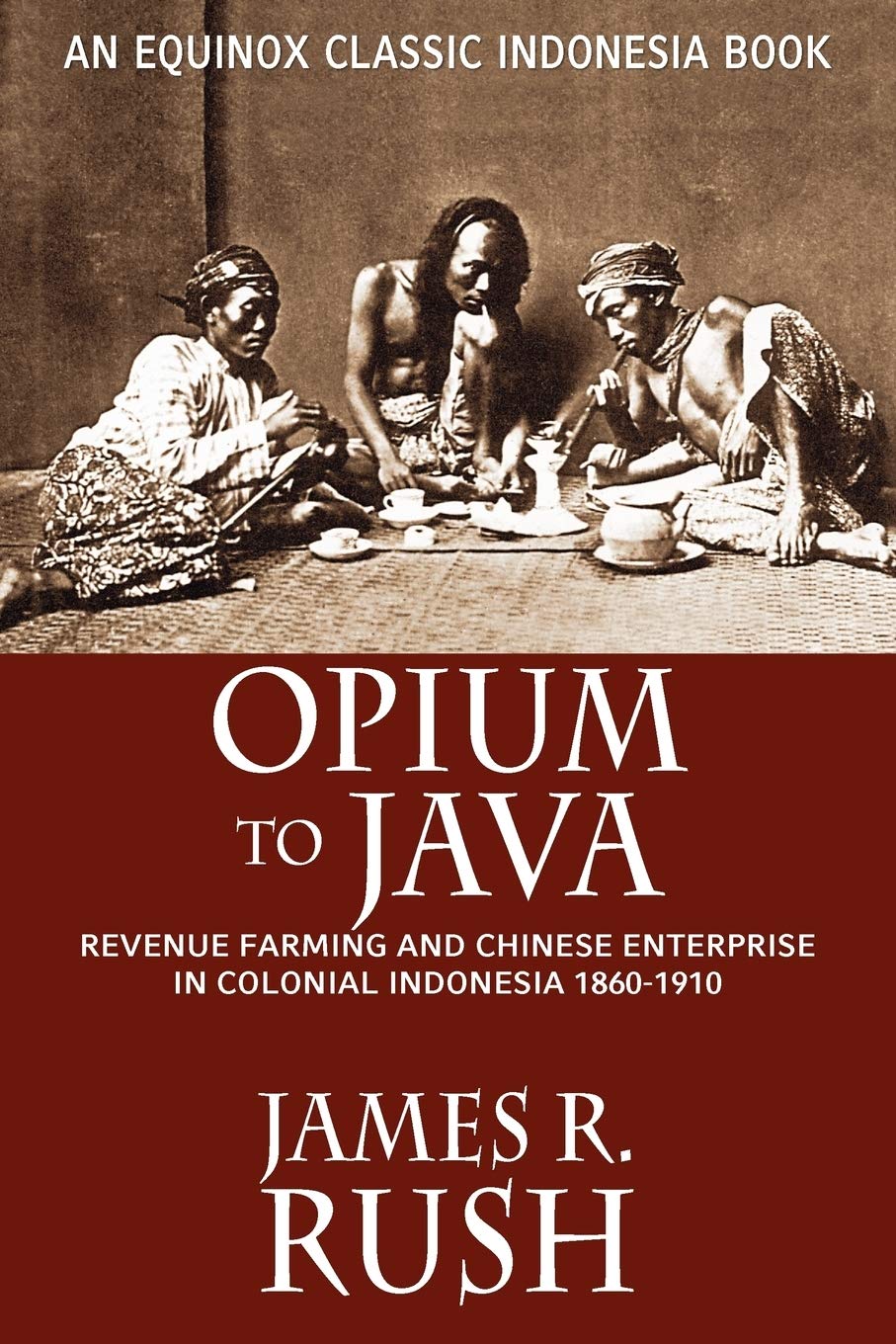
Opium to Java: Revenue Farming and Chinese Enterprise in Colonial Indonesia, 18601910,Used
Sold by Ergodebooks, an authorized reseller.
Returns accepted within 30 days | support@ergodebooks.com
Shipping Information
- Free Standard Shipping — United States only
- Processing Time: 3–5 business days
- Estimated Delivery: 6–10 business days after dispatch
- Double-boxed, fully insured & discreetly packaged
- Tracking number sent via email once dispatched
Returns & Refund
Returns accepted within 30 days of delivery.
Damaged or Defective Item
Free return shipping + replacement or full refund
Wrong Item Received
Free return shipping + replacement or full refund
Change of Mind
Return shipping at customer's expense · 25% restocking fee applies
Payment Option

Opium smoking was a widespread social custom in nineteenthcentury Java, and commercial trade in opium had farreaching economic and political implications. As in many of the Dutch territories in the Indonesian archipelago, the drug was imported from elsewhere and sold throughout the island under a government monopoly a system of revenue "farms". These monopoly franchises were regulated by the government and operated by members of Java's Chinese elite, who were frequently also local officials appointed by the Dutch. The farms thus helped support large Chinese patronage networks that vied for control of rural markets throughout Java.James Rush explains the workings of the opium farm system during its mature years by measuring the social, economic, and political reach of these monopolies within the Dutchdominated colonial society. His analysis of the opium farm incorporates the social history of opium smoking in Java and of the Chinese officer elite that dominated not only the opium farming but also the island's Chinese community and much of its commercial economy.He describes the relations among the various classes of Chinese and Javanese, as well as the relation of the Chinese elite to the Dutch, and he traces the political interplay that smuggling and the black market stimulated among all these elements. An important contribution to the social and political history of Southeast Asia and now brought back to life as a member of Equinox Publishing's Classic Indonesia series, this book gives a new dimension to our knowledge of nineteenthcentury Javanese society and the processes of social control and economic dominance during the colonial period.JAMES R. RUSH is a historian of modern Southeast Asia whose other works include The Last Tree: Reclaiming the Environment in Tropical Asia; Java: A Travellers' Anthology; and several volumes of contemporary Asian biography in the Ramon Magsaysay Awards series. His is associate professor of history at Arizona State University.
⚠️ WARNING (California Proposition 65):
This product may contain chemicals known to the State of California to cause cancer, birth defects, or other reproductive harm.
For more information, please visit www.P65Warnings.ca.gov.