If you have any questions, you are always welcome to contact us. We'll get back to you as soon as possible, withing 24 hours on weekdays.
Customer service
All questions about your order, return and delivery must be sent to our customer service team by e-mail at yourstore@yourdomain.com
Sale & Press
If you are interested in selling our products, need more information about our brand or wish to make a collaboration, please contact us at press@yourdomain.com
Help
If you have any questions, you are always welcome to contact us. We'll get back to you as soon as possible, withing 24 hours on weekdays.
Customer service
All questions about your order, return and delivery must be sent to our customer service team by e-mail at yourstore@yourdomain.com
Sale & Press
If you are interested in selling our products, need more information about our brand or wish to make a collaboration, please contact us at press@yourdomain.com
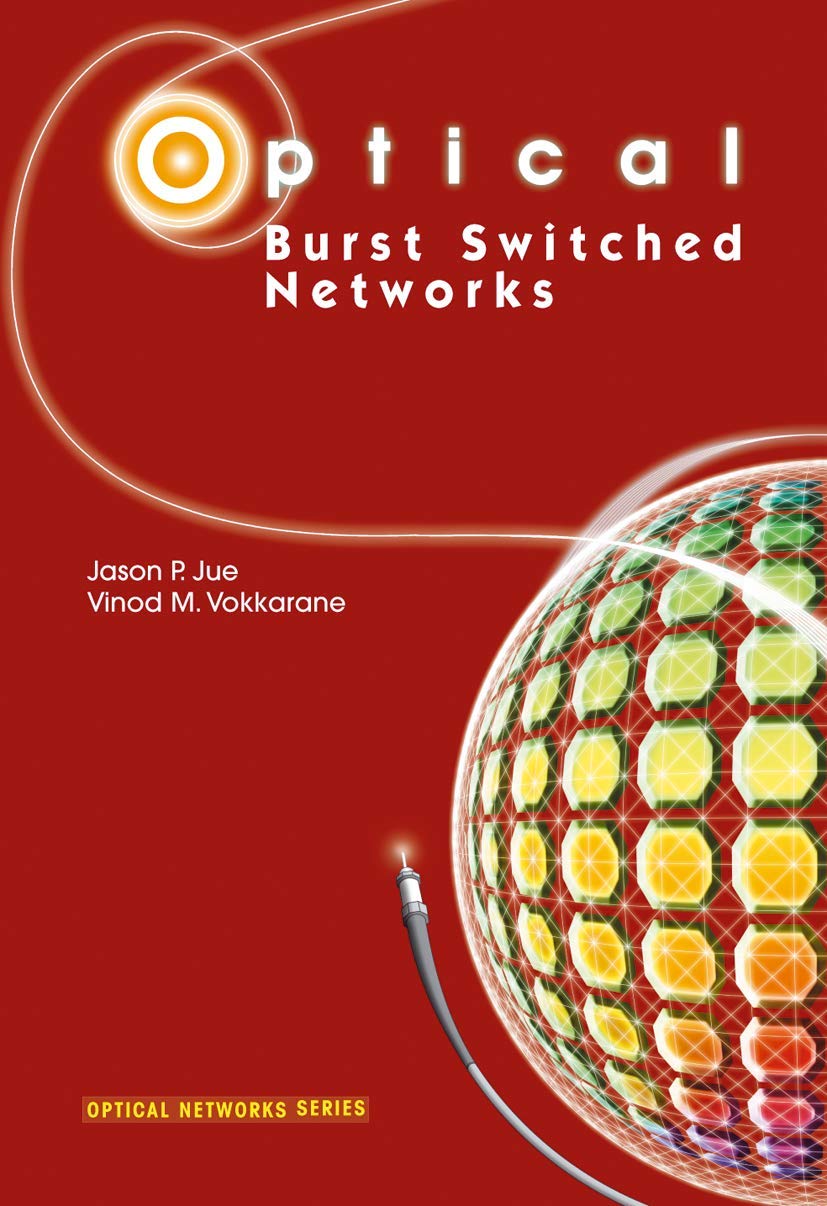
Nextgeneration highspeed Internet backbone networks will be required to support a broad range of emerging applications which may not only require significant bandwidth, but may also have strict quality of service (QoS) requirements. Furthermore, the traffic from such applications are expected to be highly bursty in nature. For such traffic, the allocation of static fixedbandwidth circuits may lead to the overprovisioning of bandwidth resources in order to meet QoS requirements.Optical burst switching (OBS) is a promising new technique which attempts to address the problem of efficiently allocating resources for bursty traffic. In OBS, incoming data is assembled into bursts at the edges of the network, and when the burst is ready to be sent, resources in the network are reserved only for the duration of the burst. The reservation of resources is typically made by an outofband oneway control message which precedes the burst by some offset time. By reserving resources only for the duration of the burst, a greater degree of utilization may be achieved in the network.This book provides an overview of optical burst switching. Design and research issues involved in the development of OBS networks are discussed, and approaches to providing QoS in OBS networks are presented. Topics include: Optical burst switching node and network architectures Burst assembly Signaling protocols Contention resolution Burst scheduling Quality of service in OBS networks
⚠️ WARNING (California Proposition 65):
This product may contain chemicals known to the State of California to cause cancer,
birth defects, or other reproductive harm.
For MAP (Minimum Advertised Price) violations and Intellectual Property (IP) or Trademark concerns, please contact:
support@ergodebooks.com
⚠️ California Proposition 65 Warning: Some products sold on this website may expose you to chemicals known to the State of California to cause cancer, birth defects, or other reproductive harm. For more information, visit www.P65Warnings.ca.gov.