If you have any questions, you are always welcome to contact us. We'll get back to you as soon as possible, withing 24 hours on weekdays.
Customer service
All questions about your order, return and delivery must be sent to our customer service team by e-mail at yourstore@yourdomain.com
Sale & Press
If you are interested in selling our products, need more information about our brand or wish to make a collaboration, please contact us at press@yourdomain.com
Help
If you have any questions, you are always welcome to contact us. We'll get back to you as soon as possible, withing 24 hours on weekdays.
Customer service
All questions about your order, return and delivery must be sent to our customer service team by e-mail at yourstore@yourdomain.com
Sale & Press
If you are interested in selling our products, need more information about our brand or wish to make a collaboration, please contact us at press@yourdomain.com
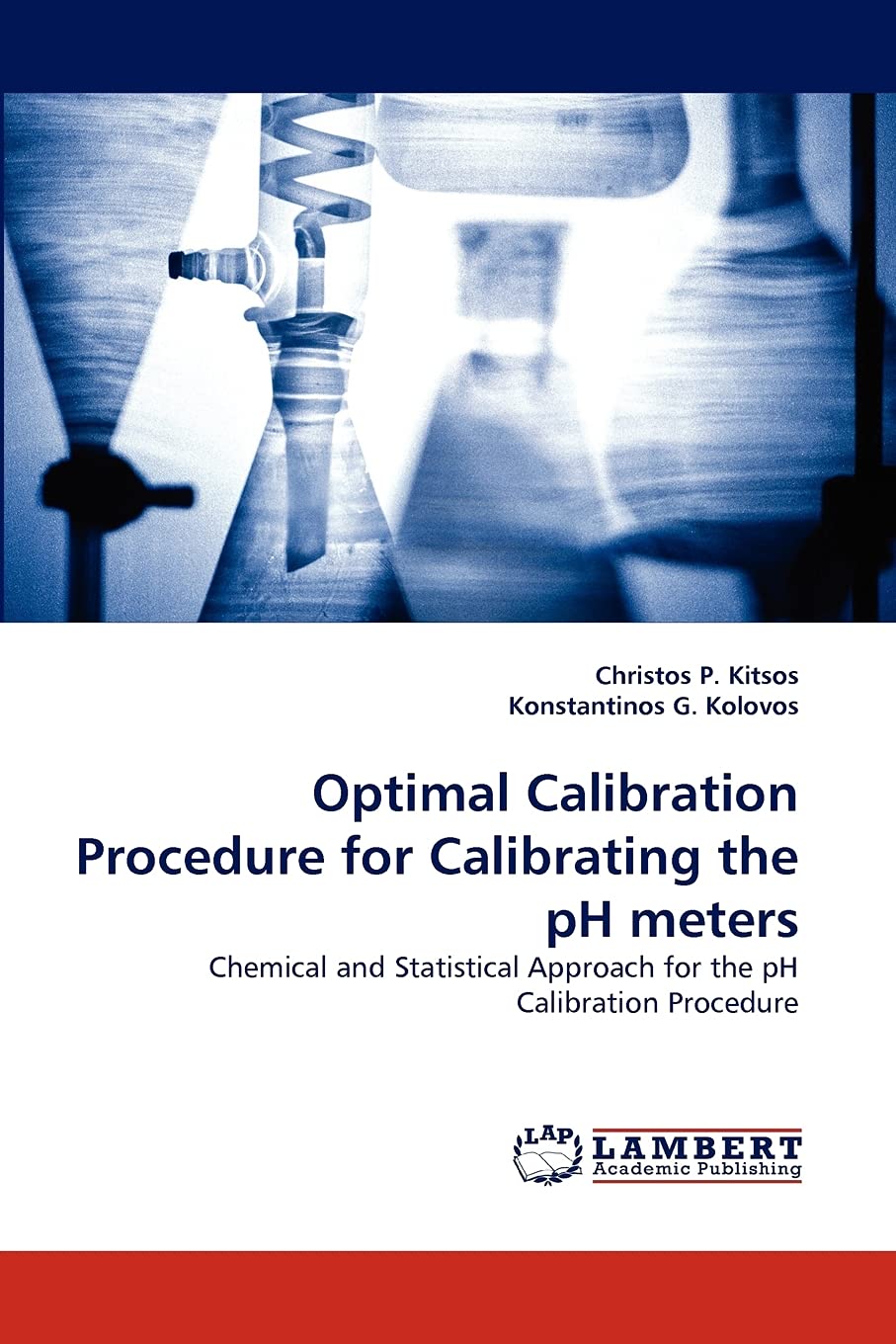
The pH measurement in chemical analysis is an important index in numerous applications, e.g. chemical engineering, environmental science, materials science, biochemistry, pharmaceutical industry. Routine pH measurements are carried out with pH meterglass electrode assemblies. The use of these electrodes is subject to various effects, producing uncertainties of unknown magnitude. Therefore, the measurement of pH requires a suitable calibration by certified standard buffer solutions traceable to primary pH standards. This monograph addresses the optimal experimental procedure for the calibration problem to common pH meters, under D and coptimality criteria. By considering the simple regression model, the main target is to estimate as a nonlinear function the calibrating value. Two optimal design procedures are adopted to tackle the problem: D and coptimality. Therefore various data sets are examined, under the D and coptimal approach, to obtain the appropriate model for calibrating pH meters.
⚠️ WARNING (California Proposition 65):
This product may contain chemicals known to the State of California to cause cancer,
birth defects, or other reproductive harm.
For MAP (Minimum Advertised Price) violations and Intellectual Property (IP) or Trademark concerns, please contact:
support@ergodebooks.com
⚠️ California Proposition 65 Warning: Some products sold on this website may expose you to chemicals known to the State of California to cause cancer, birth defects, or other reproductive harm. For more information, visit www.P65Warnings.ca.gov.