
Title
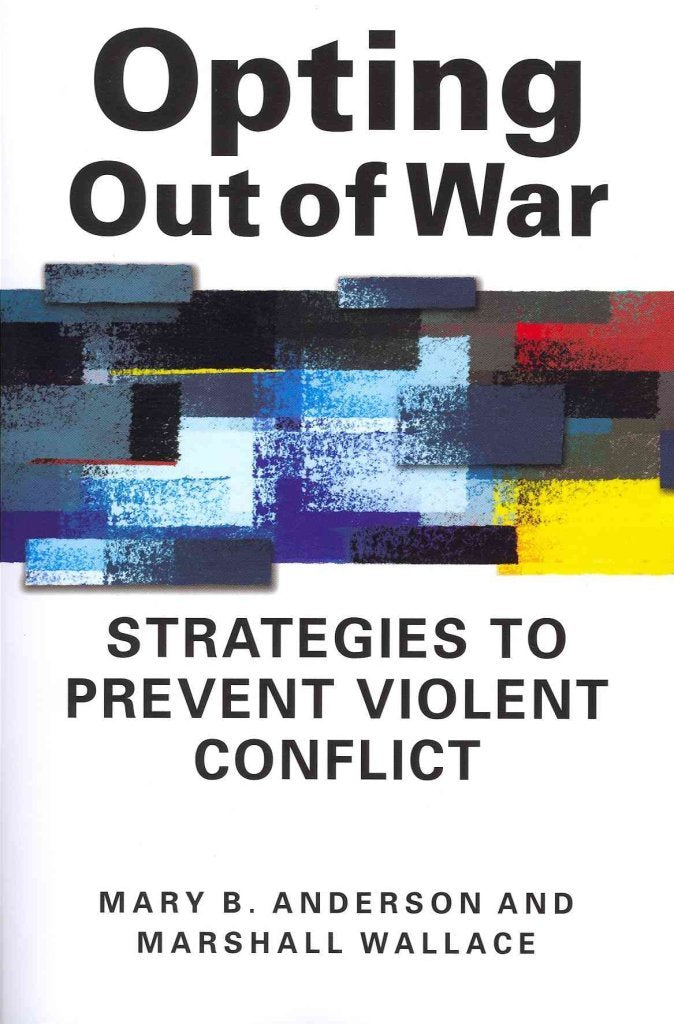
Opting Out of War: Strategies to Prevent Violent Conflict,New
Sold by Ergodebooks, an authorized reseller.
Returns accepted within 30 days | support@ergodebooks.com
Shipping Information
- Free Standard Shipping — United States only
- Processing Time: 3–5 business days
- Estimated Delivery: 6–10 business days after dispatch
- Double-boxed, fully insured & discreetly packaged
- Tracking number sent via email once dispatched
Returns & Refund
Returns accepted within 30 days of delivery.
Damaged or Defective Item
Free return shipping + replacement or full refund
Wrong Item Received
Free return shipping + replacement or full refund
Change of Mind
Return shipping at customer's expense · 25% restocking fee applies
Payment Option

How do 'ordinary' people, neither pacifists nor peace activists, come to decide collectively to eschew violent conflict and then develop strategies for maintaining their region as a nonwar area despite myriad pressures to the contrary? Mary Anderson and Marshall Wallace analyze the experiences of thirteen 'nonwar' communities that made consciousand effectivechoices not to engage in the fighting that surrounded them. Tracing the steps that these communities took, the strategies that evolved in each setting in response to local circumstances, the authors find lessons, as well, with broader relevance for international efforts to prevent violent conflict.
⚠️ WARNING (California Proposition 65):
This product may contain chemicals known to the State of California to cause cancer, birth defects, or other reproductive harm.
For more information, please visit www.P65Warnings.ca.gov.
- Q: How many pages does this book have? A: This book has one hundred ninety-three pages. It provides in-depth analysis and insights into nonviolent conflict resolution.
- Q: What is the binding type of this book? A: This book is paperback bound. This makes it lightweight and easy to handle for readers.
- Q: Who is the author of this book? A: The author of this book is Mary B. Anderson. She co-authored it with Marshall Wallace, focusing on strategies to prevent violent conflict.
- Q: What genre does this book fall under? A: This book falls under the War & Peace genre. It explores the dynamics of conflict avoidance in communities.
- Q: Is this book suitable for all ages? A: Yes, this book is suitable for adults and older teens. It discusses complex themes around conflict and community resilience.
- Q: How do I use this book for study? A: You can use this book as a resource for understanding nonviolent conflict resolution. It provides case studies and strategies that can be applied in practical scenarios.
- Q: Is this book appropriate for academic use? A: Yes, this book is appropriate for academic use. It can be used in courses related to peace studies, sociology, and conflict resolution.
- Q: What themes does this book cover? A: This book covers themes of nonviolence, community resilience, and strategies for conflict prevention. It analyzes real-life examples for broader application.
- Q: How should I store this book? A: Store this book in a cool, dry place. Avoid direct sunlight to preserve the integrity of the paperback binding and printed pages.
- Q: Can this book be returned if I'm not satisfied? A: Yes, this book can typically be returned if you are not satisfied. Check the seller's return policy for specific details.
- Q: What if the book arrives damaged? A: If the book arrives damaged, contact the seller immediately. Most sellers have policies in place for returns or exchanges for damaged items.
- Q: Is there a warranty for this book? A: No, books typically do not come with a warranty. However, you can check the return policy offered by the seller.
- Q: What should I do if I have questions about the book? A: If you have questions about the book, consult the publisher's website or reach out to customer support from the seller.
- Q: Are there other books by the same authors? A: Yes, Mary B. Anderson and Marshall Wallace have collaborated on other works focusing on peace and conflict studies. Check their profiles for more titles.
- Q: Does this book provide practical strategies? A: Yes, this book provides practical strategies for maintaining peace in communities. It is based on real-life experiences and lessons learned.