
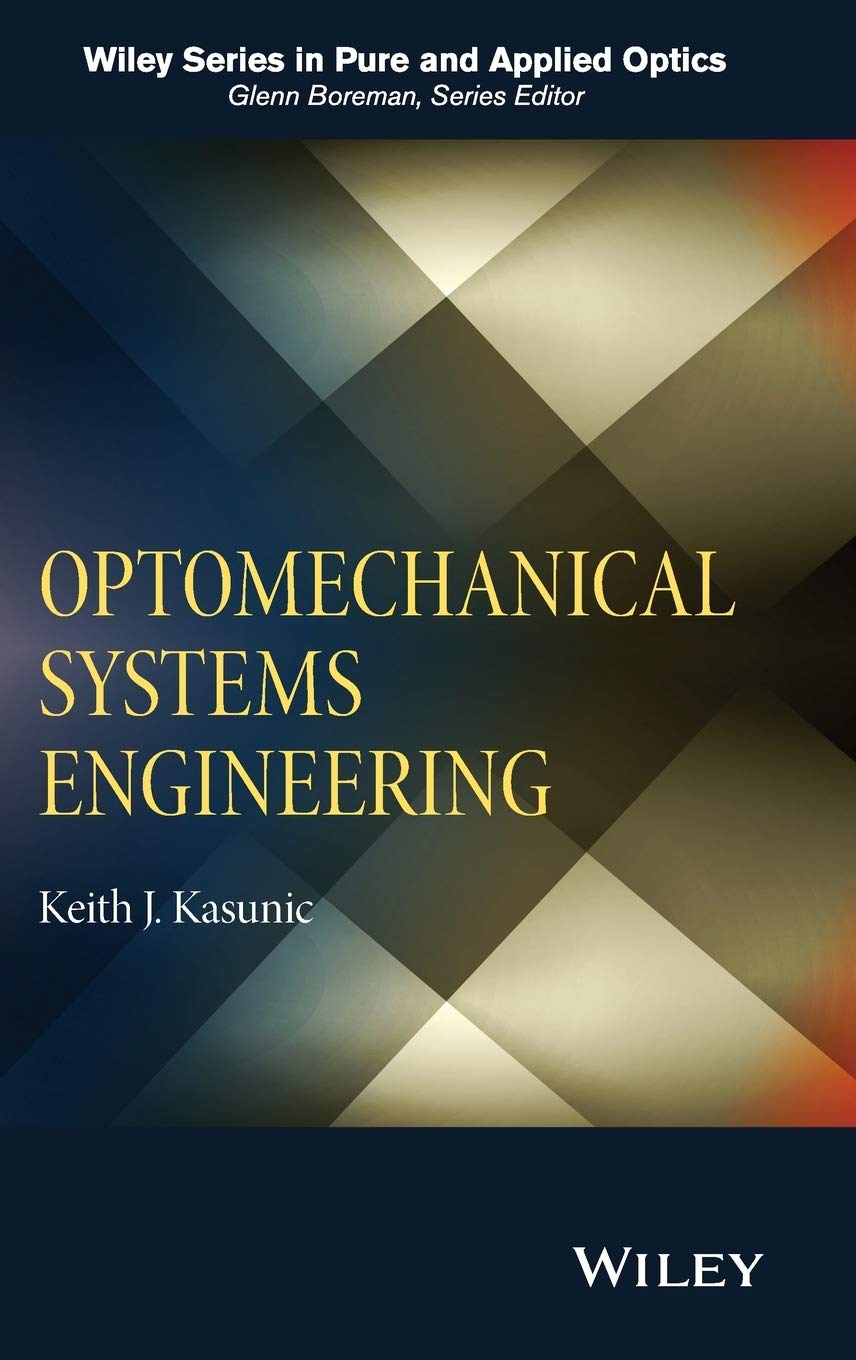
Title
Optomechanical Systems Engineering (Wiley Series In Pure And Applied Optics)
Sold by Ergodebooks, an authorized reseller.
Returns accepted within 30 days | support@ergodebooks.com
Shipping Information
- Free Standard Shipping — United States only
- Processing Time: 3–5 business days
- Estimated Delivery: 6–10 business days after dispatch
- Double-boxed, fully insured & discreetly packaged
- Tracking number sent via email once dispatched
Returns & Refund
Returns accepted within 30 days of delivery.
Damaged or Defective Item
Free return shipping + replacement or full refund
Wrong Item Received
Free return shipping + replacement or full refund
Change of Mind
Return shipping at customer's expense · 25% restocking fee applies
Payment Option

Optomechanical Systems Engineering Emphasizes A Practical, Systemslevel Overview Of Optomechanical Engineering, Bridging The Gap Between Mechanical And Optical Design. Starting With The Fundamentals Of Imaging, It Reviews How Optical System Concepts Flow Down Into Optomechanical Requirements On Optical Fabrication, Optical Alignment, Structural Design, Mechanics Of Materials, Glass Strength, Structural Vibrations, Thermal Management, And Kinematic Mounts. By Focusing On Fundamental Concepts And Firstorder, Backoftheenvelope Estimates Of Optomechanical System Performance, Optomechanical Systems Engineering Is Accessible To Engineers, Scientists, And Managers Who Want To Quickly Master The Principles Of Optomechanical Engineering.
⚠️ WARNING (California Proposition 65):
This product may contain chemicals known to the State of California to cause cancer, birth defects, or other reproductive harm.
For more information, please visit www.P65Warnings.ca.gov.
- Q: How many pages does this book have? A: This book has two hundred seventy-two pages. It provides a comprehensive overview of optomechanical systems engineering.
- Q: What are the dimensions of this book? A: The book measures six point two inches in length, zero point seventy-one inches in width, and nine point one inches in height. These dimensions make it portable and easy to handle.
- Q: What is the binding type of this book? A: This book is hardcover bound. The hardcover provides durability and longevity, making it suitable for frequent use.
- Q: Who is the author of this book? A: The author of this book is Keith J. Kasunic. He brings expertise in optomechanical engineering to the text.
- Q: What is the main focus of the book? A: The main focus of the book is a practical overview of optomechanical engineering. It bridges the gap between mechanical and optical design.
- Q: What level of expertise is this book suitable for? A: This book is suitable for engineers, scientists, and managers. It is designed for those who want to quickly grasp the principles of optomechanical engineering.
- Q: How should I care for this book? A: To keep this book in good condition, store it in a cool, dry place. Avoid exposing it to moisture and direct sunlight.
- Q: Is this book safe for children? A: Yes, this book is safe for children. However, it is more suited for older students or professionals interested in engineering.
- Q: How do I handle this book to prevent damage? A: Handle this book by its spine and avoid bending the cover. This will help maintain its structural integrity.
- Q: Is there a warranty or return policy for this book? A: The return policy varies by retailer. Check with the seller for specific details regarding returns or exchanges.
- Q: What if the book arrives damaged? A: If the book arrives damaged, contact the seller immediately to inquire about a replacement or refund.
- Q: How does this book compare to others in its category? A: This book emphasizes practical applications and first-order estimates, making it distinct from more theoretical texts in optomechanical engineering.
- Q: Is this book appropriate for beginners? A: Yes, the book is appropriate for beginners. It starts with fundamental concepts and builds up to more complex topics.
- Q: Can I use this book for self-study? A: Yes, this book is excellent for self-study. It provides a structured overview that helps learners grasp key concepts.
- Q: What topics are covered in this book? A: The book covers topics such as optical fabrication, alignment, structural design, and thermal management. It provides a comprehensive overview of optomechanical systems.
- Q: Does this book include illustrations or diagrams? A: Yes, the book includes illustrations and diagrams to enhance understanding of the material. These visual aids support the text effectively.