
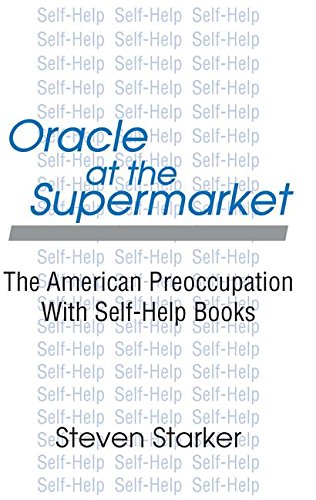
Title
Oracle at the Supermarket: The American Preoccupation with Selfhelp,Used
Sold by Ergodebooks, an authorized reseller.
Returns accepted within 30 days | support@ergodebooks.com
Shipping Information
- Free Standard Shipping — United States only
- Processing Time: 3–5 business days
- Estimated Delivery: 6–10 business days after dispatch
- Double-boxed, fully insured & discreetly packaged
- Tracking number sent via email once dispatched
Returns & Refund
Returns accepted within 30 days of delivery.
Damaged or Defective Item
Free return shipping + replacement or full refund
Wrong Item Received
Free return shipping + replacement or full refund
Change of Mind
Return shipping at customer's expense · 25% restocking fee applies
Payment Option

Where do ordinary people turn for wisdom and personal advice? In modernday America, the search for practical knowledge frequently begins and ends at the local bookstore or supermarket bookrack. The resident oracle is the selfhelp book, where paperback guidance is at hand on all aspects of life and death. Readers can learn why and how they must diet, exercise, manage stress, reduce pain, find God, enhance orgasm, mourn, achieve excellence, acquire wealth, and generally selfactualize. Often they find stepbystep instructions.Although selfhelp books are dispensing medical, psychological, financial, and spiritual advice to millions every year, little is known about them or their authors. The academic community treats the massive selfhelp literature as 'pop culture,' a phenomenon to scorn rather than study. Many express passionate opinions about such books, but few have a basis for informed judgment. Steven Starker makes a convincing case that selfhelp books have come to occupy an important niche in American culture and may no longer responsibly be ignored by health care practitioners or social scientists.Oracle at the Supermarket examines the selfhelp book from historical, cultural, and psychological perspectives. It traces the character of selfhelp works from colonial America to the present day, with an emphasis upon developments in the twentieth century. Topics include the discovery of 'mindcure,' the impact of scientific psychology and psychoanalysis upon the selfhelp literature of the 1920s, and the role of selfhelp books in the sexual revolution of the twentieth century. The wave of self interested literature in the 1960s and 1970s, and recent outpouring of diet/exercise/success books are examined. Starker explores problems in evaluating published selfhelp programs, and the ethics of their creation. He includes survey date from lay readers and selected groups of health care practititoners regarding their experiences with selfhelp books. The book is distinguished by its care in evaluating the relative merits and dangers of selfhelp literature.
⚠️ WARNING (California Proposition 65):
This product may contain chemicals known to the State of California to cause cancer, birth defects, or other reproductive harm.
For more information, please visit www.P65Warnings.ca.gov.
- Q: What is the main topic of 'Oracle at the Supermarket'? A: The book explores the cultural significance and historical development of self-help literature in America, examining how these books provide practical advice on various aspects of life.
- Q: Who is the author of 'Oracle at the Supermarket'? A: The author of the book is Steven Starker, who analyzes the impact and role of self-help books in American culture.
- Q: How many pages does 'Oracle at the Supermarket' have? A: The book contains a total of 224 pages.
- Q: What type of binding does this book have? A: The book is available in paperback binding.
- Q: Is 'Oracle at the Supermarket' a first edition? A: Yes, this book is published as a first edition.
- Q: What are some topics covered in the book? A: The book covers topics such as the evolution of self-help literature, its historical context, and its influence on personal development and societal norms.
- Q: When was 'Oracle at the Supermarket' published? A: The book was published on January 30, 2002.
- Q: What is the condition of the book listed? A: The item is listed in good condition.
- Q: Who might benefit from reading this book? A: Readers interested in self-help literature, cultural studies, psychology, and personal development may find this book particularly beneficial.
- Q: What kind of advice can self-help books provide according to the author? A: Self-help books can offer guidance on topics like dieting, stress management, achieving personal goals, and enhancing overall well-being.