
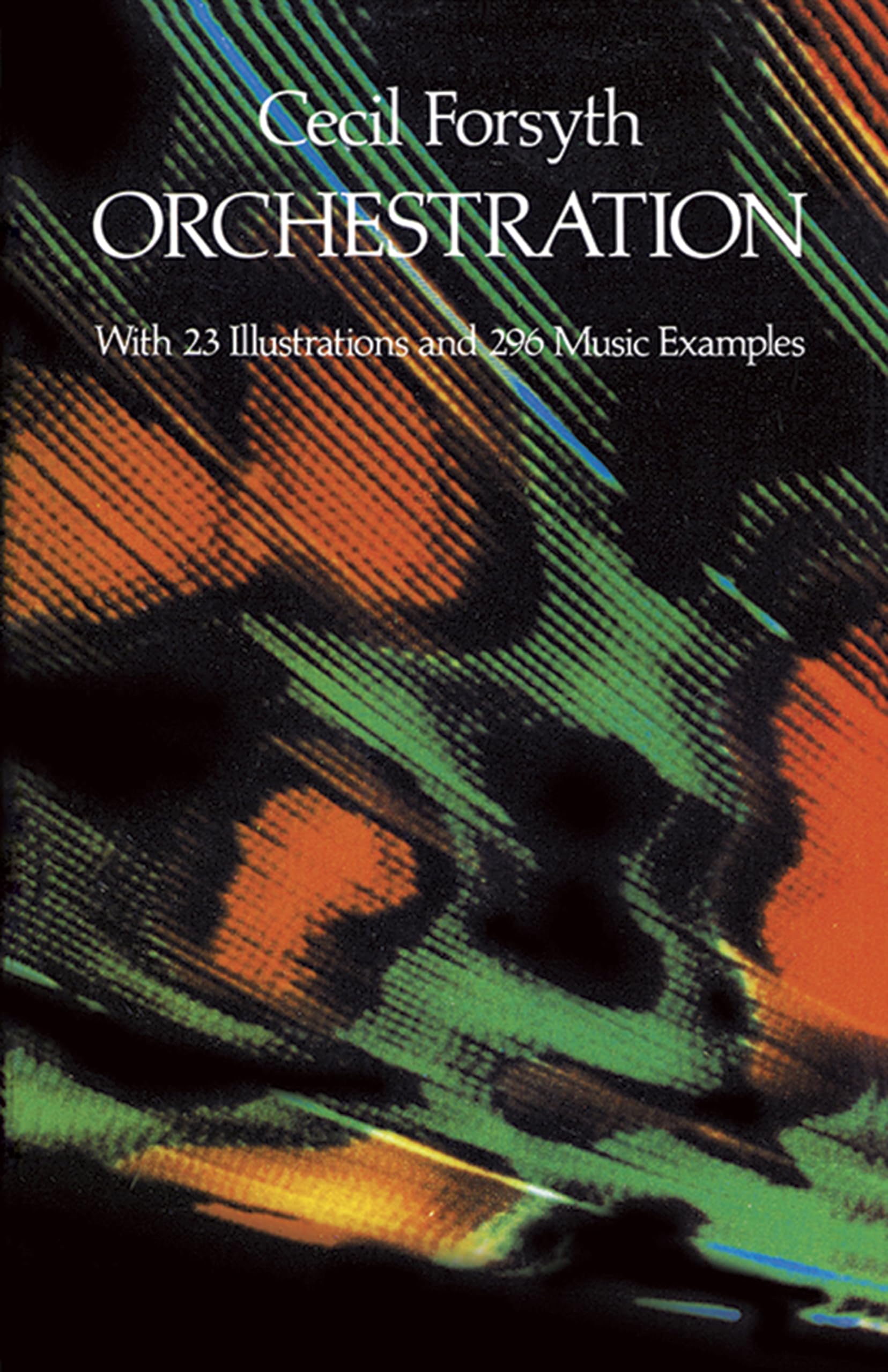
Title
Orchestration (Dover Books On Music: Analysis),Used
Sold by Ergodebooks, an authorized reseller.
Returns accepted within 30 days | support@ergodebooks.com
Shipping Information
- Free Standard Shipping — United States only
- Processing Time: 3–5 business days
- Estimated Delivery: 6–10 business days after dispatch
- Double-boxed, fully insured & discreetly packaged
- Tracking number sent via email once dispatched
Returns & Refund
Returns accepted within 30 days of delivery.
Damaged or Defective Item
Free return shipping + replacement or full refund
Wrong Item Received
Free return shipping + replacement or full refund
Change of Mind
Return shipping at customer's expense · 25% restocking fee applies
Payment Option

For Its Time The Most Comprehensive Treatment Of The Subject.' New Grove Dictionary Of Music And Musiciansbefore The 17Th Century, Composers Seldom Indicated In Their Music Whether The Composition Was To Be Performed By A Particular Combination Of Voices Or Instruments. Then In 1607 Monteverdi Made A Wellknown Suggestion For The Orchestration Of His Opera Orfeo. And As The Baroque Era Unfolded, The Concept Of Orchestrations Began To Evolve, Achieving A Notable Clarity And The Acceptance Of A Keyboard Instrument As An Integral Part Of The Ensemble.Toward The Middle Of The 18Th Century, Stylistic Changes In Instrumental Music, E.G. Styles That Emphasized A Single Melodic Line, Directly Affected Methods Of Orchestration; While In The 19Th Century, Orchestrations Became An Ever More Vital Factor In The Composer'S Technique, A Stylistic Determinant That Places A Wealth Of Possibilities At His Disposal. Finally, In The Early 18Th Century, Increasing Awareness Of The Importance Of Internal Balance, Certain Ideals Of Blended Sound, And Firmly Established Instrumental Characteristics Enabled Orchestration To Take Its Place As An Academic Discipline Beside Harmony And Counterpoint.In This Classic Manual, A Noted English Composer Describes 57 Orchestral Instruments (Ca. 1914) Tracing Their Origins, Development, And Status At The Beginning Of World War I. Not Only Are The History And Evolution Of Each Instrument Fully Discussed, The Author Also Explores The Techniques Of Each Instrument, As Well As Players' Impressions About What They Must Play. The Result Is An Unparalleled Insight Into The Inner Working Of An Orchestra A Vivid Impression Of What It Is Like To Be A Violinist, Clarinetist, Trombonist, Or Other Orchestral Player.While There Have Been Numerous Developments In Instrumental Technique On An Individual Basis Since The Book'S First Publication, Most Of What Forsyth Says Is Still Valid. Writing With Wit, Grace, And Good Sense, Forsyth Created A Formidably Thorough, Comprehensive, And Informative Text That Has Instructed And Influenced Generations Of Composers, Conductors, Musicians, And Musicologists.
⚠️ WARNING (California Proposition 65):
This product may contain chemicals known to the State of California to cause cancer, birth defects, or other reproductive harm.
For more information, please visit www.P65Warnings.ca.gov.