If you have any questions, you are always welcome to contact us. We'll get back to you as soon as possible, withing 24 hours on weekdays.
Customer service
All questions about your order, return and delivery must be sent to our customer service team by e-mail at yourstore@yourdomain.com
Sale & Press
If you are interested in selling our products, need more information about our brand or wish to make a collaboration, please contact us at press@yourdomain.com
Help
If you have any questions, you are always welcome to contact us. We'll get back to you as soon as possible, withing 24 hours on weekdays.
Customer service
All questions about your order, return and delivery must be sent to our customer service team by e-mail at yourstore@yourdomain.com
Sale & Press
If you are interested in selling our products, need more information about our brand or wish to make a collaboration, please contact us at press@yourdomain.com
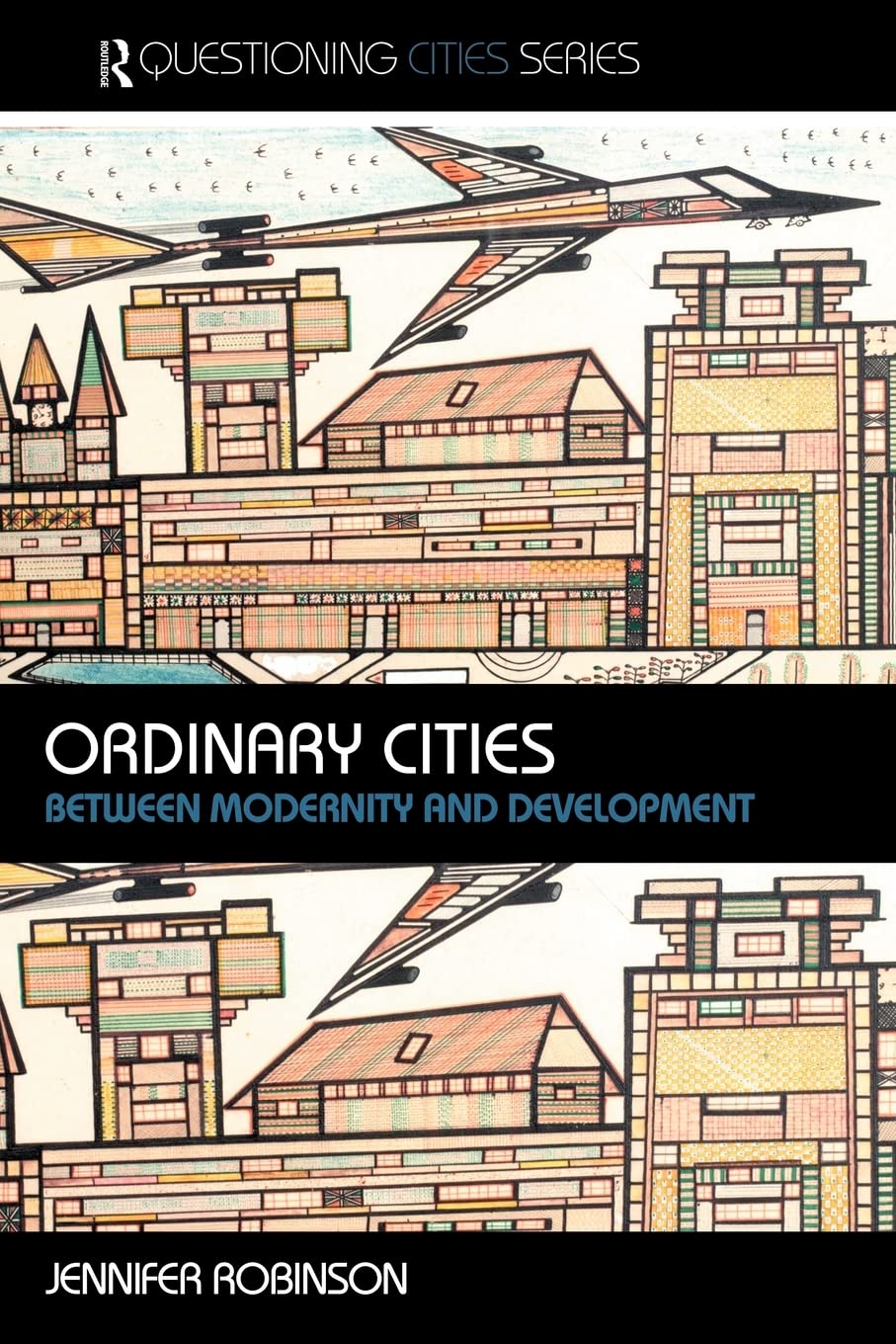
With the urbanization of the world's population proceeding apace and the equally rapid urbanization of poverty, urban theory has an urgent challenge to meet if it is to remain relevant to the majority of cities and their populations, many of which are outside the West.This groundbreaking book establishes a new framework for urban development. It makes the argument that all cities are best understood as ordinary, and crosses the longstanding divide in urban scholarship and urban policy between Western and other cities (especially those labelled Third World). It considers the two framing axes of urban modernity and development, and argues that if cities are to be imagined in equitable and creative ways, urban theory must overcome these axes with their Western bias and that resources must become at least as cosmopolitan as cities themselves.Tracking paths across previously separate literatures and debates, this innovative book a postcolonial critique of urban studies traces the outlines of a cosmopolitan approach to cities, drawing on evidence from Rio, Johannesburg, Lusaka and Kuala Lumpur. Key urban scholars and debates, from Simmel, Benjamin and the Chicago School to Global and World Cities theories are explored, together with anthropological and developmentalist accounts of poorer cities. Offering an alternative approach, Ordinary Cities skilfully brings together theories of urban development for students and researchers of urban studies, geography and development.
⚠️ WARNING (California Proposition 65):
This product may contain chemicals known to the State of California to cause cancer,
birth defects, or other reproductive harm.
For MAP (Minimum Advertised Price) violations and Intellectual Property (IP) or Trademark concerns, please contact:
support@ergodebooks.com
⚠️ California Proposition 65 Warning: Some products sold on this website may expose you to chemicals known to the State of California to cause cancer, birth defects, or other reproductive harm. For more information, visit www.P65Warnings.ca.gov.