If you have any questions, you are always welcome to contact us. We'll get back to you as soon as possible, withing 24 hours on weekdays.
Customer service
All questions about your order, return and delivery must be sent to our customer service team by e-mail at yourstore@yourdomain.com
Sale & Press
If you are interested in selling our products, need more information about our brand or wish to make a collaboration, please contact us at press@yourdomain.com
Help
If you have any questions, you are always welcome to contact us. We'll get back to you as soon as possible, withing 24 hours on weekdays.
Customer service
All questions about your order, return and delivery must be sent to our customer service team by e-mail at yourstore@yourdomain.com
Sale & Press
If you are interested in selling our products, need more information about our brand or wish to make a collaboration, please contact us at press@yourdomain.com
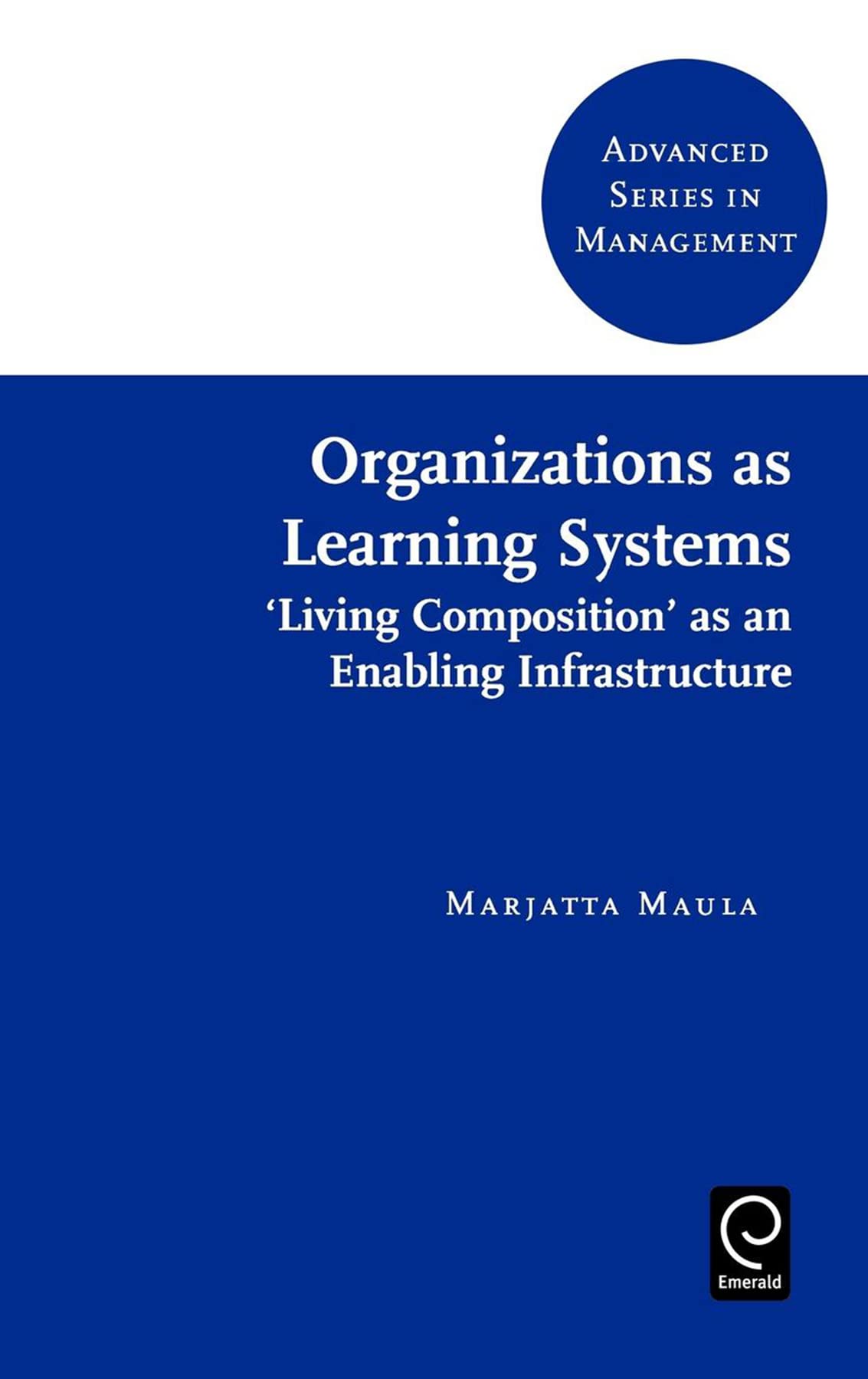
The main contribution of this book is the living composition, the model of living organizations. It is a new and original interpretation of the theory of living, selfproducing systems (autopoiesis theory). Living composition is defined here as strategic components and their relationships. A living organization is thereby a selfproducing system that is composed of ten different nonphysical strategic components that are continually produced by the organization itself. The components and their relationships are defined so that they enable and facilitate interconnected openness and closure, i.e. the 'sensing' (interactive openness) and 'memory' (selfreferentiality) of an organization. These characteristics and related knowledge flows enable the capability to learn and coevolve with the broader business ecosystem. This book also presents consistency/intentionality platforms and evolution models that help to evaluate the learning and renewal capability of an organization and to improve its enabling infrastructure. The living composition model has multiple implications for managers, consultants, and academics. It helps to identify the characteristics and development potential of the enabling structures of an organization, and to evaluate various development methods and activities in a larger framework. The sources of organizational learning and renewal are diverse and difficult to understand. This book shows how organizational learning and renewal can be explained by the theory of selfproducing systems.
⚠️ WARNING (California Proposition 65):
This product may contain chemicals known to the State of California to cause cancer,
birth defects, or other reproductive harm.
For MAP (Minimum Advertised Price) violations and Intellectual Property (IP) or Trademark concerns, please contact:
support@ergodebooks.com
⚠️ California Proposition 65 Warning: Some products sold on this website may expose you to chemicals known to the State of California to cause cancer, birth defects, or other reproductive harm. For more information, visit www.P65Warnings.ca.gov.