
Title
Organizing America: Wealth, Power, And The Origins Of Corporate Capitalism,Used
Sold by Ergodebooks, an authorized reseller.
Returns accepted within 30 days | support@ergodebooks.com
Shipping Information
- Free Standard Shipping — United States only
- Processing Time: 3–5 business days
- Estimated Delivery: 6–10 business days after dispatch
- Double-boxed, fully insured & discreetly packaged
- Tracking number sent via email once dispatched
Returns & Refund
Returns accepted within 30 days of delivery.
Damaged or Defective Item
Free return shipping + replacement or full refund
Wrong Item Received
Free return shipping + replacement or full refund
Change of Mind
Return shipping at customer's expense · 25% restocking fee applies
Payment Option

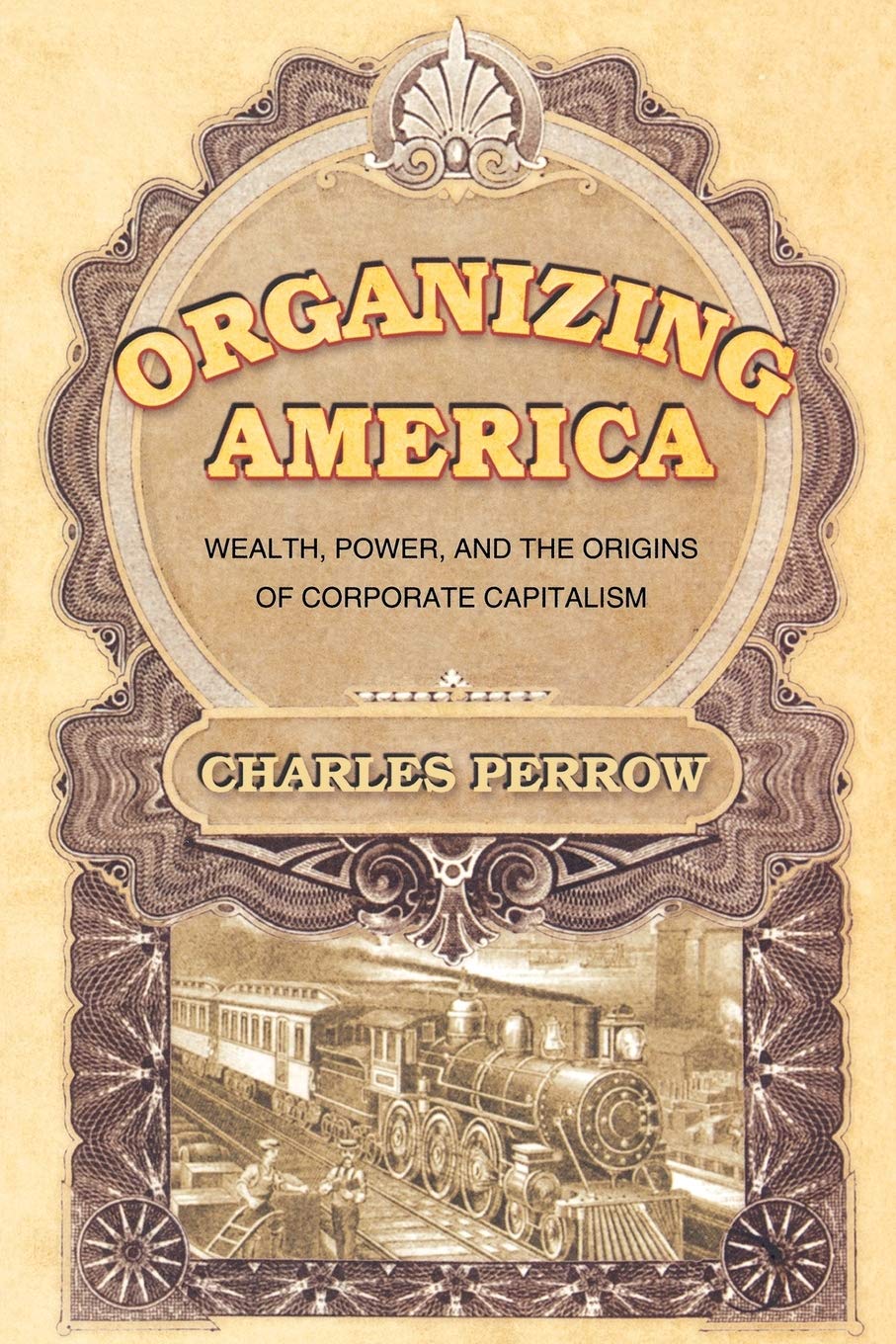
American society today is shaped not nearly as much by vast open spaces as it is by vast, bureaucratic organizations. Over half the working population toils away at enterprises with 500 or more employeesup from zero percent in 1800. Is this institutional immensity the logical outcome of technological forces in an allefficient market, as some have argued? In this book, the first organizational history of nineteenthcentury America, Yale sociologist Charles Perrow says no. He shows that there was nothing inevitable about the surge in corporate size and power by century's end. Critics railed against the nationalizing of the economy, against corporations' monopoly powers, political subversion, environmental destruction, and 'wage slavery.' How did a nation committed to individual freedom, family firms, public goods, and decentralized power become transformed in one century?Bountiful resources, a mass market, and the industrial revolution gave entrepreneurs broad scope. In Europe, the state and the church kept private organizations small and required consideration of the public good. In America, the courts and businesssteeped legislators removed regulatory constraints over the century, centralizing industry and privatizing the railroads. Despite resistance, the corporate form became the model for the next century. Bureaucratic structure spread to government and the nonprofits. Writing in the tradition of Max Weber, Perrow concludes that the driving force of our history is not technology, politics, or culture, but large, bureaucratic organizations.Perrow, the author of awardwinning books on organizations, employs his witty, trenchant, and graceful style here to maximum effect. Colorful vignettes abound: today's headlines echo past battles for unchecked organizational freedom; socially responsible alternatives that were tried are explored along with the historical contingencies that sent us down one road rather than another. No other book takes the role of organizations in America's development as seriously. The resultant insights presage a new historical genre.
⚠️ WARNING (California Proposition 65):
This product may contain chemicals known to the State of California to cause cancer, birth defects, or other reproductive harm.
For more information, please visit www.P65Warnings.ca.gov.
- Q: What is the page count of this book? A: This book has two hundred seventy-two pages. It provides an in-depth exploration of American economic history and corporate capitalism.
- Q: What are the dimensions of the book? A: The book measures six point fourteen inches in length, zero point sixty-three inches in width, and nine point twenty-one inches in height. This size makes it easy to handle and read.
- Q: What type of binding does the book have? A: The book is paperback bound. This makes it lightweight and flexible for reading.
- Q: Who is the author of this book? A: The author is Charles Perrow, a Yale sociologist known for his work on organizations and economic history.
- Q: What genre does this book fall under? A: This book is categorized under Economic History. It discusses the evolution of corporate structures in America.
- Q: How do I read this book? A: You can read this book at your own pace. It is suitable for anyone interested in understanding the historical context of corporate capitalism in America.
- Q: Is this book suitable for beginners in economic history? A: Yes, this book is suitable for beginners. It provides clear insights into complex historical themes without requiring prior knowledge.
- Q: What themes are explored in this book? A: The book explores themes such as corporate power, economic decentralization, and the historical evolution of bureaucratic organizations in America.
- Q: How do I take care of this book? A: To maintain the book's condition, store it in a cool, dry place and avoid exposure to direct sunlight. Handle it gently to prevent wear and tear.
- Q: Is this book safe for children? A: No, this book is not specifically designed for children. It covers complex themes suitable for adult readers.
- Q: What if the book arrives damaged? A: If the book arrives damaged, you can return it for a replacement or refund. Check the return policy for specific instructions.
- Q: Can I find this book in libraries? A: Yes, this book may be available in libraries. You can check your local library’s catalog or request it through interlibrary loan.
- Q: Does this book include any illustrations? A: No, this book does not include illustrations. It focuses on text-based analysis and historical narratives.
- Q: What is the publication year of this book? A: The publication year is not specified in the provided details. Please check the book for accurate publication information.
- Q: Can I buy this book online? A: Yes, this book is available for purchase online through various retailers. Look for it on platforms that sell books.
- Q: Does this book have a glossary or index? A: The provided details do not specify if there is a glossary or index. You may check the book's contents for this information.