
Title
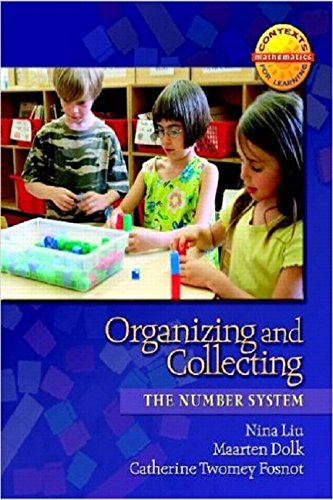
Organizing and Collecting: The Number System (Contexts in Learning Mathematics, Grades K3: Investigating Number Sense, Addition,Used
Sold by Ergodebooks, an authorized reseller.
Returns accepted within 30 days | support@ergodebooks.com
Shipping Information
- Free Standard Shipping — United States only
- Processing Time: 3–5 business days
- Estimated Delivery: 6–10 business days after dispatch
- Double-boxed, fully insured & discreetly packaged
- Tracking number sent via email once dispatched
Returns & Refund
Returns accepted within 30 days of delivery.
Damaged or Defective Item
Free return shipping + replacement or full refund
Wrong Item Received
Free return shipping + replacement or full refund
Change of Mind
Return shipping at customer's expense · 25% restocking fee applies
Payment Option

Organizing and Collecting: The Number Systemis one of eight units in the Contexts for Learning Mathematics' Investigating Number Sense, Addition, and Subtraction (K3) This unit begins with the story of the Masloppy familyan endearing, large family that finds it difficult to keep track of things. Everyone is forever losing, misplacing, and looking for things. One of the children, Nicholas, decides to sort, organize, and take inventory of things in the house. He counts and bundles materials and labels containers and baskets, and life in the Masloppy household is smoother thereafter. The idea of taking inventory is brought to the classroom, where children work to count and label baskets of supplies and materials. The discussion focuses on organizing in groups and skip counting, then specifically on groups of ten. The concept of place value is developed as the children pack objects into groups of ten and study patterns in the data. There are opportunities to deepen their understanding by packing in fives and playing games that focus on groups of ten, and there are minilessons that use the tenframe as a visual model of five and ten. (The structure of the tenframe is similar to that of the arithmetic rack, which is discussed in The DoubleDecker Bus (previous unit).Both units use five and ten as landmark numbers: the arithmetic rack has four groups of five arranged in two rows of ten, the ten frame has two groups of five. The tenframe is used in this unit because it resembles the context of packing more closely.) In the second week the inventory context is extended to include ordering more classroom supplies as a way to develop and support addition strategies, which include jumping to friendly numbers (multiples of ten) and jumping by ten. As children pack and count groups of items, they begin to unitizeto count groups and objects at the same time. Children develop an understanding of place value as they construct the idea that the number of packs and loose items is related to the total number of objects and that the numbers change when items are added to make full packs or when a pack of ten is added. The game Collecting Stamps and its variations are included in this unit. These can be played throughout the year as a way for children to develop place value and addition strategies. The game and its variations extend composing and decomposing strategies while promoting understanding of equivalencefor example, representing 26 + 8 as equal to 26 + 4 + 4. To learn more visit http://www.contextsforlearning.com
⚠️ WARNING (California Proposition 65):
This product may contain chemicals known to the State of California to cause cancer, birth defects, or other reproductive harm.
For more information, please visit www.P65Warnings.ca.gov.