If you have any questions, you are always welcome to contact us. We'll get back to you as soon as possible, withing 24 hours on weekdays.
Customer service
All questions about your order, return and delivery must be sent to our customer service team by e-mail at yourstore@yourdomain.com
Sale & Press
If you are interested in selling our products, need more information about our brand or wish to make a collaboration, please contact us at press@yourdomain.com
Help
If you have any questions, you are always welcome to contact us. We'll get back to you as soon as possible, withing 24 hours on weekdays.
Customer service
All questions about your order, return and delivery must be sent to our customer service team by e-mail at yourstore@yourdomain.com
Sale & Press
If you are interested in selling our products, need more information about our brand or wish to make a collaboration, please contact us at press@yourdomain.com
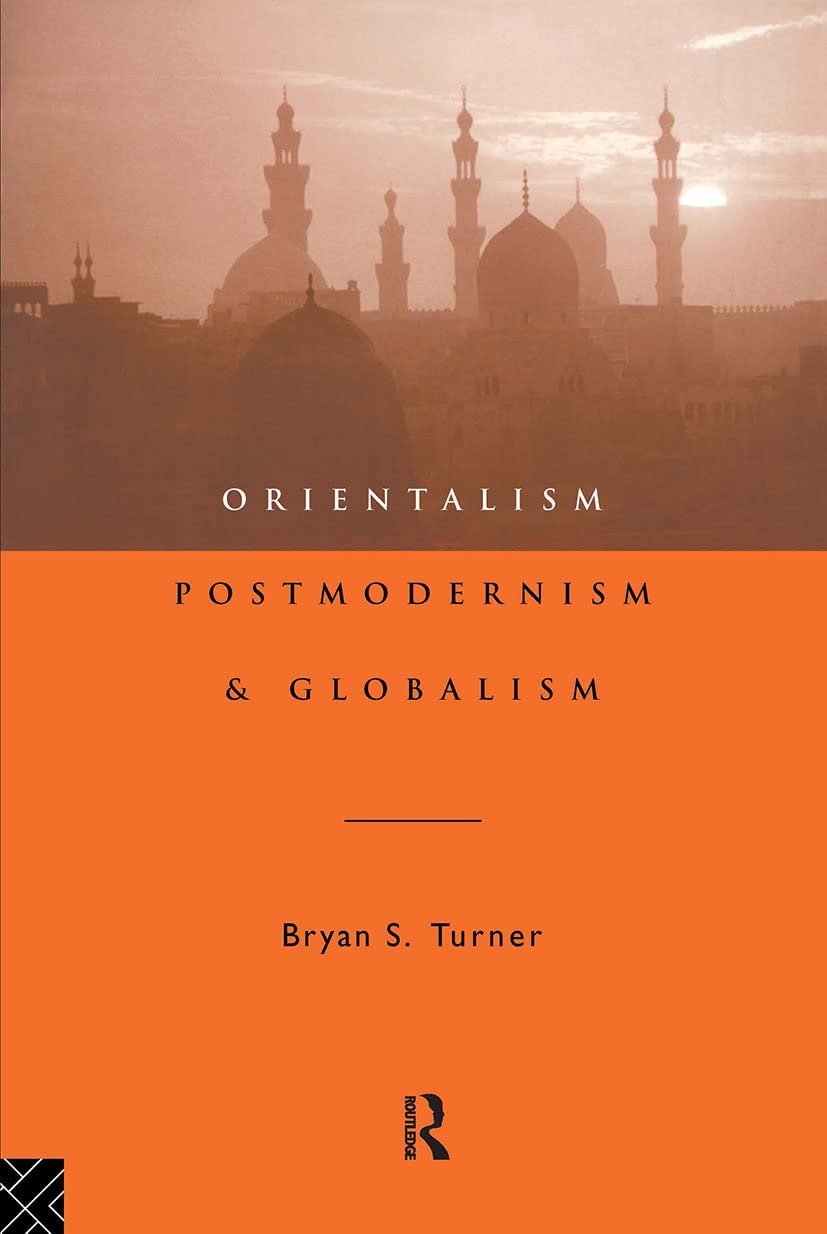
It is often thought that the development of capitalism and the modernization of culture have brought about a profound decline of religious belief and commitment. The history of Christianity in the last two decades appears to be a good illustration of this general process of secularization with the undermining of belief and commitment as Western cultures became industrial and urban. However, in the twentieth century we have seen that Islam continues to be a dominant force in politics and culture not only in the Orient but in Western society. In this challenging study of contemporary social theory, Bryan Turner examines the recent debate about orientalism in relation to postmodernism and the process of globalization. He provides a profound critique of many of the leading fissures in classical orientalism. His book also considers the impact of the notion of the world in sociological theory. These cultural changes and social debates also reflect important change in the status and position of intellecuals in modern culture who are threatened, not only by the levelling of mass culture, but also by the new opportunities posed by postmodernism. He takes a critical view of the role of sociology in these developments and raises important questions about the global role of English intellectuals as a social stratum. Bryan Turner's ability to combine these discussions about religion, politics, culture and intellectuals represents a remarkable integration of cultural analysis in cultural studies.
⚠️ WARNING (California Proposition 65):
This product may contain chemicals known to the State of California to cause cancer,
birth defects, or other reproductive harm.
For MAP (Minimum Advertised Price) violations and Intellectual Property (IP) or Trademark concerns, please contact:
support@ergodebooks.com
⚠️ California Proposition 65 Warning: Some products sold on this website may expose you to chemicals known to the State of California to cause cancer, birth defects, or other reproductive harm. For more information, visit www.P65Warnings.ca.gov.