
Title
Origins of Agriculture in Western Central Asia: An EnvironmentalArchaeological Study,New
Sold by Ergodebooks, an authorized reseller.
Returns accepted within 30 days | support@ergodebooks.com
Shipping Information
- Free Standard Shipping — United States only
- Processing Time: 3–5 business days
- Estimated Delivery: 6–10 business days after dispatch
- Double-boxed, fully insured & discreetly packaged
- Tracking number sent via email once dispatched
Returns & Refund
Returns accepted within 30 days of delivery.
Damaged or Defective Item
Free return shipping + replacement or full refund
Wrong Item Received
Free return shipping + replacement or full refund
Change of Mind
Return shipping at customer's expense · 25% restocking fee applies
Payment Option

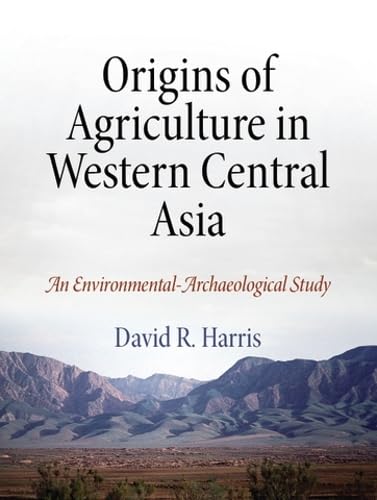
In Origins of Agriculture in Western Central Asia, archaeologist David R. Harris addresses questions of when, how, and why agriculture and settled village life began east of the Caspian Sea. The book describes and assesses evidence from archaeological investigations in Turkmenistan and adjacent parts of Iran, Uzbekistan, and Afghanistan in relation to present and past environmental conditions and genetic and archaeological data on the ancestry of the crops and domestic animals of the Neolithic period. It includes accounts of previous research on the prehistoric archaeology of the region and reports the results of a recent environmentalarchaeological project undertaken by British, Russian, and Turkmen archaeologists in Turkmenistan, principally at the early Neolithic site of Jeitun (Djeitun) on the southern edge of the Karakum desert.This project has demonstrated unequivocally that agropastoralists who cultivated barley and wheat, raised goats and sheep, hunted wild animals, made stone tools and pottery, and lived in small mudbrick settlements were present in southern Turkmenistan by 7,000 years ago (c. 6,000 BCE calibrated), where they came into contact with huntergatherers of the 'Keltiminar Culture.' It is possible that barley and goats were domesticated locally, but the available archaeological and genetic evidence leads to the conclusion that all or most of the elements of the Neolithic 'Jeitun Culture' spread to the region from farther west by a process of demic or cultural diffusion that broadly parallels the spread of Neolithic agropastoralism from southwest Asia into Europe.By synthesizing for the first time what is currently known about the origins of agriculture in a large part of Central Asia, between the more fully investigated regions of southwest Asia and China, this book makes a unique contribution to the worldwide literature on transitions from hunting and gathering to agriculture.
⚠️ WARNING (California Proposition 65):
This product may contain chemicals known to the State of California to cause cancer, birth defects, or other reproductive harm.
For more information, please visit www.P65Warnings.ca.gov.