
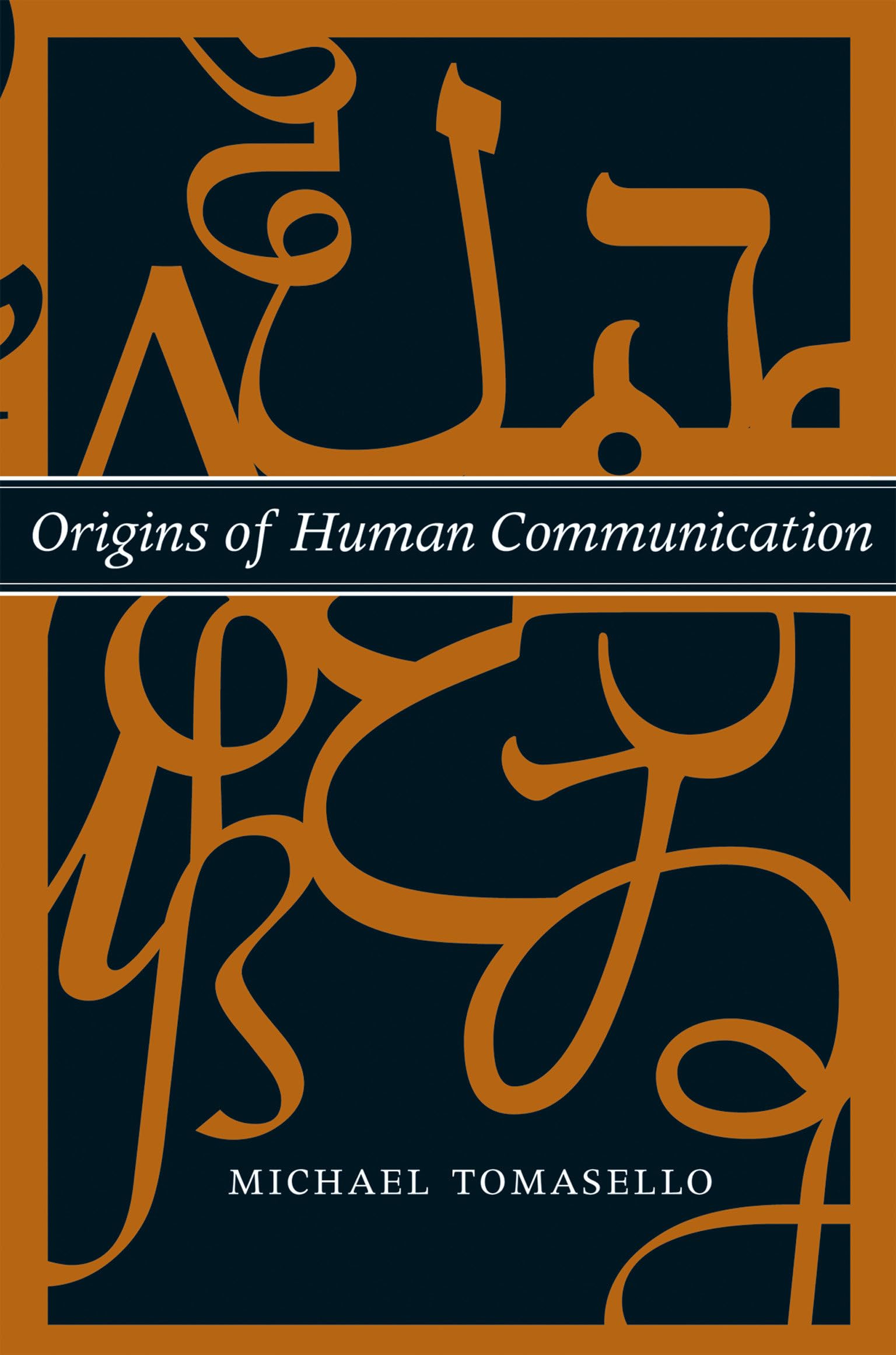
Title
Origins Of Human Communication (Jean Nicod Lectures)
Sold by Ergodebooks, an authorized reseller.
Returns accepted within 30 days | support@ergodebooks.com
Shipping Information
- Free Standard Shipping — United States only
- Processing Time: 3–5 business days
- Estimated Delivery: 6–10 business days after dispatch
- Double-boxed, fully insured & discreetly packaged
- Tracking number sent via email once dispatched
Returns & Refund
Returns accepted within 30 days of delivery.
Damaged or Defective Item
Free return shipping + replacement or full refund
Wrong Item Received
Free return shipping + replacement or full refund
Change of Mind
Return shipping at customer's expense · 25% restocking fee applies
Payment Option

A Leading Expert On Evolution And Communication Presents An Empirically Based Theory Of The Evolutionary Origins Of Human Communication That Challenges The Dominant Chomskian View.Human Communication Is Grounded In Fundamentally Cooperative, Even Shared, Intentions. In This Original And Provocative Account Of The Evolutionary Origins Of Human Communication, Michael Tomasello Connects The Fundamentally Cooperative Structure Of Human Communication (Initially Discovered By Paul Grice) To The Especially Cooperative Structure Of Human (As Opposed To Other Primate) Social Interaction. Tomasello Argues That Human Cooperative Communication Rests On A Psychological Infrastructure Of Shared Intentionality (Joint Attention, Common Ground), Evolved Originally For Collaboration And Culture More Generally. The Basic Motives Of The Infrastructure Are Helping And Sharing: Humans Communicate To Request Help, Inform Others Of Things Helpfully, And Share Attitudes As A Way Of Bonding Within The Cultural Group. These Cooperative Motives Each Created Different Functional Pressures For Conventionalizing Grammatical Constructions. Requesting Help In The Immediate Youandme And Hereandnow, For Example, Required Very Little Grammar, But Informing And Sharing Required Increasingly Complex Grammatical Devices. Drawing On Empirical Research Into Gestural And Vocal Communication By Great Apes And Human Infants (Much Of It Conducted By His Own Research Team), Tomasello Argues Further That Humans' Cooperative Communication Emerged First In The Natural Gestures Of Pointing And Pantomiming. Conventional Communication, First Gestural And Then Vocal, Evolved Only After Humans Already Possessed These Natural Gestures And Their Shared Intentionality Infrastructure Along With Skills Of Cultural Learning For Creating And Passing Along Jointly Understood Communicative Conventions. Challenging The Chomskian View That Linguistic Knowledge Is Innate, Tomasello Proposes Instead That The Most Fundamental Aspects Of Uniquely Human Communication Are Biological Adaptations For Cooperative Social Interaction In General And That The Purely Linguistic Dimensions Of Human Communication Are Cultural Conventions And Constructions Created By And Passed Along Within Particular Cultural Groups.
⚠️ WARNING (California Proposition 65):
This product may contain chemicals known to the State of California to cause cancer, birth defects, or other reproductive harm.
For more information, please visit www.P65Warnings.ca.gov.
- Q: How many pages are in 'Origins of Human Communication'? A: This book has four hundred eight pages. It provides a detailed exploration of the evolutionary origins of human communication.
- Q: What is the binding type of this book? A: The book is in paperback binding. This makes it lightweight and easy to handle.
- Q: What are the dimensions of the book? A: The book measures five point thirty-eight inches in length, one point zero two inches in width, and eight inches in height. These dimensions make it portable for reading.
- Q: Who is the author of 'Origins of Human Communication'? A: The author is Michael Tomasello. He is recognized as a leading expert in evolution and communication.
- Q: Is this book suitable for beginners in linguistics? A: Yes, this book is suitable for beginners. It presents complex ideas in an accessible manner for those new to the field.
- Q: What themes are explored in the book? A: The book explores themes of cooperative communication and shared intentions. It challenges traditional views on linguistic knowledge.
- Q: How should I care for this book? A: Store the book in a dry, cool place to prevent damage. Avoid exposing it to direct sunlight for extended periods.
- Q: Can I easily clean the book if it gets dirty? A: Yes, you can gently wipe the cover with a damp cloth. Avoid using harsh chemicals that could damage the material.
- Q: What if my book arrives damaged? A: You should contact customer support immediately. They will assist you with the return or exchange process.
- Q: Is there a warranty for this book? A: No, typically, books do not come with a warranty. However, check the retailer's return policy for additional support.
- Q: How does this book compare to others in linguistics? A: This book offers a unique perspective on human communication, focusing on evolutionary aspects. It contrasts with traditional linguistic theories.
- Q: Is this book appropriate for academic use? A: Yes, it is appropriate for academic use. The empirical research and theories presented can be beneficial for studies in linguistics.
- Q: What is the main argument presented in the book? A: The main argument is that human communication evolved from cooperative social interactions, challenging innate linguistic knowledge theories.
- Q: Does the book include research findings? A: Yes, it includes empirical research findings on human and primate communication. This adds credibility to the theories discussed.
- Q: What is the publication date of this book? A: The specific publication date is not provided. However, it is published by MIT Press, a reputable academic publisher.