
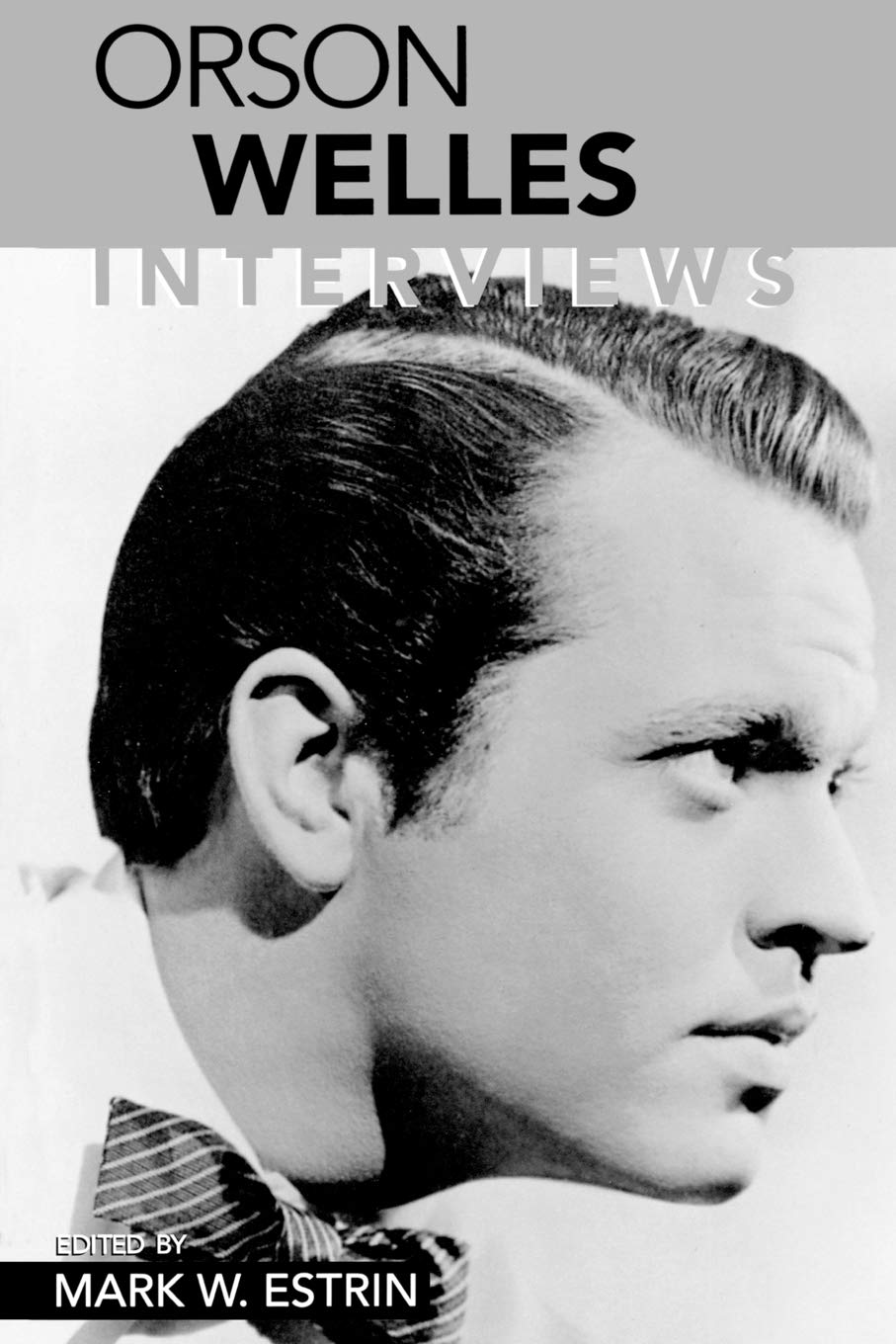
Title
Orson Welles: Interviews (Conversations with Filmmakers Series),Used
Sold by Ergodebooks, an authorized reseller.
Returns accepted within 30 days | support@ergodebooks.com
Shipping Information
- Free Standard Shipping — United States only
- Processing Time: 3–5 business days
- Estimated Delivery: 6–10 business days after dispatch
- Double-boxed, fully insured & discreetly packaged
- Tracking number sent via email once dispatched
Returns & Refund
Returns accepted within 30 days of delivery.
Damaged or Defective Item
Free return shipping + replacement or full refund
Wrong Item Received
Free return shipping + replacement or full refund
Change of Mind
Return shipping at customer's expense · 25% restocking fee applies
Payment Option

This book brings together an exceptional array of interviews, profiles, and press conferences tracing the half century that Orson Welles (19151985) was in the public eye. Originally published or broadcast between 1938 and 1989 in worldwide locations, these pieces confirm that Welles's career was multidimensional and thoroughly interwoven with Welles's persona.Several of them offer vivid testimony to his grasp on the public imagination in Welles's heyday, including accounts of his War of the Worlds broadcast. Some interviews appear in English for the first time. Two transcriptions of British television interviews have never before appeared in print. Interviewers include Kenneth Tynan, French critic Andr Bazin, and Gore Vidal.The subjects center on the performing arts but also embrace philosophy, religion, history, and, especially, American society and politics. Welles confronts painful topics: the attempts to suppress Citizen Kane, RKO's mutilation of The Magnificent Ambersons, his loss of directorial authority, his regret at never having run for political office, and his financial struggles. I would have sold my soul to play Marlon Brando's role as Don Corleone in The Godfather, he tells a BBC interviewer.Welles deflates the notion of the film director's omnipotence, insisting that it is only in the editing studio that he possesses "absolute control." With scholarly erudition, Welles revels in the plays of Shakespeare and discusses their adaptation to stage and screen. He assesses rival directors and eminent actors, offers penetrating analyses of Citizen Kane, Touch of Evil, Chimes at Midnight, and The Third Man, and declares that he never made a film that lacked an ethical pointofview. These conversations reveal the majestic mind and talent of Welles from a fresh perspective.
⚠️ WARNING (California Proposition 65):
This product may contain chemicals known to the State of California to cause cancer, birth defects, or other reproductive harm.
For more information, please visit www.P65Warnings.ca.gov.
- Q: What is the page count of this book? A: This book has two hundred ninety-two pages. It provides an extensive collection of interviews and profiles of Orson Welles.
- Q: What are the dimensions of the book? A: The book measures six inches in length, zero point sixty-seven inches in width, and nine point zero two inches in height. These dimensions make it easy to handle and store.
- Q: What type of binding does this book have? A: This book is paperback bound. This binding type is lightweight and flexible, ideal for casual reading.
- Q: Who is the author of this book? A: The author is Mark W. Estrin. He provides insightful commentary through the various interviews compiled in this work.
- Q: What genre does this book belong to? A: This book belongs to the genre of film and cinema studies. It focuses on interviews with a notable filmmaker.
- Q: How do I read this book effectively? A: To read this book effectively, start with the introduction to set the context and then explore the interviews in any order. Each interview stands alone, offering unique insights.
- Q: Is this book suitable for all ages? A: Yes, this book is suitable for all ages. However, it may be more appreciated by mature readers interested in film history and critiques.
- Q: Can this book be used for academic purposes? A: Yes, this book can be used for academic purposes. It offers valuable insights and analyses that are beneficial for film studies and media courses.
- Q: How should I store this book? A: Store this book in a cool, dry place, upright on a shelf. This helps to maintain its condition and prevent damage.
- Q: How do I clean this book? A: To clean this book, gently wipe the cover with a soft, dry cloth. Avoid using water or cleaning solutions as they can damage the print.
- Q: Is there a warranty for this book? A: No, there is no warranty for this book. However, you can usually return it if it is damaged upon delivery.
- Q: What if the book arrives damaged? A: If the book arrives damaged, contact the seller immediately for a return or exchange. Most sellers offer a satisfaction guarantee.
- Q: How does this book compare to other biographies? A: This book offers a unique perspective through interviews rather than a traditional biography. It focuses on Welles's thoughts and experiences rather than a linear narrative.
- Q: Is this book appropriate for beginners in film studies? A: Yes, this book is appropriate for beginners. It provides accessible insights into Orson Welles's work and the film industry.
- Q: What themes are explored in the interviews? A: The interviews explore themes such as creativity, the film industry's challenges, and Welles's views on American society and politics.
- Q: Are there any exclusive interviews in this book? A: Yes, some interviews appear in English for the first time, and two British television interviews have never before been published in print.